Unit 6 · 4 teaching hours · 16 min read
Security and Control of Information Systems
What the syllabus asks for 6
- Security goals, threats and controls
- Quantitative risk analysis
- Authentication and password strength
- Securing e-commerce
- Business continuity, audit and law
- Seeing security: factors, risk arithmetic, entropy and recovery
A system that is fast, integrated and loved by users but loses a customer database to a stolen laptop has failed. Security is not an add-on; it is part of the definition of a usable information system.
This unit covers the vocabulary of threats, a quantitative way to decide how much to spend on controls (annualised loss expectancy), password strength as entropy, the controls that protect e-commerce, and the legal frame in Nepal.
- Confidentiality, integrity, availability; threats, vulnerabilities, risk and controls.
- Risk analysis: SLE, ARO, ALE and the cost-benefit of a safeguard.
- Password entropy numbers; e-commerce controls (TLS, payment verification, fraud rules).
- Disaster recovery, audit and the Electronic Transactions Act 2063 in outline.
6.1 Security goals, threats and controls
The CIA triad: confidentiality (only authorised people read the data), integrity (data are accurate and unaltered) and availability (the system works when needed). Add authenticity and non-repudiation (a sender cannot deny sending).
A threat is a potential cause of harm (a hacker, a fire, a careless employee); a vulnerability is a weakness (an unpatched server); risk is the chance a threat exploits a vulnerability times the impact; a control reduces risk.
| Threat | Example | Typical control |
|---|---|---|
| Malware | Ransomware encrypting the server | Patching, anti-malware, offline backups |
| Phishing and social engineering | Fake "bank" SMS asking for an OTP | Training, MFA, URL filtering |
| Insider misuse | Clerk altering account records | Role-based access, logs, segregation of duties |
| Denial of service | Flood against the booking website | Rate limiting, CDN, redundancy |
| Physical | Theft, fire, flood, power failure | Locks, UPS, generator, offsite copies |
| Application flaws | SQL injection, weak sessions | Secure coding, testing, WAF |
Controls fall into three families: preventive (stop it: access control, encryption, firewalls), detective (notice it: logs, alerts, audits) and corrective (recover: backups, incident response).
They are further classified as technical, administrative (policies, training) and physical. Defence in depth layers several of them so that no single failure exposes the asset.
6.2 Quantitative risk analysis
Spending on security must be justified. The classic formulae:
- Single loss expectancy (SLE) = asset value (AV) × exposure factor (EF), the fraction of the asset lost in one incident.
- Annualised rate of occurrence (ARO): expected incidents per year.
- Annualised loss expectancy (ALE) = SLE × ARO.
A customer database is valued at Rs 20,00,000. A breach would destroy 40% of its value, so SLE = 20,00,000 × 0.4 = Rs 8,00,000. Incidents are expected once in four years (ARO = 0.25), so ALE = Rs 2,00,000 per year.
A safeguard (encrypted backups, MFA, monitoring) costing Rs 70,000 per year cuts the ARO to 0.05, so the new ALE = 8,00,000 × 0.05 = Rs 40,000.
Risk reduced by Rs 1,60,000; net benefit after paying for the control = 1,60,000 − 70,000 = Rs 90,000 per year, a 129% return on the security spend. The control is justified.
The numbers are estimates, so analysts use ranges and compare options; the output is a priority list, not a precise forecast. Alternatives to reducing risk: accept it, transfer it (insurance), avoid it (stop the activity) or mitigate it (controls).
6.3 Authentication and password strength
Authentication proves identity with something you know (password), have (phone, token) or are (fingerprint); multi-factor authentication (MFA) combines at least two.
The strength of a password scheme is its entropy: H = L × log₂(N) bits for L symbols chosen uniformly at random from an alphabet of N. A guesser needs on average half the space.
At 10¹⁰ guesses per second (an offline attack against a weak hash):
| Password scheme | Space size | Entropy (bits) | Average time at 10¹⁰ guesses/s |
|---|---|---|---|
| 8 random lowercase letters | 2.09e+11 | 37.6 | 10.44 seconds |
| 8 random chars from 95 printable ASCII | 6.63e+15 | 52.6 | 3.8 days |
| 12 random lowercase letters | 9.54e+16 | 56.4 | 55.2 days |
| 4 random words from a 2,048-word list | 1.76e+13 | 44.0 | 14.7 minutes |
| 6 random words from a 2,048-word list | 7.38e+19 | 66.0 | 116.9 years |
An 8-character password from the full keyboard (52.6 bits) is weaker than 12 random lowercase letters (56.4 bits), and six random words (66 bits) is stronger than both and easier to remember.
These figures assume random choice; human-chosen passwords (names plus birth year) have far less entropy, which is why systems must store passwords as salted, slow hashes (bcrypt, Argon2) and why a one-time password (OTP) from SMS or an authenticator app is added for payments.
6.4 Securing e-commerce
- Transport security: HTTPS (TLS) encrypts traffic between browser and server and authenticates the server by a certificate. Check for the padlock and a valid certificate; redirect all HTTP to HTTPS.
- Do not store card data you do not need; use a gateway so card numbers never touch your server (and the PCI DSS standard applies if you do).
- Server-side payment verification: after a gateway callback, confirm the transaction ID, amount, merchant and status through a back-channel call; compare the amount with the order total.
- Fraud controls: velocity checks (many orders from one device), address mismatch, OTP, blacklists, manual review of large orders, COD limits for new customers.
- Application security: parameterised SQL, output encoding, CSRF tokens, secure session cookies, rate limits, least-privilege database accounts.
- Digital signatures and certificates give integrity and non-repudiation (the cryptography is in Cryptography and Network Security).
- Privacy: collect only what you need, state the purpose, protect and delete data on request where the law requires.
6.5 Business continuity, audit and law
A business continuity plan (BCP) keeps critical functions running; a disaster recovery plan (DRP) restores the IT systems.
Key numbers: RPO (recovery point objective: how much data you can afford to lose, e.g. 15 minutes) and RTO (recovery time objective: how long you can be down, e.g. 4 hours).
They determine backup frequency and standby systems: a bank with an RPO near zero replicates to a disaster recovery site synchronously. Follow the 3-2-1 rule: three copies, two media, one offsite (and test restoring them).
IS audit examines controls: logs, access reviews, change management, and segregation of duties (no one person both creates and approves a payment).
In Nepal the Electronic Transactions Act, 2063 (2008) gives legal recognition to electronic records and digital signatures, establishes a Controller of Certification Authorities, and defines computer-related offences (unauthorised access, damage, publishing illegal material) with penalties; its provisions are covered in detail in Society and Technology.
NRB issues an IT guideline for banks and financial institutions requiring policies, access control, audit trails and disaster recovery.
Treat any incident as both a technical and a legal event: preserve logs, notify as required, and communicate honestly.
6.6 Seeing security: factors, risk arithmetic, entropy and recovery
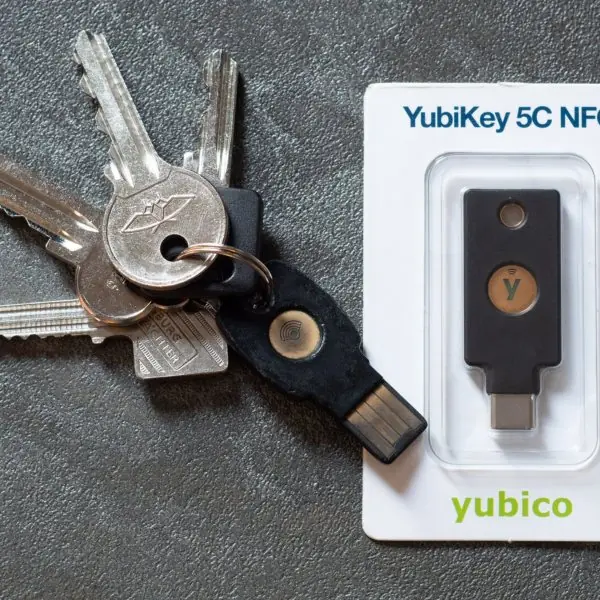
Security decisions are built on three questions: who is it, how likely is the loss, and how fast can we recover. The plate shows the three kinds of proof of identity; the figures put numbers to risk, passwords and recovery.


6.6.1 Eight good security practices for an e-business
- Use multi-factor authentication. Ask for a password and a second factor such as a one-time code or a security key. A stolen password alone then cannot open the account. Banks and wallets in Nepal send an OTP for this purpose.
- Encrypt data in transit and at rest. Use HTTPS for every page and encrypt databases and backups. A lost laptop or stolen backup tape then exposes nothing readable. Encryption is cheap compared with the loss from a leak.
- Store passwords as salted slow hashes. Never keep passwords in plain text; use bcrypt or Argon2 with a unique salt. If the database is stolen the passwords are still hard to recover. This protects users who reuse passwords on other sites.
- Patch and update quickly. Install security updates for the operating system, the web server and libraries. Most attacks use known weaknesses that have fixes. A shop that delays updates for months is an easy target.
- Give least privilege. Each person and program gets only the access needed for the work. A cashier cannot change prices and a report tool cannot delete records. This limits damage from mistakes and insiders.
- Back up and test recovery. Keep copies offline or in a separate location and test that the restore works. Define the RPO and RTO, as in Figure 6.4. A backup never tested is only a hope.
- Train people. Phishing and weak habits are the most common cause of breaches. Teach staff to check links, report suspicious email and use a password manager. A short drill each year is far cheaper than a breach.
- Monitor, log and plan the response. Keep logs, watch for unusual activity and have a written incident plan with named contacts. Report serious incidents as the law requires. Fast response reduces the damage and the loss of trust.
Chapter summary
- Security aims at confidentiality, integrity and availability; controls are preventive, detective or corrective.
- ALE = AV × EF × ARO; a safeguard is justified when the ALE it removes exceeds its cost.
- Entropy L × log₂ N measures password strength; use MFA and salted slow hashes.
- E-commerce security relies on TLS, a gateway, server-side verification, fraud rules and secure code.
- RPO and RTO drive backup and recovery design; audit and the Electronic Transactions Act supply oversight and legal frame.
Practice
- Define CIA and give one threat to each.
- Differentiate threat, vulnerability and risk.
- A server worth Rs 10,00,000 has EF = 0.3 and ARO = 0.5. Compute ALE.
- A control costing Rs 40,000 cuts that ALE by 60%. Is it worthwhile?
- Compute the entropy of a 10-character random password over 62 symbols (letters and digits).
- Why is a salted slow hash used for passwords?
- List three steps that a merchant takes to verify a payment callback.
- Explain RPO and RTO with an example.
- State the 3-2-1 backup rule.
- Why separate the duties of creating and approving a payment?
Answers and worked solutions
1. Confidentiality (data theft), integrity (tampered records), availability (denial-of-service).
2. Threat: potential cause of harm. Vulnerability: weakness. Risk: likelihood times impact of a threat exploiting a weakness.
3. SLE = 10,00,000 × 0.3 = 3,00,000; ALE = 3,00,000 × 0.5 = Rs 1,50,000.
4. The control saves 0.6 × 1,50,000 = 90,000 per year, net 90,000 − 40,000 = Rs 50,000: worthwhile.
5. 10 × log₂ 62 = 10 × 5.954 = 59.5 bits.
6. Salt defeats pre-computed tables and makes equal passwords hash differently; a slow hash makes each guess expensive for an attacker.
7. Check the transaction ID and status by a server-to-server call; compare amount and currency with the order; ensure each ID is used for one order only.
8. RPO is the tolerated data loss (15 minutes means backups or replication at least every 15 minutes); RTO is the tolerated downtime (4 hours means a restore plan that completes within that time).
9. Three copies, on two media, one offsite.
10. One person acting alone could commit fraud; two people must collude, which is harder to hide.
Model answers: medium (5 marks) and long (10 marks) questions
Q1 (5 marks). A customer database worth Rs 20,00,000 would lose 40 percent of its value in a breach, expected once in four years. A safeguard costing Rs 70,000 a year reduces the rate to once in twenty years. Is it worth buying?
Introduction. Quantitative risk analysis compares the expected annual loss with and without a safeguard (section 6.2, Figure 6.2).
- SLE. Asset value x exposure factor = 20,00,000 x 0.4 = Rs 8,00,000.
- ALE before. ARO = 1/4 = 0.25, so ALE = 8,00,000 x 0.25 = Rs 2,00,000 a year.
- ALE after. ARO = 1/20 = 0.05, so ALE = 8,00,000 x 0.05 = Rs 40,000.
- Risk reduction. 2,00,000 - 40,000 = Rs 1,60,000 a year.
- Net benefit. 1,60,000 - 70,000 = Rs 90,000 a year.
- Decision. The benefit is greater than the cost, so the safeguard is worth buying. Other responses are accept, transfer (insurance), avoid or mitigate.
Conclusion. The calculation shows the safeguard returns more than it costs, but the inputs are estimates, so ranges should be tested.
Q2 (5 marks). Define password entropy. Compare 8 random lowercase letters, 8 random printable characters and 6 random words from a list of 2,048 words.
Introduction. Entropy measures how unpredictable a randomly chosen password is; each additional bit doubles the number of guesses needed (section 6.3, Figure 6.3).
- Formula. H = L x log2(N), where L is the number of symbols and N the size of the alphabet.
- 8 lowercase letters. 8 x log2(26) = 8 x 4.70 = 37.6 bits, about 2.09 x 10^{11} combinations.
- 8 printable characters. 8 x log2(95) = 8 x 6.57 = 52.6 bits, about 6.63 x 10^{15}.
- 6 random words. 6 x log2(2048) = 6 x 11 = 66 bits, about 7.4 x 10^{19}.
- Time. At 10^{10} guesses a second, on average half the space is searched: about 10 seconds, 3.8 days and 117 years respectively.
- Conclusion for users. Random words beat short complex passwords and are easier to remember, but human-chosen passwords have far less entropy than these figures, so systems also need MFA and slow hashing.
Conclusion. Length and true randomness matter more than complicated character rules.
Q3 (10 marks). Explain the security threats to information systems and e-commerce and the controls used against them. Describe authentication, encryption, and business continuity measures.
Introduction. Information systems hold the money, records and reputation of an organisation, so their protection is a management duty and not only a technical task.
Security aims to protect confidentiality, integrity and availability (the CIA triad) against threats from outside and inside (sections 6.1 to 6.5, Figures 6.1 to 6.4).
- Threats. Malware and ransomware, phishing and social engineering, hacking and denial of service, insider misuse, theft or loss of devices, and natural disasters or power failure.
- Risk analysis. SLE = asset value x exposure factor, ALE = SLE x ARO; compare the ALE reduction with the cost of the control.
- Authentication. Something you know, have or are; MFA combines at least two. Passwords must be long and random and stored as salted slow hashes.
- Access control. Least privilege, role-based access and logs of who did what.
- Encryption. Symmetric encryption (AES) for bulk data; asymmetric encryption and digital signatures for key exchange and proof of origin; TLS secures web traffic and padlock-protected payment pages.
- Network controls. Firewalls, intrusion detection, patching and segmented networks.
- Business continuity. Backups, disaster recovery sites, and defined RPO and RTO; tested plans, as in Figure 6.4.
- Audit and law. Regular audits and logs, and compliance with the Electronic Transactions Act, 2063 (2008) and bank rules.
| Goal | Threat | Control |
|---|---|---|
| Confidentiality | Phishing, theft | Encryption, MFA |
| Integrity | Tampering, malware | Hashes, signatures, audit trail |
| Availability | DoS, ransomware | Backups, redundancy |
Conclusion. Security is a layered, risk-based process: identify the threats, estimate the loss, choose controls whose cost is below the risk reduction and test recovery. A technical control without trained people and tested backups is not enough.