Unit 3 · 6 teaching hours · 16 min read
Subsidiary Books, Trial Balance and Error Rectification
What the syllabus asks for 8
- Purchases, sales and returns books
- Cash books
- Petty cash and the imprest system
- The trial balance
- Locating errors and the suspense account
- Rectification principles
- Seeing the ideas: books of prime entry, the three-column cash book and the hunt for a difference
- Summary and exercises
A wholesaler in Birgunj may issue two hundred invoices a day. Journalising each one individually, with a narration, would bury the accountant.
The remedy is to divide the journal into subsidiary books (also called books of original entry or special journals), one per kind of repetitive transaction, and to post only their totals to the ledger.
After posting, a trial balance checks the arithmetic of double entry, and a suspense account parks any unexplained difference until the errors are found.
- The subsidiary books: purchases, sales, returns and cash books (single, double and triple column).
- Contra entries and discounts: trade vs cash discount.
- Preparing a trial balance, what it proves and what it cannot detect.
- Locating and rectifying errors, with a suspense account where needed.
3.1 Purchases, sales and returns books
- Purchases book records credit purchases of goods for resale. Sales book records credit sales. Cash purchases and sales go to the cash book, and purchases of assets (not for resale) go to the journal proper.
- Purchases returns (returns outward) and sales returns (returns inward) books record goods sent back, supported by debit notes and credit notes respectively.
- A trade discount is a reduction from the list price given at the time of sale; it is not recorded in the books, only the net invoice amount is. A cash discount is an incentive for prompt payment; it is recorded, as discount allowed (an expense, on sales) or discount received (an income, on purchases).
VAT is shown in a separate column. The program below builds a two-invoice sales book: list prices Rs 50,000 and Rs 30,000, a 10% trade discount, and 13% VAT on the discounted value.
invoices = [50000, 30000]
net = sum(p * 90 // 100 for p in invoices)
vat = net * 13 // 100
print(f"sales book: net {net}, VAT {vat}, gross {net + vat}")
sales book: net 72000, VAT 9360, gross 81360
Net sales are Rs 72,000, VAT is Rs 9,360 and the debtors' total is Rs 81,360. Posting is by totals: Dr Debtors (per customer, from each invoice), Cr Sales for the net total, Cr VAT Output for the VAT total.
3.2 Cash books
The cash book is both a journal and a ledger: it records every cash and bank transaction in date order, and it is the Cash and Bank account, so it is not separately posted to a cash ledger account.
- Single column: cash only.
- Double column: cash and bank columns.
- Triple column: cash, bank and a discount column on each side. The discount-allowed total on the debit side and the discount-received total on the credit side are not balanced like cash and bank; they are posted to the Discount Allowed and Discount Received accounts at period end.
A contra entry is a transaction entirely between cash and bank (depositing cash, withdrawing cash). It appears on both sides of the cash book, once in each column, and needs no ledger posting. The letter C in the folio column marks it.
Opening balances: cash Rs 20,000, bank Rs 80,000.
Transactions: (1) received Rs 15,000 cash from customer X, allowing Rs 500 discount; (2) deposited Rs 10,000 cash in the bank (contra); (3) paid supplier Y Rs 24,000 by cheque, receiving Rs 1,000 discount; (4) cash sales of Rs 30,000; (5) withdrew Rs 5,000 from the bank for office use (contra); (6) paid Rs 4,000 cash expenses.
dr = [("Balance b/d", 20000, 80000, 0), ("X (debtor)", 15000, 0, 500),
      ("Cash (contra)", 0, 10000, 0), ("Cash sales", 30000, 0, 0), ("Bank (contra)", 5000, 0, 0)]
cr = [("Bank (contra)", 10000, 0, 0), ("Y (creditor)", 0, 24000, 1000),
      ("Expenses", 4000, 0, 0), ("Cash (contra)", 0, 5000, 0)]
cash = sum(r[1] for r in dr) - sum(r[1] for r in cr)
bank = sum(r[2] for r in dr) - sum(r[2] for r in cr)
print(f"closing cash {cash}, closing bank {bank}")
closing cash 56000, closing bank 61000
The cash column balances at Rs 56,000 and the bank column at Rs 61,000.
Each contra entry appears in both lists: moving Rs 10,000 from cash to bank lowers the cash balance and raises the bank balance by the same amount, so the combined total of cash and bank is unchanged by contra entries.
A bank overdraft is a credit balance in the bank column. Do not subtract it from a debit total as a "negative asset" without labelling it: on the balance sheet it appears as a current liability.
3.3 Petty cash and the imprest system
Small expenses are met from a petty cash book under the imprest system: the petty cashier receives a fixed float (say Rs 5,000), pays small expenses against vouchers, and at period end is reimbursed the exact amount spent so that the float is restored.
The analytical columns (postage, travel, refreshments) are totalled and posted to the matching expense accounts.
3.4 The trial balance
A trial balance lists every ledger balance, debit balances in one column and credit balances in the other, at a given date. Its totals must agree, because every transaction was recorded with equal debits and credits.
Agreement of the totals shows that the arithmetic of double entry is intact. It does not prove the books are correct: several errors leave the totals equal.
Errors not revealed by the trial balance:
- Error of omission: a transaction not recorded at all.
- Error of commission: the right amount posted to the wrong account of the same class (a sale to Ram credited to Shyam).
- Error of principle: wrong class of account (buying furniture debited to purchases).
- Compensating errors: two errors of equal amount in opposite directions.
- Complete reversal: debit and credit swapped.
- Error of original entry: the wrong amount recorded on both sides.
Errors that do make the totals differ include: a one-sided posting, posting a different amount to each side, a transposition (5,400 written as 4,500), wrong addition of an account and balance carried wrongly.
3.5 Locating errors and the suspense account
A difference exactly divisible by 9 often signals a transposition or slide error: swapping two adjacent digits changes a number by a multiple of 9. A difference equal to twice an amount hints that an item was posted to the wrong side.
If the error cannot be found immediately, the books are closed with the difference placed in a suspense account (credit if the debit side is heavier, debit if the credit side is heavier), and it is cleared when the error is found.
A credit sale to a debtor was Rs 5,400. The debtor was debited correctly with 5,400, but Sales was credited with 4,500. The trial balance showed debits of Rs 8,42,500 and credits of Rs 8,41,600.
debits = {"Cash": 56000, "Bank": 61000, "Debtors": 305400, "Purchases": 300000, "Rent": 60000, "Salaries": 60100}
credits = {"Capital": 400000, "Creditors": 150000, "Sales": 291600}
diff = sum(debits.values()) - sum(credits.values())
print(f"difference {diff}, divisible by 9: {diff % 9 == 0}")
susp_cr, susp_dr = diff, 0          # credit suspense balances the books
susp_dr += 900                      # rectification: Dr Suspense 900, Cr Sales 900
print(f"suspense after rectification: {susp_cr - susp_dr}")
difference 900, divisible by 9: True
suspense after rectification: 0
The difference is Rs 900 (exactly 100 × 9) and the entry Dr Suspense 900, Cr Sales 900 clears it, restoring Sales to its true figure and returning the suspense balance to zero.
3.6 Rectification principles
Rectify in the period the error is found:
- Errors that affected the trial balance go through the suspense account. Errors that did not are corrected by a journal entry directly between the accounts concerned.
- Commission (sale to Ram credited to Shyam): Dr Shyam, Cr Ram. Principle (furniture debited to Purchases, Rs 20,000): Dr Furniture 20,000, Cr Purchases 20,000. Omission: record the transaction now. Complete reversal: debit and credit the amount twice the original.
- If an error affected profit, adjust profit as well; corrected profit equals reported profit plus or minus the effect of each error, keeping a clear statement of corrected profit.
3.7 Seeing the ideas: books of prime entry, the three-column cash book and the hunt for a difference
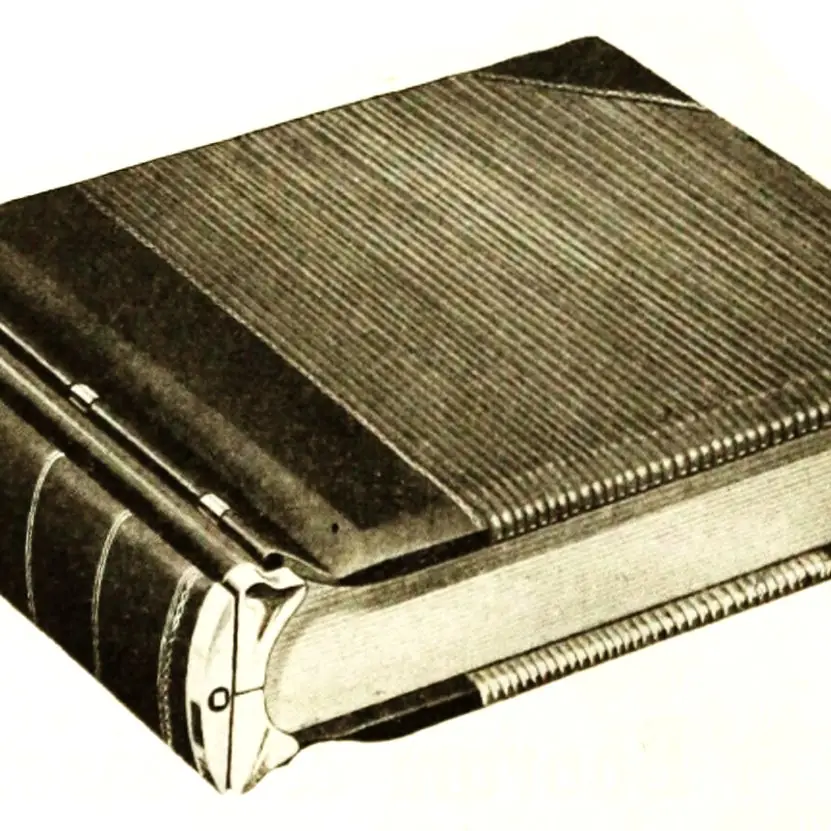


3.7.1 Eight good habits of cash-book and trial-balance work
- Record cash and bank daily. The cash book is both a book of original entry and a ledger, so it should be written on the day of each transaction. A shop that records weekly forgets small payments. Daily entries also make theft easy to notice.
- Count the cash each evening. Compare the cash book balance with the cash in the drawer and note any difference. A shortage of Rs 50 found today is easy to trace, but one found next month is not. This is the oldest and cheapest control.
- Use the imprest system for petty cash. Give the cashier a fixed float, say Rs 5,000, and refill it by the exact amount spent. Each expense needs a voucher. The reimbursement cheque then equals the vouchers, which keeps small spending honest.
- Show contra entries on both sides. When Rs 6,000 cash is deposited into the bank, it appears on the debit side in the bank column and on the credit side in the cash column. Writing it on one side only is a common mistake. Mark such lines with the letter C.
- Keep discounts in their own column. Cash discount allowed to customers and received from suppliers are separate nominal accounts. The totals of the discount columns are posted at the period end. Netting them into the cash amount hides the cost of early payment.
- Total the subsidiary books before posting. Add the purchases, sales and returns books at the month end, check the totals and post only the totals. One posting instead of many reduces the chance of an error. Nepali shops that issue hundreds of VAT bills a month save hours this way.
- Divide a difference by 9. If the trial balance is out by an amount divisible by 9, look for a transposition or a slide first. If it equals twice an amount, look for an item posted to the wrong side. A systematic search is faster than rechecking every page.
- Never force the trial balance. Putting a difference into a suspense account is allowed only as a clearly labelled temporary step. Find the error and rectify it by a proper entry. A forced balance hides a real fault and misleads whoever reads the statements.

3.8 Summary and exercises
Subsidiary books keep detail manageable, the triple-column cash book handles cash, bank and discounts together, and the trial balance and suspense account give a first, imperfect line of defence against error.
- Distinguish trade discount from cash discount, with the entry for each.
- Record in a triple-column cash book: opening cash Rs 12,000 and bank Rs 40,000; deposit of Rs 6,000 cash; cheque received of Rs 9,000 from a debtor, discount Rs 300.
- State six errors that the trial balance cannot reveal, with one example each.
- A trial balance disagrees by Rs 1,260 (credits larger). Show why a transposition is plausible and prepare the suspense entry.
- Furniture costing Rs 30,000 was debited to Purchases. Journalise the correction.
- Explain why a bank overdraft is a liability even though it is a bank-column balance.
Model answers: medium (5 marks) and long (10 marks) questions
Q1 (5 marks). List the errors that a trial balance does not reveal, with an example of each.
Introduction. A trial balance tests only the arithmetic of double entry. If the totals agree, it does not prove the books are correct, because some errors leave debits equal to credits.
| Error | Meaning | Example |
|---|---|---|
| Omission | transaction not recorded at all | a credit sale of Rs 4,000 never entered |
| Commission | right amount, wrong account of the same class | sale to Ram credited to Shyam |
| Principle | wrong class of account | furniture debited to Purchases |
| Compensating | two errors of equal amount that cancel | Sales over-added by 500 and Rent over-added by 500 |
| Complete reversal | debit and credit swapped | cash received debited to Cash as credit |
| Original entry | wrong amount on both sides | Rs 1,500 recorded as 1,050 in the journal |
Errors that do show up: a one-sided posting, different amounts on the two sides, a transposition in one posting and wrong addition of an account.
Conclusion agreement of the trial balance is necessary but not sufficient evidence of correct books.
Q2 (5 marks). Prepare a three-column cash book from: opening cash Rs 10,000 and bank Rs 40,000; deposited cash in bank 6,000; received a cheque from a customer 12,000 and banked it; paid a supplier by cheque 9,800 after discount 200.
Method. Cash receipts and the bank column are on the debit side, payments on the credit side; the discount column records discount allowed (debit) and discount received (credit). The deposit is a contra entry.
| Dr | Disc | Cash | Bank | Cr | Disc | Cash | Bank |
|---|---|---|---|---|---|---|---|
| Balance b/d | 10,000 | 40,000 | Bank (C) | 6,000 | |||
| Cash (C) | 6,000 | Supplier | 200 | 9,800 | |||
| Customer | 12,000 | Balance c/d | 4,000 | 48,200 | |||
| 10,000 | 58,000 | 200 | 10,000 | 58,000 |
Check: cash 10,000 − 6,000 = 4,000; bank 40,000 + 6,000 + 12,000 − 9,800 = 48,200. The discount received of 200 is posted to the Discount Received account (a gain).
Conclusion the cash book serves as journal and ledger together, and its two balances must equal the cash in hand and the bank's own figure after reconciliation.
Q3 (10 marks). Explain the trial balance, its limits and the methods of locating errors. A trial balance shows debits of Rs 8,42,500 and credits of Rs 8,41,600. Find the cause and show the suspense account entries.
Introduction. The trial balance lists every ledger balance in a debit and a credit column on a date. Its totals must agree because every entry has equal debits and credits (Figure 3.2).
Limits. It does not reveal errors of omission, commission, principle, compensating errors, complete reversal or errors of original entry (Q1).
Method of locating a difference.
- Recheck the addition of the trial balance.
- Find the difference and halve it: a difference of twice an amount suggests an item posted to the wrong side.
- Check whether the difference is divisible by 9: a transposition (5,400 written as 4,500) or a slide changes a number by a multiple of 9.
- Look for an item equal to the difference that was left out of the trial balance.
- Recheck the postings and balances of the ledger accounts; then the subsidiary books and their totals.
- If the error is still not found by the deadline, place the difference in a suspense account and continue.
Application. Difference = 8,42,500 − 8,41,600 = Rs 900. 900 ÷ 9 = 100, so a transposition is likely. A search finds that a credit sale of Rs 5,400 was debited to the debtor correctly but credited to Sales as 4,500.
Entries.
| Step | Entry | Effect |
|---|---|---|
| 1. To agree the trial balance | Cr Suspense 900 | credits become 8,42,500 |
| 2. Rectification | Dr Suspense 900, Cr Sales 900 | Sales is now 2,92,500 and suspense is nil |
Comparison of error treatment.
| Error type | Trial balance shows? | Correction |
|---|---|---|
| One-sided posting | yes | find and post the other side |
| Transposition | yes | Dr/Cr Suspense and the correct account |
| Commission | no | transfer between the two accounts |
| Principle | no | transfer from wrong to right class |
Conclusion. A trial balance is a first check, not a certificate.
A systematic search, the divisible-by-9 test and a clearly labelled suspense account locate errors while the books stay in order, and every suspense balance must be cleared to zero before the final accounts.