Unit 1 · 6 teaching hours · 16 min read
Technology and Society - Theories and History
What the syllabus asks for 6
- Society, culture and social change
- Does technology drive society? Four views
- A short history of the information revolutions
- The pace of change: Moore's law
- Social impacts of computing
- Seeing the ideas: four information revolutions, the timeline and Moore's law
In 2015 the earthquake cut Kathmandu's roads and, within hours, Facebook's Safety Check, open-source crisis maps and phone-credit transfers were organising relief.
In 2020 the lockdown moved Nepali classrooms onto Zoom, and the same phones that carried help carried rumours. Was technology the cause of these changes, or did society shape how technology was used?
Sociologists have argued both ways for a century.
This unit gives you the vocabulary of that argument (determinism, social construction, actor-networks, the politics of artefacts), a short history of the information revolutions, and a quantitative sense of the pace of change (Moore's law).
- Society, culture, social structure and social change; what "technology" means.
- Technological determinism, social shaping, SCOT, actor-network theory, and Winner's "artifacts have politics".
- Stages of the information revolution; the pace of hardware change (Moore's law with numbers).
- Positive and negative social impacts of computing; the Nepali setting.
1.1 Society, culture and social change
A society is a group of people who share a territory and are bound by relationships, institutions and a common way of life.
Culture is the shared knowledge, beliefs, values, language, customs and artefacts of a society; social structure is the pattern of roles, groups and institutions (family, school, market, state).
Social change is a significant alteration in that structure or culture over time. Technology is one of its drivers, alongside economy, politics, ideas and demography.
Technology is the application of knowledge to make tools, systems and techniques that extend human capability.
It has three aspects: artefacts (a phone), knowledge and skills (how to repair and program it) and organisation (the networks, companies and rules around it).
Treating technology as only the object misses that a phone is useless without towers, spectrum licences, payment systems and literacy.
1.2 Does technology drive society? Four views
Technological determinism holds that technology develops by its own internal logic and then determines social structure: the hand-mill gives you the feudal lord, the steam-mill the industrial capitalist (a line often attributed to Marx).
The strong form says that once a technology exists, social consequences follow regardless of what people want; the soft form says technology creates opportunities and pressures that people respond to.
Determinism is attractive because impacts are visible: the printing press and literacy, the car and suburbs, the smartphone and constant connectivity.
Its weakness is that identical technology produces different outcomes in different places: the same mobile phone supported branchless banking in one country and little in another.
Social construction of technology (SCOT) (Pinch and Bijker) argues the reverse: technology is shaped by the choices of relevant social groups, each with its own interpretation of what the artefact is for.
The history of the bicycle shows it: the high-wheeler was a sport machine for young men, a danger for women and the elderly, and the "safety bicycle" with equal wheels emerged when the groups' problems were negotiated.
A design passes from interpretive flexibility (many possible meanings) to closure (one design is accepted and stabilises).
Applied to software: the same social-media platform is a news channel, a marketplace, a dating service, a classroom, depending on the group.
Social shaping of technology and co-production takes the middle path: technology and society shape each other. Economic interests, laws, gender relations and culture influence design, and then the design alters behaviour.
Actor-network theory (ANT) (Latour, Callon) treats people and non-human things (machines, documents, protocols) as actors in a network whose stability depends on how well they are enrolled and aligned.
A national ID card works only when enrolment centres, fingerprint scanners, databases, officials, laws and citizens all play their parts; remove one and the network breaks. It is useful in explaining why e-government projects stall.
| View | Main claim | Question it asks | Illustration |
|---|---|---|---|
| Determinism | Technology causes social change | What will this technology do to us? | Social media and political polarisation |
| SCOT | Society shapes technology | Who defined this design, and who was left out? | Interfaces that ignore Nepali script |
| Co-production | Mutual shaping | How do law, design and use evolve together? | Mobile wallets and NRB regulation |
| ANT | Human and non-human actors form networks | Which links hold the system together? | Digital ID roll-out |
Do artefacts have politics?
Langdon Winner argued that technologies can embody social arrangements.
Two senses: a design can be chosen to settle an issue (low bridges on Long Island parkways, reputedly too low for buses, restricted who could reach the beaches), or a technology can be inherently political (a nuclear power system requires central control and security).
In software, defaults are political: a form that allows only two genders, a name field that cannot hold a Nepali name, a face-recognition system trained on a narrow set of faces.
The practical rule: ask who benefits, who pays and who is absent in every design decision.
1.3 A short history of the information revolutions
Information technology has changed society in waves, each lowering the cost of storing, copying or moving information:
| Revolution | Technology | Social effect |
|---|---|---|
| Speech and writing | Language, scripts, clay tablets | Memory beyond one lifetime; administration, law, religion |
| Printing | Movable type (15th century) | Mass literacy, science, standard languages, the Reformation |
| Electric communication | Telegraph, telephone, radio, TV | Instant distance communication; mass media and propaganda |
| Computing | Mainframes, PCs (1940s–80s) | Automation of calculation and records; new office work |
| Networking | Internet, web (1990s) | Global publishing, e-commerce, search |
| Mobile and social | Smartphones, apps, cloud (2007 on) | Always-on connectivity, platform economy, mobile money |
| Data and AI | Big data, machine learning (2010s on) | Personalisation, automation of cognitive tasks, surveillance |
Nepal's own sequence compressed these waves: radio (1951) and the Nepal Television (1985) reached many homes before landline telephones did; mobile telephony then largely leapfrogged fixed lines; and mobile data, wallets and social media spread to the districts before many of them had reliable roads or electricity.
Satellite and optical-fibre links, the arrival of competitive ISPs and the expansion of 4G changed access in a decade.
1.4 The pace of change: Moore's law
In 1965 Gordon Moore observed that the number of components on an integrated circuit was doubling regularly; in 1975 he set the period at about two years.
This is Moore's law, an empirical trend and an industry roadmap, not a law of physics.
With the first microprocessor, the Intel 4004 of 1971 (about 2,300 transistors), as the baseline, doubling every two years predicts N(y) = 2,300 × 2^((y − 1971)/2):
| Year | Years since 1971 | Doublings (÷ 2) | Predicted transistors |
|---|---|---|---|
| 1971 | 0 | 0.0 | 2,300 |
| 1981 | 10 | 5.0 | 73,600 |
| 1991 | 20 | 10.0 | 2,355,200 |
| 2001 | 30 | 15.0 | 75,366,400 |
| 2011 | 40 | 20.0 | 2,411,724,800 |
| 2021 | 50 | 25.0 | 77,175,193,600 |
Between 1971 and 2021 there are 25 doublings, a factor of 2²⁵ = 33,554,432, giving about 77,175,193,600 transistors; flagship processors of the early 2020s contain tens of billions, so the trend has held, roughly, for half a century.
Doubling every two years is a growth of √2 − 1 = 41.4% per year, compounding.
The social meaning: devices that were impossible become cheap, and every few years a new class of computing (minicomputer, PC, phone, wearable, sensor) becomes affordable to a new group of people.
Limits now come from heat, atomic dimensions and cost, so progress is shifting to parallelism, specialised chips and software.
Two related laws: Metcalfe's law (network value grows as the square of users) and Wright's law/learning curves (unit cost falls by a fixed percentage with each doubling of cumulative production).
Together they explain why digital goods spread fast once past a threshold.
1.5 Social impacts of computing
| Domain | Benefits | Costs and risks |
|---|---|---|
| Work | New jobs, remote work, productivity, access to global clients (freelancing, BPO in Nepal) | Automation of routine jobs, surveillance of workers, always-on culture |
| Education | Online resources, digital libraries, remote classes | Unequal access, distraction, quality and assessment concerns |
| Health | Telemedicine, electronic records, health information systems | Privacy of records, misinformation, dependence on connectivity |
| Commerce | Wider markets, mobile payment, lower prices | Fraud, platform dependence, local shops under pressure |
| Culture and media | Voice for the unheard, language communities online | Echo chambers, misinformation, loss of attention |
| Family and community | Contact with migrants abroad (remittance families) | Weakened face-to-face ties, cyber-bullying |
| Government | Transparency, faster services | Surveillance, exclusion of the offline |
Nepal's remittance economy shows the double edge: video calls and wallet transfers connect families across the Gulf and Malaysia, while new patterns of scams and loan apps target the same users.
The sociological habit is to look at who gains, who loses and who decides, not to declare technology good or bad.
1.6 Seeing the ideas: four information revolutions, the timeline and Moore's law
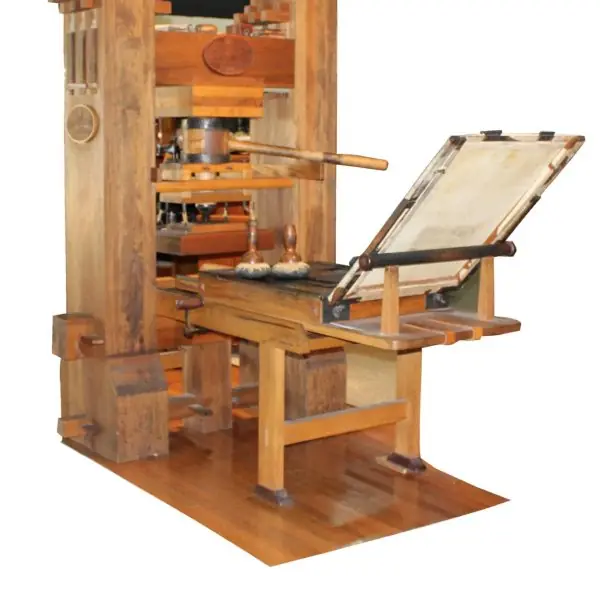
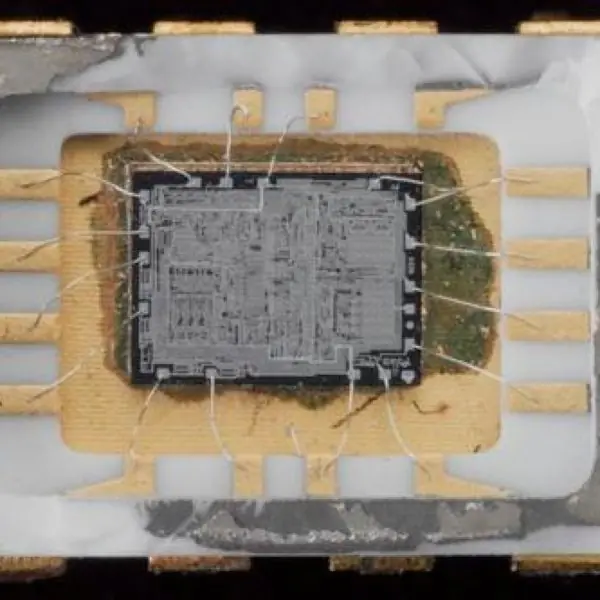
Each information revolution came with a machine. Plate 1.1 puts four of them side by side: the printing press, the vacuum-tube computer, the first microprocessor and today's smartphone.




1.6.1 Eight social impacts of computing
- Faster access to information. A student in Dolpa can now read the same article as a student in Kathmandu if a connection exists. Search engines, e-books and recorded lectures reduce the cost of learning. The gain is largest where libraries are few.
- New kinds of work. Software, freelancing, digital marketing and remote jobs did not exist at scale a generation ago. Many young Nepalis now earn from international clients. At the same time, some clerical jobs are shrinking.
- Easier payments and services. Fonepay, eSewa, Khalti and ConnectIPS let people pay bills without standing in a queue. Remittances reach families faster. Small shops gain customers who carry no cash.
- Stronger communication. Messaging and video calls keep migrant workers close to their families. Disaster alerts reach people within minutes. Community groups organise on social media.
- Privacy risks. Phones, apps and cameras record where we go and what we buy. This data can be sold, leaked or misused. People need clear rules and the habit of sharing less.
- Misinformation and harm. False news and scams spread as fast as true news. Online fraud and bullying cause real losses and distress. Media literacy and reporting channels are needed.
- Unequal access. Those with devices, electricity, skills and language benefit first. Others fall further behind, which is the digital divide of Unit 3. Public policy must widen access, not only improve it for the connected.
- Environmental cost. Devices use energy, minerals and water, and they become e-waste after a few years. Data centres draw large amounts of power. Responsible use and recycling reduce the damage (Unit 7).
Chapter summary
- Society, culture and structure change under many forces, technology among them; technology comprises artefacts, knowledge and organisation.
- Determinism, SCOT, co-production and ANT give four lenses; Winner's point is that designs carry politics.
- Information revolutions run from writing and printing to mobile, data and AI; Nepal leapfrogged fixed lines.
- Moore's law (doubling every ~2 years, √2 − 1 = 41.4% per year) explains the rapid fall in cost of computing; it is a trend, with physical limits.
- Social impacts are mixed in every domain; ask who benefits, who pays and who is absent.
Practice
- Define society, culture and social change.
- State the strong and soft forms of technological determinism and one objection.
- What does SCOT mean by "interpretive flexibility" and "closure"?
- How does actor-network theory explain the failure of a national ID project?
- Give a software example of an artefact with politics.
- Predict transistor counts for 2001 using N(y) = 2,300 × 2^((y − 1971)/2).
- By what factor does a quantity grow in 10 years if it doubles every 2 years?
- List the information revolutions from speech to AI in order.
- Give two benefits and two risks of mobile phones for Nepali migrant families.
- State three questions to ask when assessing a technology's social impact.
Answers and worked solutions
1. Society: people sharing territory, institutions and way of life. Culture: shared beliefs, values, language, customs. Social change: significant change in structure or culture over time.
2. Strong: technology automatically dictates social outcomes. Soft: it creates opportunities and pressures. Objection: the same technology has different effects in different societies, so social context matters.
3. Interpretive flexibility: different groups see different meanings and designs for an artefact. Closure: debate ends and one design becomes the accepted standard.
4. The system works only if all enrolled actors (centres, scanners, databases, officials, laws, citizens) cooperate; if any link fails (a rule not issued, an unreliable scanner) the network collapses.
5. A form that accepts only two gender options or cannot store a Nepali-language name; a face-recognition model trained on few skin tones.
6. (2001 − 1971)/2 = 15 doublings, so 2,300 × 2¹⁵ = 2,300 × 32,768 = 75,366,400.
7. 5 doublings: 2⁵ = 32.
8. Speech and writing, printing, electric communication, computing, networking, mobile and social, data and AI.
9. Benefits: free or cheap video calls; instant remittance. Risks: scams targeting remitters; weaker face-to-face bonds (also loan-app harassment).
10. Who benefits? Who pays or is harmed? Who is absent from the design and decision?
Model answers: medium (5 marks) and long (10 marks) questions
Q1 (5 marks). State Moore's law. Use it to predict the transistor count of a chip in 2021 starting from the Intel 4004 of 1971.
Introduction. In 1965 Gordon Moore noticed that the number of components on a chip was doubling regularly, and in 1975 he set the period at about two years. It is an empirical trend and an industry roadmap, not a law of physics (section 1.4).
Calculation. The Intel 4004 (1971) had about 2,300 transistors. From 1971 to 2021 is 50 years, so there are 50 / 2 = 25 doublings. The factor is 2^{25} = 33,554,432, so the predicted count is 2,300 x 33,554,432 = 77,175,193,600 (Figure 1.2).
| Year | Doublings | Predicted transistors |
|---|---|---|
| 1971 | 0 | 2,300 |
| 1991 | 10 | 2,355,200 |
| 2011 | 20 | 2,411,724,800 |
| 2021 | 25 | 77,175,193,600 |
Meaning. Doubling every two years is a growth of \sqrt{2} - 1 = 41.4% per year, compounding. Flagship processors of the early 2020s have tens of billions of transistors, so the trend has held roughly for fifty years.
Effect on society. Cheap, powerful chips made computers personal and then pocket-sized. The same cost curve explains why smartphones now reach villages.
Q2 (5 marks). Compare technological determinism and social shaping of technology, with an example from Nepal.
Introduction. People disagree about whether technology drives society or society drives technology (section 1.2).
- Technological determinism. Technology is the main cause of social change. The argument is that the printing press, the telegraph and the internet each forced new ways of living. A weakness is that the same technology has had different effects in different countries.
- Social shaping (social construction). Laws, markets, culture and choices decide which technologies are built and how they are used. Mobile money succeeded in some countries quickly and slowly in others because of regulation and trust, not just technology.
- Co-evolution (the usual modern view). Technology and society shape each other in a loop.
| Point | Determinism | Social shaping |
|---|---|---|
| Cause | Technology | Society and choices |
| Policy implication | Adapt to the tool | Steer the tool |
| Weakness | Ignores context | Underrates technical limits |
Nepali example. QR payments spread after Fonepay and banks agreed on shared standards, and after COVID-19 made cash risky. The technology existed earlier; policy, trust and need decided the timing.
Conclusion. A balanced answer says that technology opens possibilities and society chooses among them.
Q3 (10 marks). Describe the information revolutions in history and discuss the social impacts of computing, with examples from Nepal.
Introduction. An information revolution is a change in how information is recorded, copied or moved that reshapes society. History has several of them, and each arrived faster than the one before (section 1.3 and Figure 1.1).
The revolutions.
- Writing (c. 3200 BCE). Records outlive memory, so trade, law and administration become possible.
- Printing (c. 1450). Books become cheap (Plate 1.1a), literacy spreads and ideas travel faster than rulers can control.
- Telegraph and telephone (1844, 1876). Messages travel at the speed of electricity, linking markets and governments.
- Electronic computers (1946). ENIAC and its vacuum tubes (Plate 1.1b) automate calculation for the census, banks and science.
- Microprocessor (1971). The Intel 4004 (Plate 1.1c) begins the personal computer; Moore's law then multiplies power by a factor of 33 million in fifty years.
- Web and mobile (1991, 2007). Anyone can publish, and a smartphone (Plate 1.1d) is a computer, camera and bank in one hand.
Social impacts (section 1.5).
| Area | Positive effect | Negative effect |
|---|---|---|
| Education | Free lectures and e-books | Distraction, cheating |
| Work | Remote jobs, freelancing | Job loss from automation |
| Money | Fonepay, eSewa, ConnectIPS | Online fraud |
| Communication | Contact with migrant workers | Misinformation |
| Privacy | Personalised services | Tracking and data leaks |
| Environment | Paperless offices | E-waste and energy use |
Discussion. The benefits are real, but they are not equally shared. People without devices, skills or electricity gain little, so policy such as the Digital Nepal Framework matters.
Society should treat technology as a choice that can be steered by law, education and ethics, not as a force that cannot be questioned.
Conclusion. Each information revolution lowered the cost of information and raised the speed of change. Computing is the largest so far, so its social effects, good and bad, need deliberate management.