Chapter 7 · Reading · 5 questions in the paper · 14 min read
Reading Comprehension
What the syllabus asks for 4
- Passage reading: main idea, detail, inference, vocabulary in context, tone
- One passage, annotated
- Vocabulary in context and the extreme-word filter
- Eight traps in reading comprehension
The reading section has four or five questions on one or two passages; the Dean's Office model had a passage on genetic engineering with questions on tone, detail and what is "not true".
The passage is the easiest part of the English paper to prepare for, because the answer is always in the text. This chapter gives the method and then four original passages with eight questions each.
- Main idea and purpose: what the whole passage is for.
- Detail: a fact stated in the text; NOT/EXCEPT questions.
- Inference: what must follow from what is stated.
- Vocabulary in context: the meaning the word has here.
- Tone and attitude.
7.1 Passage reading: main idea, detail, inference, vocabulary in context, tone
- Read the questions first, then the passage once at normal speed. Mark names, numbers and contrast words (but, however, although).
- Main idea is in the first and last sentences, and the options that are too narrow (one detail) or too broad (a whole subject) are wrong.
- Detail questions: find the sentence, then compare it word by word with the option. A NOT question has three true statements and one false or absent one.
- Inference: the answer must follow from the text; extreme words (always, never, only, all) are usually wrong.
- Vocabulary in context: substitute each option into the sentence and keep the one that fits the surrounding meaning.
- Tone: words such as worrying, hopeful, mocking in the text give the attitude; a factual passage has an informative tone.
About 8 minutes for a 120-word passage with five questions: 2 minutes reading, 1 minute per question, and leave the hardest inference for last.
7.2 One passage, annotated
Passage 1 in Set A is about glaciers and rivers. Before you answer any question, split the passage into sentences and give each sentence a job: topic, detail, set-up, pivot or conclusion.
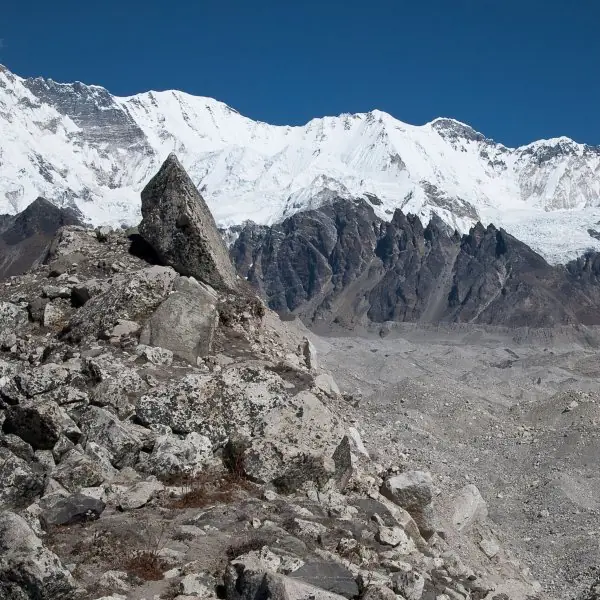
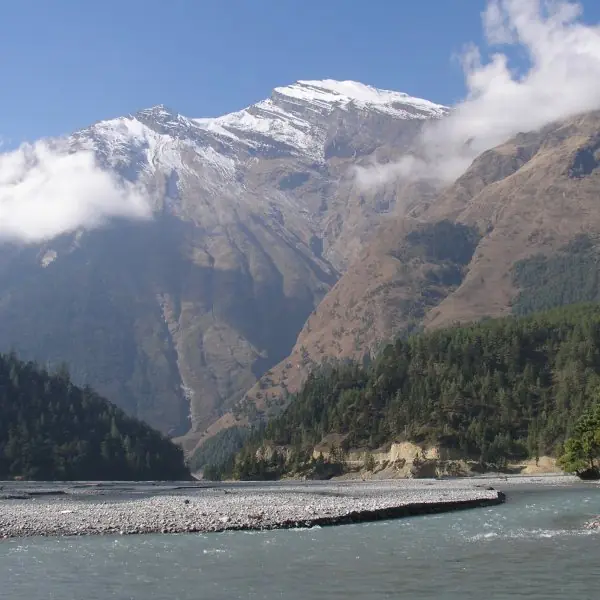
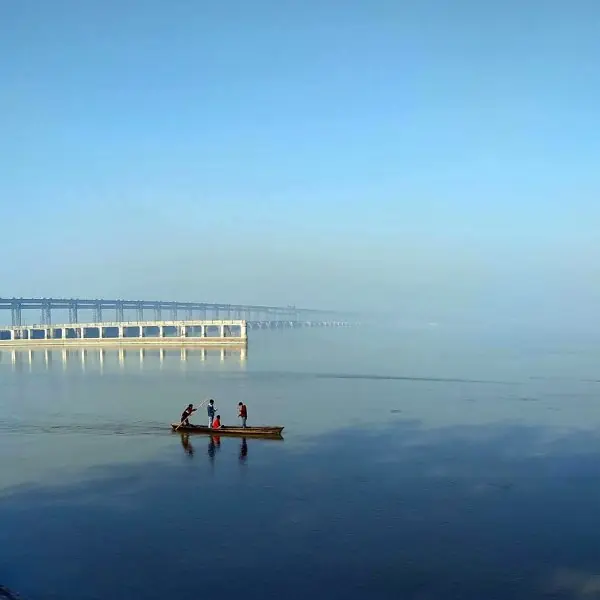
The pictures below show the real places the passage talks about, and Fig 7.1 marks up the text.


7.3 Vocabulary in context and the extreme-word filter
Two quick tests settle many questions. For a word in context, put each option into the sentence and keep the one that fits both grammar and meaning.
For an inference or detail question, scan the options for extreme words such as only, always, never and all: if the passage does not say it, the option is probably wrong.

7.4 Eight traps in reading comprehension
Each trap below is a way the paper makes a wrong option look right. The examples use Passage 1 from Set A.
- Read the questions before the passage. Two minutes of reading and one minute for each question is enough for a 120-word passage (Fig 7.2). Knowing the questions tells you what to underline: names, numbers and the words but and therefore.
- The correct main idea is a paraphrase. Question 1 is answered by "why shrinking glaciers matter to people downstream", yet the word downstream is not in the passage (Fig 7.2). Join the first and last sentences, then pick the option that says the same thing in other words.
- Reject options that are too narrow or too broad. "The length of Nepal's rivers" picks up a detail the text never states, and "the beauty of Himalayan peaks" is another subject. A main idea covers the whole passage, no more and no less.
- Compare detail options word by word. The text says most glaciers are shrinking, not all of them, and rivers keep flowing after the monsoon, not only during it (Fig 7.3). One changed word makes an option false.
- A NOT question has three true options. For "Which river is NOT mentioned?" check each river against the sentence: Koshi, Gandaki and Karnali are named, so the answer is the Brahmaputra (Fig 7.1). Do not choose an option just because it is true in real life.
- Do not go beyond the text in an inference. The melt "may even raise" river flows; it does not always do so. An inference must follow from the words, so hedges such as may and can matter, and options with only or always are suspect (Fig 7.3).
- Test vocabulary in context by substitution. Stake has several meanings, but only interest fits "have a stake in what happens on the peaks" (Fig 7.3). Do not choose the meaning you know best; choose the one the sentence needs.
- Read tone from the signal words. Scientists report, good news, But and therefore show a concerned and informative tone. An angry, humorous or indifferent tone needs words in the text that show it, and none appear here.
7.4.1 Worked checks
Q. Which river is NOT mentioned in Passage 1? (Koshi / Gandaki / Karnali / Brahmaputra)
Answer. The names in the text are the Koshi, the Gandaki and the Karnali, so the answer is the Brahmaputra (Fig 7.1).
Q. In the sentence "Farmers ... have a stake in what happens on the peaks", the word stake means (a pole / a bet / an interest / a danger).
Answer. Substituting each option shows that only an interest gives a sensible sentence (Fig 7.3).
Q. Why might the melt look like good news for a few decades?
Answer. Because the melt may raise river flows for a while (sentence 4, Fig 7.1). The next sentence begins with But and explains why this is only temporary.
Q. Choose the main idea: (a) beauty of peaks / (b) how to climb glaciers / (c) why shrinking glaciers matter downstream / (d) length of rivers.
Answer. Option (c) joins sentence 1 (snow and ice feed rivers) and sentence 6 (farmers have a stake); the other options are off topic or too narrow (Fig 7.2).
Formula and fact sheet
| Question type | Where the answer is |
|---|---|
| Main idea | first + last sentences |
| Detail | one sentence in the text |
| NOT / EXCEPT | three options are in the text |
| Inference | follows from the text, never beyond it |
| Vocabulary | the surrounding sentence |
Chapter summary
- Read the questions first.
- The answer is in the passage, not in your opinion.
- Reject options with always, never, only unless the text says so.
- Test vocabulary options by substitution.
- "NOT" means three options are true.
Practice questions
Set A — Passage 1
Nepal's rivers begin as snow and ice. In the high Himalaya, glaciers store water in winter and release it slowly through the warm months, so that the Koshi, the Gandaki and the Karnali keep flowing long after the monsoon has ended.
Scientists who study these glaciers report that most of them are shrinking as the climate warms. For a few decades the melt may even raise river flows, which can look like good news.
But a glacier that has thinned cannot be refilled quickly, and in the long run less ice means less water in the dry season.
Farmers in the hills and the plains therefore have a stake in what happens on the peaks, even if they have never seen a glacier.
- The passage is mainly aboutathe beauty of Himalayan peaksbhow to climb glacierscwhy shrinking glaciers matter to people downstreamdthe length of Nepal's rivers
- According to the passage, glaciers keep rivers flowingaafter the monsoon has endedbonly during the monsoonconly in winterdonly on the plains
- Why might the melt look like good news for a few decades?aglaciers grow biggerbfarmers stop using watercrainfall increasesdriver flows may rise at first
- In the long run, less ice meansamore floods onlybless water in the dry seasoncmore snowdno change
- The word "stake" in the passage meansaa poleba betcan interestda danger
- Which river is NOT mentioned in the passage?athe Koshibthe Gandakicthe Karnalidthe Brahmaputra
- The author's tone isaconcerned and informativebhumorouscangrydindifferent
- We can infer that a glacier that has thinnedarefills in one seasonbrecovers only slowlycturns into a riverdis unaffected
Answers and explanations — Set A
1. (c) — the passage links glacier loss to farmers downstream.
2. (a) — "long after the monsoon has ended".
3. (d) — "the melt may even raise river flows".
4. (b) — "less ice means less water in the dry season".
5. (c) — "have a stake" means have an interest.
6. (d) — only the Koshi, Gandaki and Karnali are named.
7. (a) — factual with an undercurrent of worry.
8. (b) — "cannot be refilled quickly".
Set B — Passage 2
Most beginners believe that programming is a talent that some people are born with. In practice it is closer to learning a musical instrument.
A student who writes a small program every day, reads the error messages carefully and fixes one bug at a time improves steadily, while a student who copies long programs without understanding them stalls.
Good programmers are not those who never make mistakes; they are the ones who find their mistakes quickly. They break a large problem into small steps, test each step, and keep notes about what failed.
Patience, rather than brilliance, is the quality that separates those who continue from those who give up.
- The passage compares programming toacookingblearning a musical instrumentcplaying footballdpainting
- Which student improves steadily?aone who copies long programsbone who never writes codecone who avoids errorsdone who writes a small program daily
- Good programmers are those whoafind their mistakes quicklybnever make mistakescmemorise codedwork alone
- The word "stalls" meansaspeeds upbends happilycstops progressingdturns back
- What separates those who continue from those who give up?atalentbluckcmoneydpatience
- The author's attitude isadiscouragingbencouragingcsarcasticdneutral
- Which is NOT advice given in the passage?atest each stepbkeep notes on what failedcavoid reading error messagesdbreak a problem into small steps
- "Brilliance" is contrasted withapatiencebtalentcpracticednotes
Answers and explanations — Set B
1. (b) — "closer to learning a musical instrument".
2. (d) — small daily programs improve steadily.
3. (a) — "they are the ones who find their mistakes quickly".
4. (c) — copying without understanding stops progress.
5. (d) — the last sentence names patience.
6. (b) — it tells beginners how to improve.
7. (c) — the passage says to read error messages carefully.
8. (a) — "patience, rather than brilliance".
Set C — Passage 3
Walk through the middle hills of Nepal and the slopes look like giant staircases. These terraces were cut by generations of farmers who needed flat ground to grow rice and millet on steep land.
A terrace holds soil in place during the monsoon, and it lets water move slowly from one level to the next so that each field gets a share.
The work is hard, because walls must be repaired every year and many young people have left for cities or abroad.
When a terrace is abandoned, the wall collapses within a few seasons and the soil that took centuries to build washes away. Keeping the terraces alive is therefore not only about food but also about protecting the hillside itself.
- Terraces were built toahold religious festivalsbstore water in lakescmark village boundariesdcreate flat land for farming on steep slopes
- During the monsoon a terrace helps byaholding the soil in placebstopping all raincgrowing treesdstoring grain
- Why are terraces being abandoned?arice is unprofitablebthere is too much raincmany young people have moved awaydlaws forbid them
- What happens when a terrace is abandoned?ait becomes fertilebthe wall collapses and soil washes awaycit floods at oncednothing changes
- "Generations" in the passage meansagovernmentsbvillagesclessonsdsuccessive groups of family members
- The main idea of the passage is that terracesamatter for food and for protecting the hillsidebare a tourist attractioncare cheap to maintaindare used only for rice
- Which crop is mentioned?awheatbteacmilletdmaize
- The author's tone isamockingbappreciative and concernedcboreddhostile
Answers and explanations — Set C
1. (d) — "needed flat ground to grow rice and millet on steep land".
2. (a) — "holds soil in place during the monsoon".
3. (c) — "many young people have left".
4. (b) — the wall collapses and soil washes away.
5. (d) — generations of farmers, one after another.
6. (a) — the last sentence.
7. (c) — rice and millet are named; millet is the option present.
8. (b) — respect for the work and worry for its loss.
Set D — Passage 4
A library card costs nothing, yet many students never get one. They say they have no time to read, but the same students spend hours each day scrolling through short videos.
Reading a book is slower and asks more of the mind, and that is exactly why it helps. A reader must follow an argument across many pages, hold ideas in memory and notice how sentences are built.
Those habits carry over to every subject and to every examination. A student who reads even twenty pages a day finishes more than twenty books in a year.
- Students who avoid libraries say they haveano timebno moneycno books at homedno interest in videos
- The same students spend hours each day onahomeworkbsportcshort videosdlibrary books
- According to the passage, reading helps because itais quickbasks more of the mindccosts nothingdneeds no effort
- Which skill is NOT mentioned as a benefit of reading?afollowing an argumentbholding ideas in memorycnoticing how sentences are builtdtyping quickly
- "Carry over" meansaliftbforgetctransferdend
- A student who reads twenty pages a dayafinishes more than twenty books in a yearbfinishes one book a yearcreads too little to matterdwill fail
- The author's purpose is toaentertainbdescribe a libraryccriticise teachersdpersuade students to read
- The cost of a library card isahighbnothingca small feednot stated
Answers and explanations — Set D
1. (a) — "they say they have no time to read".
2. (c) — "scrolling through short videos".
3. (b) — "asks more of the mind, and that is exactly why it helps".
4. (d) — typing is not mentioned.
5. (c) — habits transfer to other subjects.
6. (a) — 20 pages × 365 days is 7,300 pages, over twenty books of about 300 pages.
7. (d) — the passage urges students to read.
8. (b) — "costs nothing".