Unit 1 · Units · 19 min read
A Tour to Central Zoo / A Request Letter
What the syllabus asks for 5
- Reading a timetable and a schedule; finding information in a table
- A request letter: purpose, politeness and layout
- Grammar: modal verbs (can, could, would); present simple tense
- Writing: interpreting a timetable and a schedule; filling in a form
- Project work: designing a timetable; pronunciation: word stress
Unit 1 of your textbook is about information you have to use. Reading I is a school notice with a timetable for a tour to the Central Zoo; you must find times in it and work out how long things take.
Reading II is a request letter from grade 8 students asking their headteacher for a better computer lab. The grammar is the modal verbs can, could, would and the present simple tense.
In writing you interpret a sports timetable and fill in a hostel registration form.
(1) Answer questions from a timetable, including "how long" questions that need subtraction. (2) Make yes/no questions with can, could, would and fill blanks with them, using the negative where the meaning needs it.
(3) Put verbs in the present simple, with -s/-es for he, she, it. (4) Write a request letter in the correct layout. (5) Turn a timetable into a short paragraph.
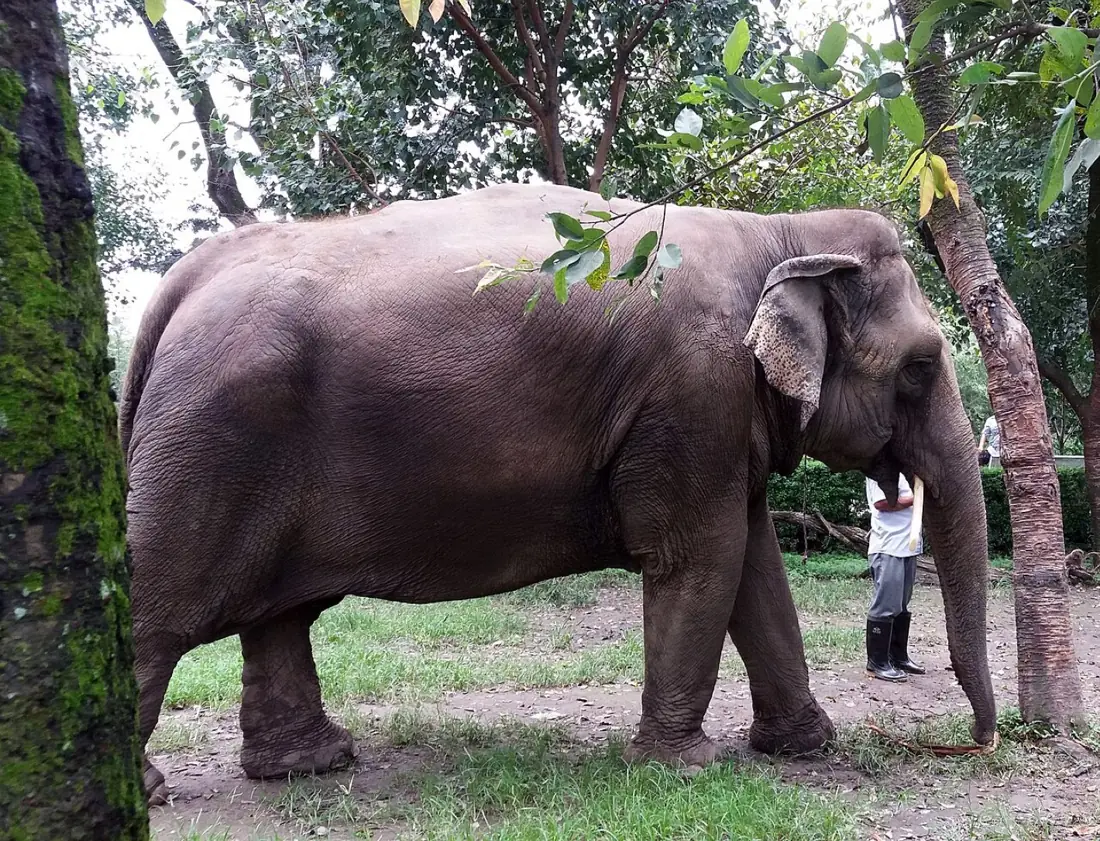
1.1 Reading I: A Tour to Central Zoo (timetable)
What the text is
The text is a notice from Saraswati Niketan Secondary School, Teku, Kathmandu, dated 20th June. It tells grade 8 students that the school is taking them on an educational tour to the Central Zoo, Jawalakhel, Lalitpur, on 24th June.
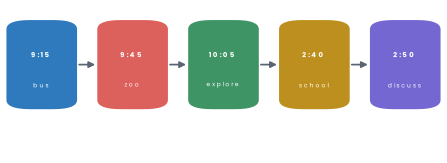
Most of the notice is a timetable: a list of activities on the left and the time of each on the right.
| Time | Activity |
|---|---|
| 9:00 a.m. | Arrive at school and arrange groups |
| 9:15 a.m. | Board the bus |
| 9:20 a.m. | Attendance |
| 9:45 a.m. | Reach Central Zoo |
| 10:00 a.m. | Form small animal groups |
| 10:05 a.m. | Enter the zoo |
| 10:05 a.m. – 2:00 p.m. | Explore the animals in the zoo |
| 2:10 p.m. | Board the bus |
| 2:15 p.m. | Attendance |
| 2:40 p.m. | Arrive back at school |
| 2:50 p.m. | Return to classroom |
| 2:50 p.m. – 4:00 p.m. | Grand discussion |
The students explore in four animal groups: birds, reptiles, mammals and amphibians. A note at the end says that Mrs. Karki, the English teacher, will lead the tour, and students must follow the timetable and her guidelines.
How to read a timetable
- Find the activity in the left column (e.g. Reach Central Zoo).
- Read the time next to it (9:45 a.m.).
- For a "how long" question, take two times and subtract: bus leaves 9:15, reaches zoo 9:45 → 30 minutes.
Vocabulary (Exercise A)
| Word | Meaning |
|---|---|
| tour | a visit to a place |
| board | to get on or into a vehicle |
| explore | to travel to or around an area to learn about it |
| grand | large and important |
| amphibian | an animal that can live both on land and in water (e.g. a frog) |
Answer key: a–iii, b–iv, c–i, d–v, e–ii.
Comprehension (Exercise B) — model answers
a. What time do the students need to arrive at school? They need to arrive at school at 9:00 a.m.
b. How long will it take them to reach the zoo from their school? They board the bus at 9:15 a.m. and reach the zoo at 9:45 a.m., so the journey takes about 30 minutes. (Counting from the attendance at 9:20, it is 25 minutes.)
c. Why do you think the teacher will take the students' attendance twice? To make sure that every student is on the bus — once before leaving school and once before leaving the zoo — so that nobody is lost or left behind.
d. Why do you think the students will explore the zoo in animal groups? Small groups are easier to manage, and each group can study one kind of animal (birds, reptiles, mammals or amphibians) closely and report on it in the grand discussion.
e. Who should the students contact if they have any problem during the tour? They should contact Mrs. Karki, the English teacher, who is leading the tour.
- Read a.m. and p.m. carefully: 2:00 p.m. is in the afternoon.
- Exploring lasts from 10:05 a.m. to 2:00 p.m. = 3 hours 55 minutes, not 4 hours and not 8 hours.
- Answer in a full sentence and give the exact time from the table.
1.2 Reading II: A Request Letter
What the letter says
The letter is written from Kushma-9, Parbat, on 27 April 2023, by the students of Grade 8 to the Headteacher of Adarsha Secondary School, Kushma, Parbat. Its subject is A request to increase computer lab facilities.
- Paragraph 1 – thanks. The students thank the headteacher for setting up a computer lab. It gives them up-to-date learning devices and technological knowledge.
- Paragraph 2 – the problem. The effort is "not quite sufficient". The lab lacks equipment: (1) there are not enough computers, (2) only a few computers have the required software, and (3) there is no internet connection, so they cannot reach the "vast world of knowledge and information".
- Paragraph 3 – the request. They would be thankful if the headteacher provided everything a modern lab needs, and they await a reply.
Notice the polite structure: thank first, explain the problem with reasons, then request. The request uses would: "We would be thankful if you provided…".
Vocabulary (Exercise A — unscrambled)
| Meaning | Word |
|---|---|
| having qualities that you admire and respect | admirable |
| not having enough of something | lacking |
| tools needed for a particular purpose | equipment |
| large in area, amount, etc. | vast |
| the programmes used by a computer | software |
Comprehension (Exercise B) — model answers
a. Who wrote the letter? The students of Grade 8 of Adarsha Secondary School, Kushma, Parbat, wrote the letter.
b. Who is the letter addressed to? It is addressed to the Headteacher of Adarsha Secondary School.
c. Why are the students grateful to the headteacher? Because he/she has succeeded in establishing a computer lab at their school.
d. Why are the students very happy about the computer lab? Because it gives them the most up-to-date learning devices and helps them gain technological knowledge.
e. List the three issues the students talk about. (i) There are not enough computers. (ii) Only a few computers have the required software installed. (iii) The lab has no internet connection.
Layout of a request letter
| Part | In the textbook letter |
|---|---|
| Sender's address and date | Kushma-9, Parbat / 27 April 2023 |
| Receiver's address | The Headteacher, Adarsha Secondary School, Kushma, Parbat |
| Subject | A request to increase computer lab facilities |
| Salutation | Respected sir/madam |
| Body | thanks → problem with reasons → request |
| Closing | Yours faithfully, |
| Signature | Students of Grade 8 |
1.3 Grammar I: Modal verbs — can, could, would
Modal verbs are helping verbs. They never take -s, -ing or -ed, and they are always followed by the base form of the verb (can swim, not can swims or can to swim).
| Modal | Main uses | Example |
|---|---|---|
| can | present ability; informal request; permission | Ganesh can cook Thakali food. Can I sit here? |
| could | past ability; polite request; possibility | I couldn't go to the party last night. Could you tell me the day of the visit? |
| would | very polite request; imagined result (if…); wish; would rather (preference) | Would you tell the time again, please? If I had a car, I would drive it. I'd rather go to the cinema. |
Negatives: cannot/can't, could not/couldn't, would not/wouldn't.
Yes/no questions: move the modal to the front. They could rescue the victims. → Could they rescue the victims?
Textbook answers
Exercise A (yes/no questions): a. Could they rescue the victims? b. Can Linda win the match? c. Can your mother drive a car? d. Could you help me?
(In a question you stays; me stays.) e. Would he suggest a solution to a problem? f. Would they do social work? g. Would your father take us to the park? h. Could you come to meet me?
Exercise B (blanks): a. couldn't (past + sick) b. Can (answer is "Yes, he can") c. couldn't … can (last year not able, now able) d. would (imagined result after If I had) e. could (some were able to fly) f. would (after I wish they) g. can't (glasses are missing) h. would (would rather = prefer).
- She cans drive. ✗ → She can drive. ✓
- Could you to help me? ✗ → Could you help me? ✓
- Last year I can't swim. ✗ → Last year I couldn't swim. ✓ (past ability = could)
- Can you lend me your pen, sir? is acceptable but plain; to a teacher or in a letter, Could/Would you…, please? is more polite.
1.4 Grammar II: The present simple tense
Use the present simple for habits (Peter starts his day at 7:00), facts (an apple a day keeps the doctor away) and timetables (the bus to Dharan leaves at 9:00 a.m.).
| Subject | Positive | Negative | Question |
|---|---|---|---|
| I / you / we / they / plural nouns | work | don't work | Do they work? |
| he / she / it / singular nouns | works | doesn't work | Does he work? |
Spelling of the -s form: add -es after -s, -sh, -ch, -x, -o (goes, watches); consonant + y → -ies (tidy → tidies); have → has; be → am/is/are. After does/doesn't use the base form (Does she work? not Does she works?).
Word order with frequency adverbs: always, never, usually go before the main verb but after be: She always drives too fast. / He is always late.
Textbook answers
Exercise A: a. are b. provides c. helps d. have e. limits
Exercise B (jumbled sentences): a. He works in a department store. b. Suman does his laundry at the weekend. c. My friends and I go to the cinema once a month. d. My neighbour never gives me a nice gift. e. Akash always loves playing the guitar. f. My mother is a doctor. g. She always drives her scooter too fast. h. A lot of people work during the day. i. Where does your brother work? j. What time does your sister get up every day?
Exercise C (Peter Hanson): starts, has, likes, has, believes, keeps, makes, tidies, gets, is; start, have, love, rehearse, are, want; don't have, doesn't like, are.
- My friends goes to school. ✗ → My friends go… (plural subject, no -s)
- She don't like it. ✗ → She doesn't like it. ✓
- Where your brother works? ✗ → Where does your brother work? ✓
1.5 Writing: interpreting a timetable and filling in a form
Interpreting a timetable
To interpret a timetable, turn the table into connected sentences. Start with what the event is, where and when; then go through the days in order; use the present simple or the future (will), and linking words (first, then, on the following day, finally).
Model answer — Inter-house Football Tournament (textbook Writing A)
Problem. Study the sports timetable of Janata Secondary School and interpret it.
Solution. Janata Secondary School is organising a three-day Inter-house Football Tournament from May 3 to May 5. On May 3, the morning session, from 10:00 to 12:00, is for the opening ceremony and the registration of teams and players.
From 1:00 p.m. onwards, Sagarmatha House plays against Manaslu House. On May 4, grade 8 students give a cultural performance in the morning, and in the afternoon Machhapuchhre House plays against Annapurna House.
On the last day, May 5, the final match is played in the morning, and the tournament ends in the afternoon with the prize distribution and the closing ceremony.
(Note: the textbook prints "10.00–12.00 am"; strictly, 12:00 is noon, so write "from 10 a.m. to 12 noon".)
Filling in a form (Writing B)
The hostel registration form of Mero Janmabhumi Secondary School asks for the date of registration, full name, date of birth, gender, roll number, grade, parent's and local guardian's names, e-mails and contact numbers, permanent and current address, and three signatures (student, parent/guardian, warden).
- Write names in BLOCK letters when the form says so.
- Write dates in the boxes given: DD / MM / YYYY.
- Tick (✓) only one gender box.
- Do not leave any required box empty; do not sign in the warden's box.
1.6 Speaking, listening, pronunciation and project work
Word stress. In a word of two or more syllables, one syllable is said more strongly.
The textbook marks it with ' before the stressed syllable: a'ttendance, a'rrange, 'mammal, 'reptile, a'rrival, ex'plore, a'rrive, am'phibian, re'turn, in'form.
Many two-syllable verbs are stressed on the second syllable (ar'rive, ex'plore); many two-syllable nouns on the first ('mammal, 'reptile).
Speaking. Raima asks her teacher about a museum visit: "Could you tell me the day of the visit?" and "Sorry, would you tell the time again, please?" These are polite ways of asking for information and asking for repetition.
For the textbook situations: Could you tell me your mobile number, please? / Can you tell me how much a cup of coffee costs? / Could you tell me what time the next bus for Pokhara leaves? / Would you tell me how far the hospital is?
Project work. In groups, design an ideal weekly class timetable (subjects, times, days) and display it.
Chapter summary
- A timetable lists activities and times; for "how long", subtract one time from another (9:15 → 9:45 = 30 minutes).
- The zoo notice: tour on 24th June, led by Mrs. Karki; four animal groups — birds, reptiles, mammals, amphibians; attendance twice.
- The request letter: thanks → problem (too few computers, little software, no internet) → polite request with would; closes Yours faithfully.
- can = present ability/informal request; could = past ability/polite request; would = very polite request, imagined result, wish, would rather.
- Modal + base verb; no -s; question = modal first.
- Present simple: habits, facts, timetables; he/she/it + -s/-es/-ies; does/doesn't + base verb.
- Interpreting a timetable = turning it into connected sentences in order.
Practice questions
Reading
- Read this (practice) timetable and answer the questions. [5]
| Time | Activity — Science Exhibition Day |
|---|---|
| 10:00 a.m. | Opening by the chief guest |
| 10:30 a.m. – 1:00 p.m. | Visitors see the projects |
| 1:00 p.m. – 1:45 p.m. | Lunch break |
| 1:45 p.m. – 3:15 p.m. | Judges visit each stall |
| 3:30 p.m. | Prize distribution |
(a) What happens at 10:00 a.m.? (b) How long can visitors see the projects? (c) How long is the lunch break? (d) How long do the judges spend at the stalls? (e) What is the last activity of the day?
Answers — Reading
1.(a) The chief guest opens the exhibition.(b) Two and a half hours (10:30 a.m. to 1:00 p.m.).(c) 45 minutes.(d) One and a half hours (1:45 to 3:15).(e) The prize distribution at 3:30 p.m.
Grammar
- Fill in the blanks with can, could or would (negative if needed). [5]aWhen I was six, I ______ swim, but now I can.b______ you please open the window?cMy grandfather ______ read without glasses; his eyes are still good.dIf I won a prize, I ______ buy a bicycle.eI ______ rather stay at home today.
- Change into yes/no questions. [3]aShe can speak French.bThey would help the poor.cYou could carry this bag.
- Put the verbs in the present simple. [5] My brother (get) up at six. He (wash) his face and (study) for an hour. He (not/eat) breakfast at home. The school bus (leave) at 8:30.
Answers — Grammar
2.(a) couldn't(b) Could/Would(c) can(d) would(e) would
3.(a) Can she speak French?(b) Would they help the poor?(c) Could you carry this bag?
4. gets, washes, studies, doesn't eat, leaves
Writing
- Write a letter to your headteacher requesting him/her to manage clean drinking water in your school. [5]
- Interpret your school's weekly timetable for grade 8 in about 80 words. [5]
Answers — Writing
5. Model: Gorkha-5, Gorkha / 2 Shrawan 2082 / The Headteacher, Shree Janajyoti Secondary School, Gorkha / Subject: Request for clean drinking water / Respected Sir/Madam, We, the students of grade 8, thank you for the many improvements in our school this year. However, our school has no safe drinking water. The only tap is often dry and the water tank has not been cleaned for months. Many students bring no water from home and some have fallen ill with stomach problems. We would be grateful if you could install a water filter and arrange regular cleaning of the tank. We hope you will consider our request. Yours faithfully, Students of Grade 8.
6. Marks for: an opening sentence (what the timetable is for), every day in order, times and subjects stated correctly, linking words, present simple.
Group D: Long writing and model answers
Group D — Extended answers (8 to 10 marks each, for deeper revision)
- Write a formal request letter to your headteacher asking for a school tour to the Central Zoo. [10]
- Explain the modal verbs can, could and would and the present simple tense with examples. [10]


Model answer D1: a formal request letter (10 marks)
Introduction. A formal request letter is written to a person in authority, such as a headteacher. It uses polite language, a clear subject line and a fixed layout. The writer must give the reason for the request, the details, and thanks.
Model letter.
Shree Janajyoti Secondary School, Gorkha
12 Baisakh 2082
The Headteacher
Shree Janajyoti Secondary School, Gorkha
Subject: Request for a school tour to the Central Zoo
Respected Sir/Madam,
We, the students of grade 8, thank you for the new science laboratory this year. We are now studying the chapter on wild animals, and we would like to see them with our own eyes.
So we kindly request you to arrange a one-day tour to the Central Zoo, Jawalakhel, on a Friday in Jestha. We would travel by school bus, and every student would pay Rs. 300 for the ticket and lunch. Our class teacher, Mrs.
Karki, has agreed to lead the group. We would be grateful if you could give us permission and a bus.
Yours faithfully,
Grade 8 students
How the letter is built (the points an examiner looks for).
- Sender's address and date at the top right (or left).
- Receiver's name and address below the date.
- Subject line that tells the purpose in one short phrase.
- Salutation: Respected Sir/Madam, with a comma.
- Opening: a polite thank-you or a friendly sentence.
- Body: the problem or need, then the request with would or could.
- Closing: Yours faithfully for an unknown or formal reader, then the name.
- Language: polite modals, no short forms, no slang.
| Part | Weak writing | Good writing |
|---|---|---|
| Request | Give us a bus. | We would be grateful if you could arrange a bus. |
| Reason | We want to go. | We are studying wild animals this term. |
| Ending | Bye | Yours faithfully |
Conclusion. A good letter is short, polite and complete: layout 3 marks, content 4 marks, language 3 marks.
Model answer D2: modal verbs and the present simple (10 marks)
Introduction. A modal verb is a helping verb such as can, could and would. It comes before the base verb and never takes -s. The present simple tells about habits, facts and timetables.
Uses of the modal verbs.
- can = present ability: Raima can read a timetable.
- can = informal request: Can you open the door?
- could = past ability: I could swim when I was six.
- could = polite request: Could you tell me the time?
- would = very polite request: Would you help me, please?
- would = imagined result: I would buy a book if I had Rs. 500.
- would rather = preference: I would rather stay at home.
- Question form: the modal goes first: Can she sing?
The present simple (rules).
- Use it for a habit: She walks to school.
- Use it for a fact: Water boils at 100 °C.
- Use it for a timetable: The tour starts at 9 a.m.
- With he/she/it add -s/-es; study becomes studies.
- Negative and question use do/does + base verb: He doesn't eat meat. Does he eat meat?
| Form | I / you / we / they | He / she / it |
|---|---|---|
| Positive | play | plays |
| Negative | do not play | does not play |
| Question | Do ... play? | Does ... play? |
Conclusion. Remember that after a modal and after does the verb stays in its base form.
Practise more: English question bank