Unit 5 · Science and Technology · 31 min read
Physiological Structure and Life Process
What the syllabus asks for 5
- Nervous and endocrine systems
- reproduction
- circulation
- excretion
- homeostasis
Your body is a living machine of organ systems that work together. While you read this page, your eyes and brain are working, your heart is pumping blood, your kidneys are cleaning it and your hormones are keeping you alert or calm.
This unit studies how the nervous and endocrine systems coordinate the body, how new human beings are born, how blood circulates, how waste is removed, and how the body keeps its inner conditions steady (homeostasis).
This is the longest biology unit.
Expect labelled diagrams (neuron, reflex arc, human heart, nephron or kidney), functions of glands and their hormones, the menstrual cycle, the path of blood through the heart (double circulation), blood groups, urine formation, and homeostasis of temperature and blood sugar.
Draw and label every diagram at least once.
5.1 Nervous and endocrine systems
The two systems of coordination keep the activities of the body working together and let it respond to changes (stimuli). The nervous system acts quickly through electrical signals; the endocrine system acts slowly through chemical messengers (hormones).
| Nervous system | Endocrine system |
|---|---|
| Messages are electrical impulses carried by nerves | Messages are chemicals (hormones) carried by blood |
| Very fast, in milliseconds | Slower, from seconds to days |
| Effect is short-lived | Effect lasts longer |
| Acts on a specific organ | May act on many organs |
The nervous system
The nervous system is made of neurons (nerve cells). It has two main parts:
- Central nervous system (CNS): the brain and the spinal cord.
- Peripheral nervous system (PNS): the nerves that join the CNS to all parts of the body (12 pairs of cranial nerves from the brain and 31 pairs of spinal nerves from the spinal cord).
Neuron. A neuron has a cell body (with nucleus), short branches called dendrites that receive impulses, and a long axon that carries impulses away; the axon is often covered by an insulating myelin sheath.
The end of the axon meets the next neuron at a gap called a synapse, which the impulse crosses by chemicals (neurotransmitters).
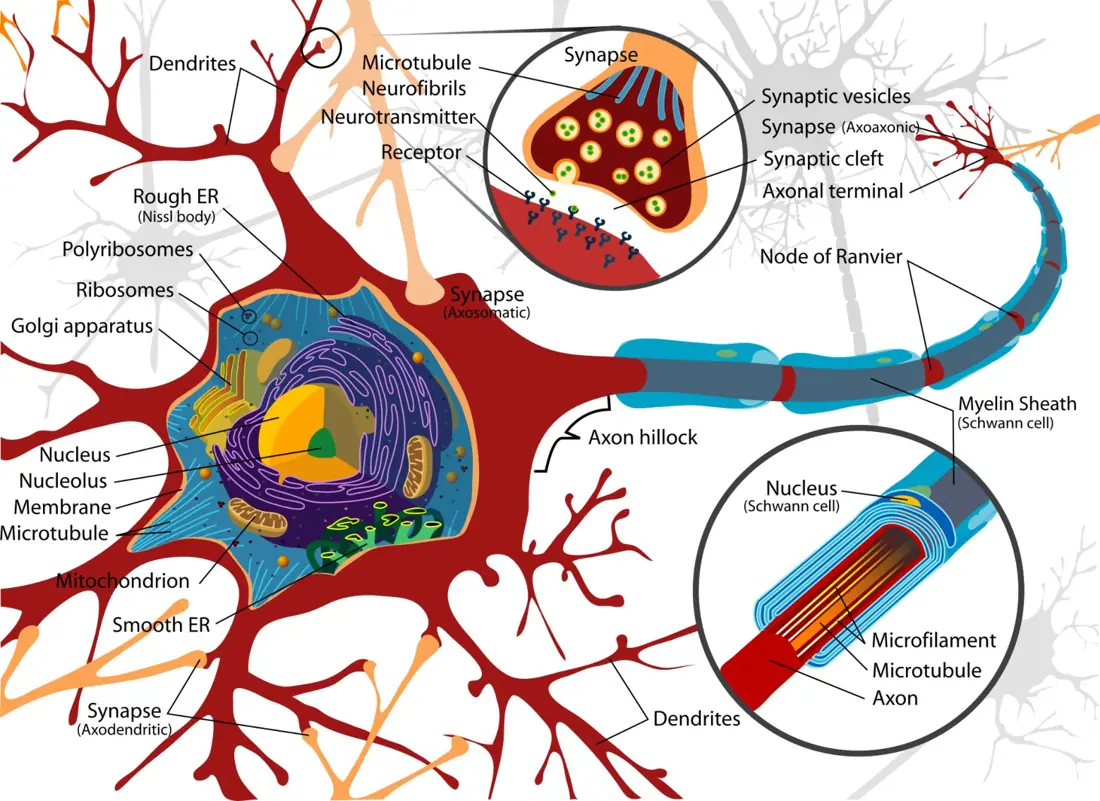
Neurons are of three kinds:
| Type | Function |
|---|---|
| Sensory neuron | Carries impulses from the sense organs (receptors) to the CNS |
| Motor neuron | Carries impulses from the CNS to muscles or glands (effectors) |
| Relay (connecting) neuron | Joins sensory and motor neurons inside the CNS |
The brain
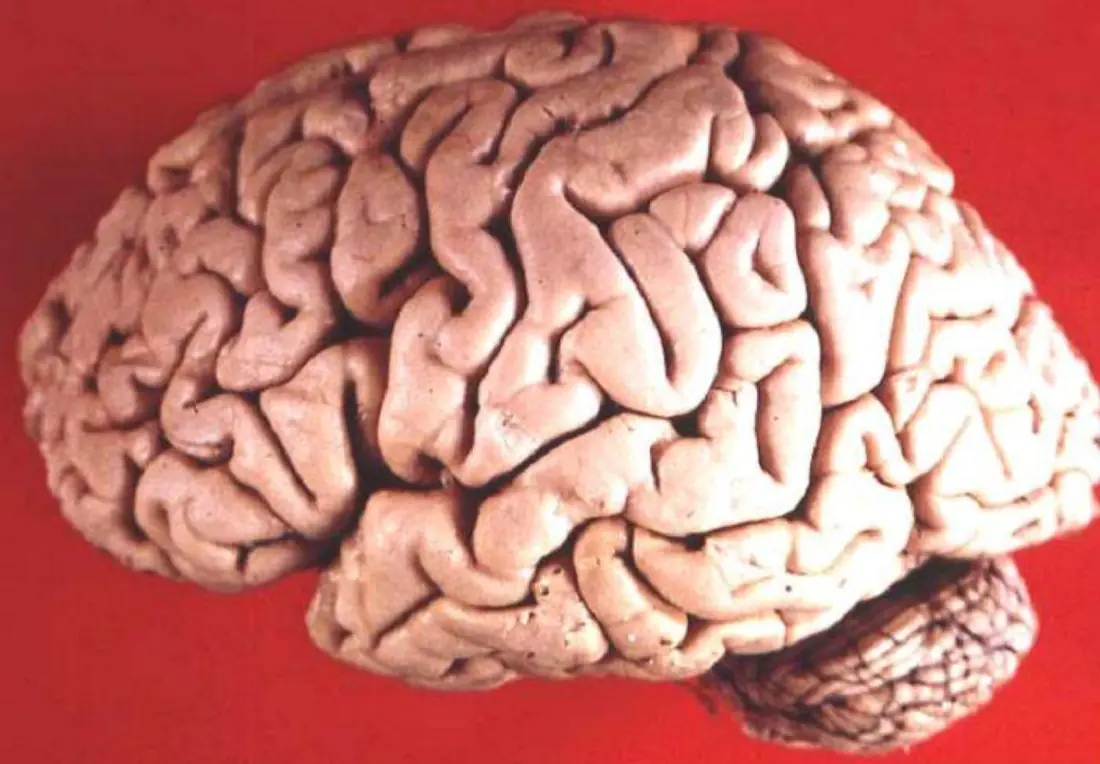
The brain is protected by the skull, by three membranes (meninges) and by a fluid (cerebrospinal fluid). It weighs about 1.4 kg and has three main parts.
| Part | Function |
|---|---|
| Cerebrum (the largest part, with two hemispheres) | Thinking, memory, intelligence, will, speech, seeing and hearing, voluntary movement |
| Cerebellum (behind and below the cerebrum) | Balance of the body, posture and smooth movement |
| Medulla oblongata (brain stem, joins the spinal cord) | Controls involuntary actions: heartbeat, breathing, swallowing, vomiting, blood pressure |
Other parts: the thalamus relays signals, and the hypothalamus controls body temperature, hunger and thirst and links the nervous system with the endocrine system through the pituitary gland.
Spinal cord, reflex action
The spinal cord is a cord of nervous tissue about 45 cm long, inside the backbone. It carries impulses between the brain and the body and is the centre of reflex actions.
A reflex action is a quick, automatic response to a stimulus that does not need the will or thought. It is controlled by the spinal cord (or the brainstem) without waiting for the brain.
Examples: pulling the hand away from a hot object; blinking when dust enters the eye; knee jerk; sneezing; coughing.
The path of a reflex action is the reflex arc:
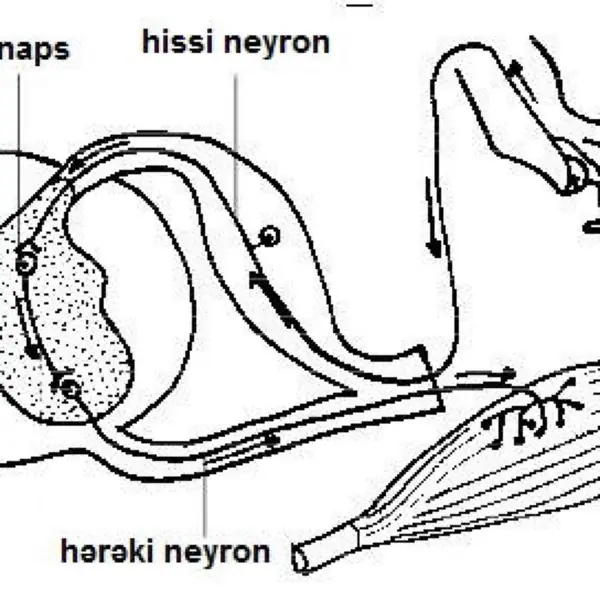
Stimulus → receptor (skin) → sensory neuron → spinal cord (relay neuron) → motor neuron → effector (muscle) → response.
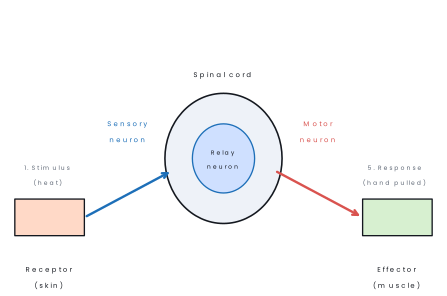
Do not say that the brain controls a reflex action. The brain is informed afterwards (that is why you feel the pain after pulling your hand away). The reflex centre is the spinal cord. Reflex action is involuntary; walking or writing are voluntary actions.
Sense organs
The five sense organs are the eye (sight), ear (hearing and balance), nose (smell), tongue (taste) and skin (touch, pain, temperature). Each has receptors that turn a stimulus into an impulse.
The endocrine system
The endocrine system is a set of ductless glands that make hormones and pour them straight into the blood. Hormones are chemical messengers; they work in tiny amounts and act on target organs.
| Gland | Position | Hormone | Function / disorder |
|---|---|---|---|
| Pituitary (master gland) | Base of the brain | Growth hormone (GH) | Growth of bones. Too little: dwarfism; too much: gigantism |
| TSH, ACTH, FSH, LH | Control other glands | ||
| ADH | Water absorption in kidney; lack causes diabetes insipidus | ||
| Oxytocin | Contraction of uterus at birth; milk release | ||
| Thyroid | Neck, in front of windpipe | Thyroxine (needs iodine) | Controls metabolism. Too little: goitre (in adults), cretinism (in children) |
| Parathyroid | Behind the thyroid | Parathormone | Keeps calcium level in blood |
| Adrenal | On top of each kidney | Adrenaline | "Fight, flight or fright": raises heartbeat and blood sugar |
| Pancreas | Below the stomach | Insulin, glucagon | Control blood sugar. Lack of insulin: diabetes mellitus |
| Ovary (female) | Lower abdomen | Oestrogen, progesterone | Female sex characters; menstrual cycle |
| Testis (male) | Scrotum | Testosterone | Male sex characters, sperm formation |
Diseases to remember: goitre (swollen neck from lack of iodine; prevented by iodised salt), diabetes mellitus (high blood sugar, from lack of insulin), dwarfism and gigantism (growth hormone).
The pituitary is called the master gland because it controls most of the other glands. It is, in turn, controlled by the hypothalamus.
5.2 Reproduction
Reproduction is the production of new individuals of the same kind. Humans reproduce sexually: a male gamete (sperm) fuses with a female gamete (egg or ovum) in fertilisation.
Male reproductive system
| Organ | Function |
|---|---|
| Testes (a pair, in the scrotum) | Make sperms and the hormone testosterone. The scrotum keeps them about 2–3 °C cooler than the body |
| Epididymis | Stores sperms and lets them mature |
| Vas deferens | Tube carrying sperms from the epididymis |
| Seminal vesicle, prostate gland | Make a fluid that feeds the sperms; with the sperm it forms semen |
| Urethra and penis | Carry semen (and urine) out of the body |
Female reproductive system
| Organ | Function |
|---|---|
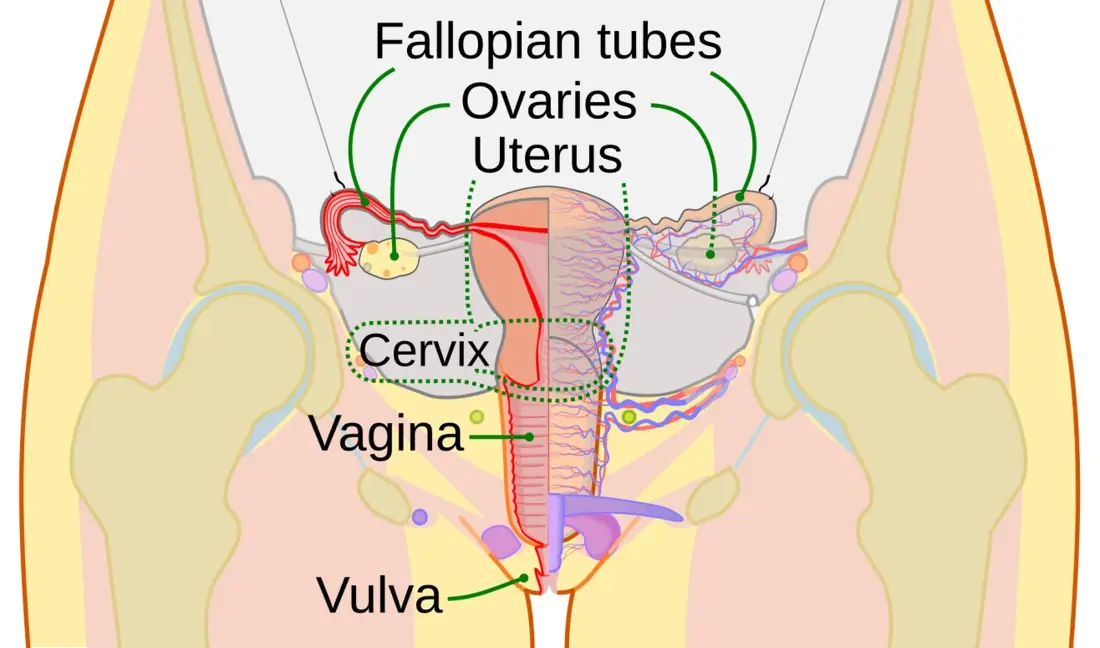
| Ovaries (a pair) | Produce an egg about every 28 days; make oestrogen and progesterone |
| Fallopian tubes (oviducts) | Carry the egg to the uterus; fertilisation takes place here |
| Uterus (womb) | A pear-shaped muscular organ where the embryo grows |
| Cervix | The neck of the uterus |
| Vagina | Receives the sperm; the birth canal |
Puberty, gametes and menstruation
At puberty (about 10–14 years in girls, 12–16 in boys), the sex hormones start the secondary sexual characters: in boys, deeper voice, beard and broad shoulders; in girls, breast development and wider hips.
A girl begins to have the monthly menstrual cycle (first period = menarche), and it stops around the age of 45–50 (menopause).
The menstrual cycle
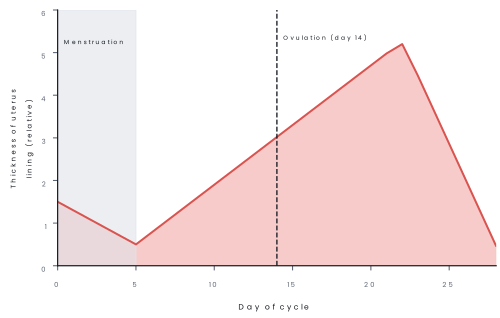
The cycle averages 28 days and is controlled by FSH and LH from the pituitary and oestrogen and progesterone from the ovary.
| Days | Event |
|---|---|
| 1–5 | Menstruation: the lining of the uterus breaks down and leaves the body with blood |
| 6–13 | The uterus lining rebuilds under oestrogen; an egg ripens in the ovary |
| About 14 | Ovulation: the ripe egg is released from the ovary (LH peak) |
| 15–28 | The uterus lining thickens under progesterone. If the egg is not fertilised, the hormone level falls and menstruation starts again |
If the egg is fertilised and settles in the uterus wall (implantation), menstruation stops and pregnancy begins.
Problem. A woman has a regular 28-day cycle and her last period started on 3 June. Find(a) the expected date of ovulation,(b) the date of the next period.
Solution.
(a) Ovulation is about day 14 of the cycle. Day 1 = 3 June, so day 14 = 3 June + 13 days = 16 June.
(b) The next period starts on day 29 = 3 June + 28 days = 1 July. (June has 30 days: 3 + 28 = 31, which is 1 July.)
Fertilisation, pregnancy and birth
- Fertilisation: a sperm fuses with the egg in the fallopian tube to form a zygote (2n = 46).
- The zygote divides repeatedly while moving to the uterus and sinks into the lining (implantation) after about 6–7 days. It is now an embryo.
- The placenta forms from the embryo and the uterine wall. Through it the mother gives food and oxygen to the baby and takes away wastes; the umbilical cord joins the baby to the placenta.
- The baby floats in the amniotic fluid inside the amniotic sac, which protects it from shocks. After the eighth week it is called a foetus.
- Gestation lasts about 9 months (about 280 days or 40 weeks). The birth (parturition) is helped by oxytocin; the mother's body then makes milk (prolactin).
After birth the mother's breast milk is the best food for the baby, as it has the right nutrients and antibodies.
Twins
Identical twins form when one fertilised egg splits into two embryos; they have the same sex and genes. Fraternal twins form from two eggs fertilised by two sperms; they may be of different sex and look no more alike than other brothers and sisters.
Family planning and reproductive health
Birth control (contraception) methods: barrier methods (condom), hormonal pills and injections, the intrauterine device (copper-T), and surgical methods (vasectomy in men, tubectomy in women).
Condoms also protect from sexually transmitted infections (STIs) such as HIV/AIDS, syphilis and gonorrhoea.
Early marriage and teenage pregnancy are dangerous to the health of both mother and child; in Nepal the legal age of marriage is 20 years. Healthy habits, correct knowledge and regular health check-ups protect reproductive health.
5.3 Circulation
The circulatory system carries oxygen, digested food, hormones and waste products around the body. It has blood (the fluid), the heart (the pump) and blood vessels (the pipes).
Blood
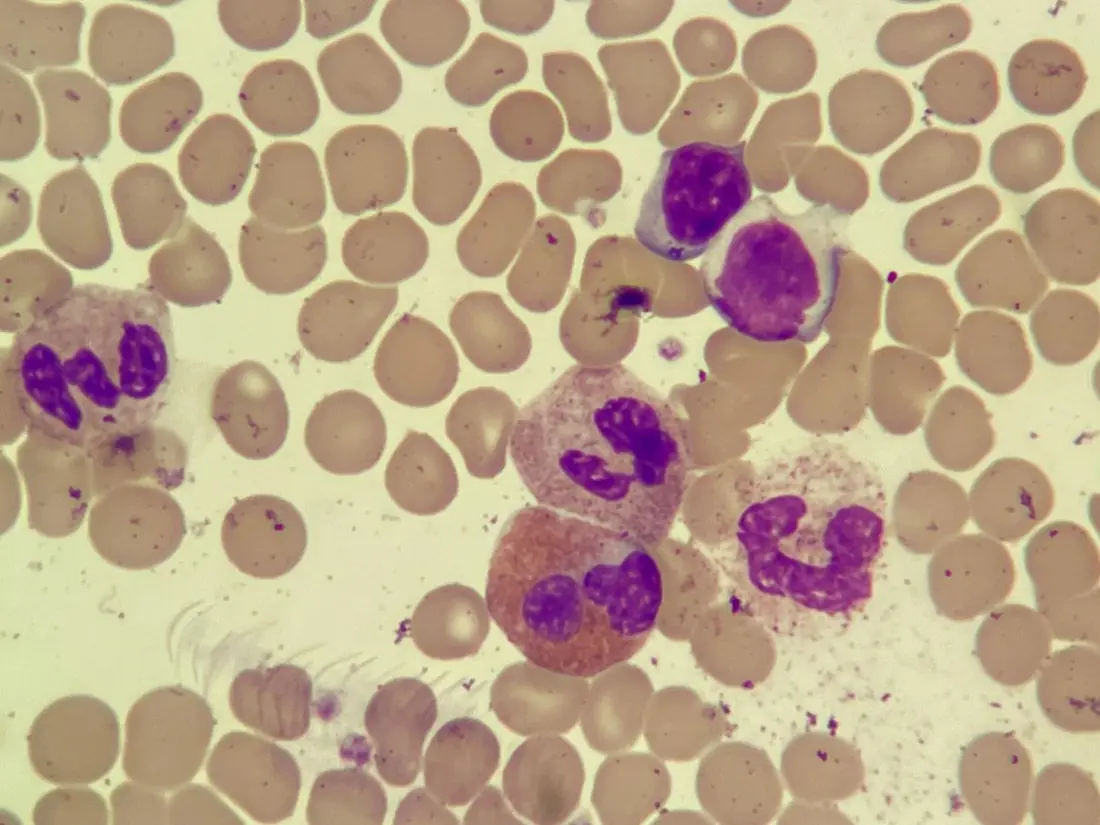
An adult has about 5 litres of blood, which is about 7–8% of the body mass. Blood is made of a liquid, plasma (about 55%), and cells (about 45%).
| Component | Feature | Function |
|---|---|---|
| Plasma | Pale yellow liquid, 90% water | Carries food, hormones, wastes (urea), carbon dioxide |
| Red blood cells (RBC, erythrocytes) | Biconcave discs, no nucleus, contain haemoglobin; 4.5–5.5 million per mm³; live about 120 days; made in the bone marrow | Carry oxygen (as oxyhaemoglobin) |
| White blood cells (WBC, leucocytes) | Larger, with a nucleus; 5,000–10,000 per mm³ | Fight germs by eating them or making antibodies |
| Platelets (thrombocytes) | Cell fragments; 1.5–4 lakh per mm³ | Help the blood to clot at a wound |
Haemoglobin is an iron-containing red pigment. Lack of iron or of haemoglobin causes anaemia. Green vegetables, liver, beans and jaggery (sakhar) are rich in iron.
Blood groups. In 1901 Karl Landsteiner found the ABO blood groups, based on the antigens (A, B) on the red cells and antibodies in the plasma.
A person with group O can donate to all (universal donor) and one with group AB can receive from all (universal recipient). The Rh factor is another antigen: people with it are Rh⁺, those without are Rh⁻.
| Blood group | Antigen on RBC | Antibody in plasma | Can donate to | Can receive from |
|---|---|---|---|---|
| A | A | anti-B | A, AB | A, O |
| B | B | anti-A | B, AB | B, O |
| AB | A and B | none | AB | A, B, AB, O |
| O | none | anti-A and anti-B | A, B, AB, O | O |
The heart
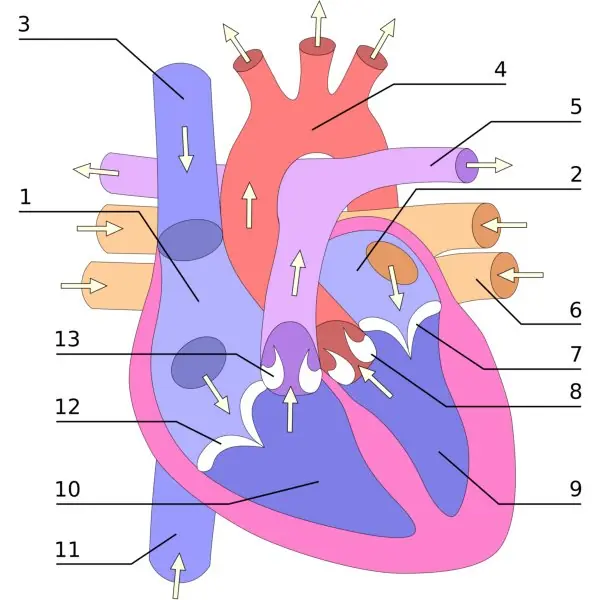
The heart is a muscular organ about the size of a fist, between the lungs, a little to the left. It has four chambers:
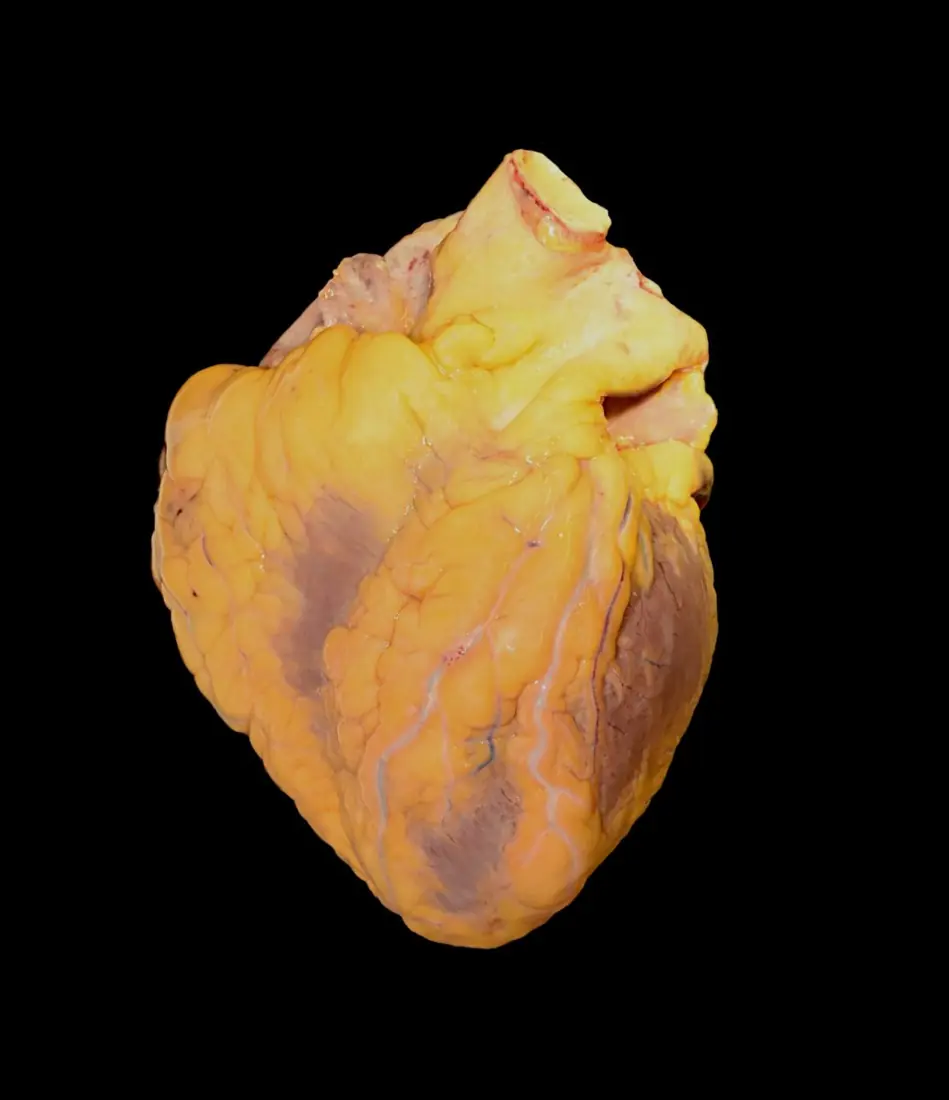
- two upper atria (auricles), which receive blood;
- two lower ventricles, which pump blood out. The left ventricle has a thicker wall because it pumps blood to the whole body.
Valves between atria and ventricles (the bicuspid valve on the left and the tricuspid valve on the right) and at the exits of the ventricles prevent blood from flowing backwards. The heart makes the "lub-dub" sound when the valves close.
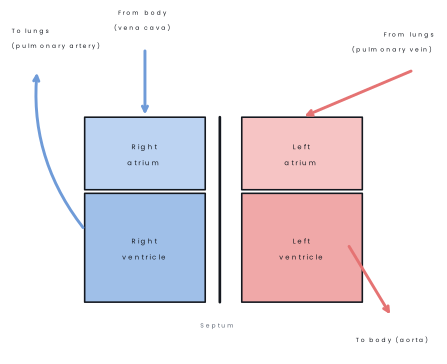
The right side carries deoxygenated blood and the left side oxygenated blood; the septum keeps them from mixing.
| Vessel | Carries blood | From → to |
|---|---|---|
| Vena cava (superior and inferior) | Deoxygenated | Body → right atrium |
| Pulmonary artery | Deoxygenated | Right ventricle → lungs |
| Pulmonary vein | Oxygenated | Lungs → left atrium |
| Aorta | Oxygenated | Left ventricle → body |
Blood vessels
| Feature | Artery | Vein | Capillary |
|---|---|---|---|
| Direction | Away from heart | Towards heart | Between artery and vein |
| Wall | Thick, elastic | Thin | One cell thick |
| Valves | Absent | Present | Absent |
| Blood pressure | High | Low | Falling |
| Blood (usually) | Oxygenated (except the pulmonary artery) | Deoxygenated (except the pulmonary vein) | Exchange of food, oxygen and waste with cells |
Double circulation
In human beings the blood passes twice through the heart in one complete round, so it is called double circulation.
- Pulmonary circulation: right ventricle → pulmonary artery → lungs (blood gets oxygen) → pulmonary vein → left atrium.
- Systemic circulation: left ventricle → aorta → body → vena cava → right atrium.
William Harvey (1628) first described the circulation of blood.
Pulse, heartbeat and blood pressure
- Heartbeat. A resting adult heart beats about 72 times a minute. The pulse felt at the wrist is the stretch of an artery with each beat.
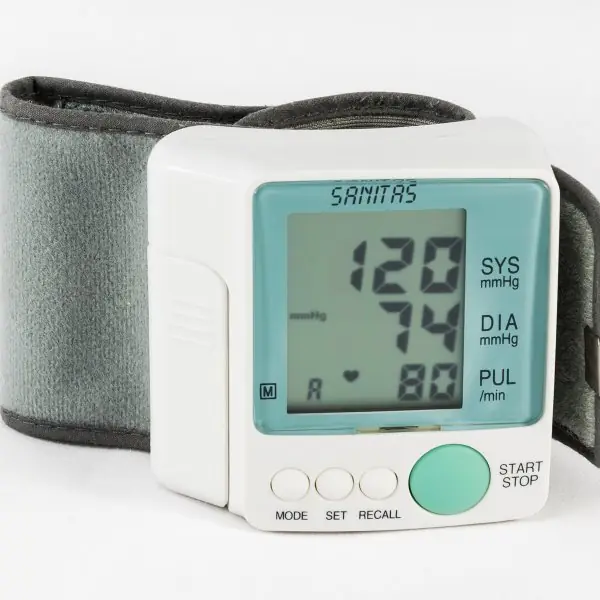
- Blood pressure is the force of blood on the vessel wall. Normal adult value is about 120/80 mm Hg (systolic/diastolic), measured with a sphygmomanometer.
- Stroke volume is the blood pumped by one ventricle in one beat (about 70 mL). Cardiac output = heart rate × stroke volume.
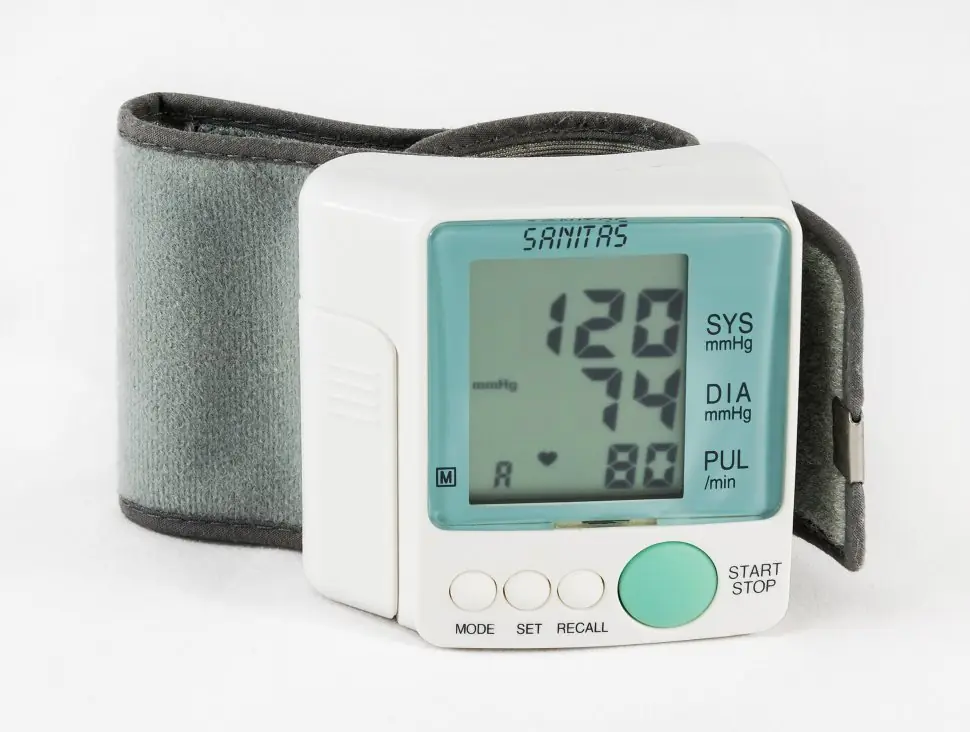
Problem. The heart of a resting man beats 72 times per minute and pumps 70 mL of blood at each beat from the left ventricle. Find(a) the volume of blood pumped in one minute, and(b) in one day.
Solution.
(a) Cardiac output = 72 × 70 mL = 5,040 mL per minute ≈ 5.04 litres per minute.
(b) In one day: 5.04 L × 60 × 24 = 5.04 × 1,440 = 7,257.6 litres (about 7,260 litres).
Heart diseases and care
- High blood pressure (hypertension): caused by stress, too much salt and fat, lack of exercise.
- Atherosclerosis and heart attack: fat deposits narrow the arteries and a clot blocks the blood flow to the heart muscle.
- Stroke: blockage or bursting of a blood vessel in the brain.
Care: regular exercise, less salt and oil, no smoking, no alcohol, healthy weight, and regular check-ups.
Lymphatic system
Some fluid leaks out of capillaries to the tissues (tissue fluid). The extra fluid returns to the blood as lymph, which flows through thin vessels with lymph nodes. Lymph carries fats from the intestine and white cells help to fight infection in the nodes.
5.4 Excretion
Excretion is the removal of the waste products of metabolism from the body.
| Organ | Excretory product |
|---|---|
| Kidneys | Urea, uric acid, excess water and salts (in urine) |
| Lungs | Carbon dioxide and water vapour |
| Skin | Water, salts and a little urea (in sweat) |
| Liver | Bile pigments (from the breakdown of haemoglobin); makes urea from ammonia |
The urinary system
The urinary system has two kidneys, two ureters, one urinary bladder and one urethra.
- Kidneys: bean-shaped organs about 10 cm long, on either side of the backbone, just under the ribs; they filter the blood.
- Ureter: a tube from each kidney to the bladder.
- Urinary bladder: a muscular bag that stores urine (up to about 400–500 mL comfortably).
- Urethra: carries urine out of the body.
The nephron
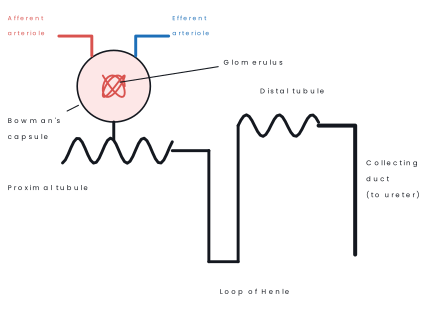
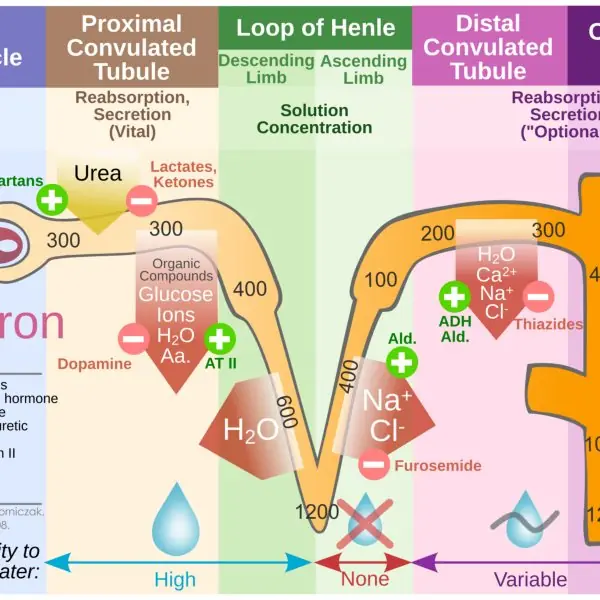
Each kidney has about one million nephrons, the structural and functional units of the kidney. A nephron has:
- the Bowman's capsule, a cup around a cluster of capillaries called the glomerulus;
- a long coiled renal tubule: the proximal convoluted tubule, the loop of Henle and the distal convoluted tubule, which opens into a collecting duct.
Urine formation
Urine is made in three steps.
- Ultrafiltration (in the glomerulus): blood in the glomerulus is under high pressure. Water, glucose, salts, amino acids and urea pass into Bowman's capsule. Blood cells and big proteins remain in the blood. About 180 litres of filtrate is formed per day.
- Selective reabsorption (in the tubule): useful substances (all the glucose, most of the water, amino acids and salts) go back into the blood.
- Tubular secretion: extra wastes (urea, excess salts, drugs) are added to the filtrate by the tubule.
The fluid that reaches the collecting duct is urine: about 1.5 litres per day, pale yellow (the colour is from the pigment urochrome), made of about 95% water, 2% urea and 3% salts and other wastes.
Problem. The kidneys of a person filter 180 litres of fluid per day and produce 1.5 litres of urine. What percentage of the filtrate is reabsorbed?
Solution. Reabsorbed volume = 180 − 1.5 = 178.5 litres.
Percentage = (178.5 / 180) × 100 = 99.2%.
Only about 0.8% of the filtrate leaves as urine.
Kidney problems and dialysis
- Kidney stones: hard deposits of salts (calcium oxalate) in the kidney or ureter; they cause severe pain. Drinking enough water helps to prevent them.
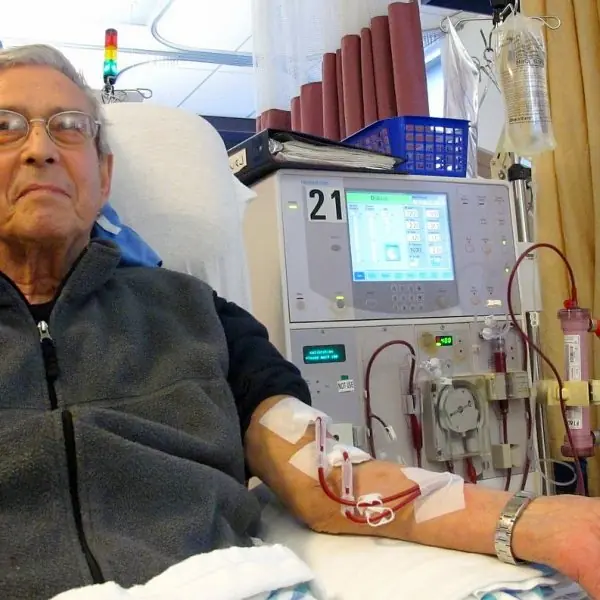
- Kidney failure: the kidneys stop cleaning the blood. Urea builds up in the blood. Treatment is dialysis (haemodialysis), where the patient's blood passes through a machine with a membrane that removes urea and extra salts and returns the clean blood, or a kidney transplant from a donor. Nepal has dialysis and transplant centres, such as the Tribhuvan University Teaching Hospital in Kathmandu.
Role of the skin and liver
The skin sweats to cool the body, and removes some water and salts. The liver changes harmful ammonia into urea and breaks down old red cells.
5.5 Homeostasis
Homeostasis is the maintenance of a constant internal environment in the body (temperature, water, salts, blood sugar and pH) in spite of changes outside.
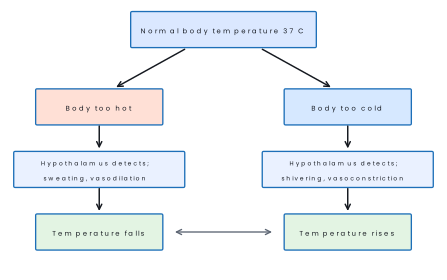
Homeostasis works by negative feedback: when a condition goes away from its normal value, the body reacts to bring it back. Receptors detect the change, a control centre (often the brain) processes it, and effectors (muscles, glands) correct it.
Temperature regulation
The normal human body temperature is about 37 °C (98.6 °F). The control centre is the hypothalamus.
| When it is hot | When it is cold |
|---|---|
| Sweat glands make more sweat; evaporation cools the skin | Sweating stops |
| Blood vessels in the skin widen (vasodilation), so more heat is lost | Blood vessels in the skin narrow (vasoconstriction), so less heat is lost |
| Hair lies flat | Hairs stand up (goose bumps) to trap warm air |
| Less food and activity | Shivering makes heat; adrenaline and thyroxine increase metabolism |
Control of blood sugar
The normal blood glucose level is about 70–110 mg per 100 mL (fasting). The pancreas keeps it steady:
| Condition | Pancreas releases | Effect |
|---|---|---|
| Blood sugar high (after a meal) | Insulin | Liver and muscles take up glucose and store it as glycogen; sugar falls |
| Blood sugar low (hungry) | Glucagon | Liver changes glycogen back to glucose; sugar rises |
If insulin is lacking or does not work, blood sugar stays high: diabetes mellitus. Signs: much urine, thirst, tiredness, weight loss. Treatment: diet, exercise, tablets or insulin injections.
Water and salt balance
The kidney controls water balance under the control of ADH from the pituitary.
When the body has too little water (hot day, little drinking), the blood becomes concentrated and the pituitary releases more ADH; the kidney reabsorbs more water and passes a small amount of dark urine.
When we drink much water, less ADH is released and a large amount of pale urine is passed.
Other homeostatic organs
| Organ | Role |
|---|---|
| Brain (hypothalamus) | Temperature, thirst, hunger |
| Kidney | Water, salts, pH, removal of urea |
| Pancreas | Blood glucose |
| Liver | Stores glucose; removes toxins |
| Lungs | Oxygen and carbon dioxide levels |
| Skin | Temperature, water loss |
Do not confuse excretion (removal of metabolic wastes such as urea and CO₂) with egestion (removal of undigested food, as faeces). Also, sweating does not warm the body; it is the evaporation of sweat that cools it.
Chapter summary
- The CNS (brain + spinal cord) and the PNS (nerves) coordinate quickly using electrical impulses; the endocrine glands coordinate slowly using hormones.
- Neuron: dendrites, cell body, axon, myelin sheath. Reflex arc: receptor → sensory neuron → spinal cord → motor neuron → effector.
- Brain: cerebrum (thinking), cerebellum (balance), medulla (involuntary actions). Pituitary is the master gland; thyroxine needs iodine; insulin controls blood sugar.
- Human reproduction: sperm and egg meet in the fallopian tube; the zygote implants in the uterus; gestation about 280 days. Menstrual cycle 28 days, ovulation about day 14.
- Blood = plasma + RBC (oxygen) + WBC (defence) + platelets (clotting). Blood groups A, B, AB, O.
- Heart has four chambers; double circulation (pulmonary and systemic). Cardiac output = heart rate × stroke volume; normal BP 120/80 mm Hg.
- Nephron: filtration (glomerulus), reabsorption (tubule), secretion; about 180 L filtered and 1.5 L urine per day. Dialysis treats kidney failure.
- Homeostasis: constant internal conditions by negative feedback: body temperature 37 °C (hypothalamus), blood glucose (insulin and glucagon), water (ADH).
Practice questions
Group A — Objective questions (1 mark each)
- The part of the brain that controls balance of the body is the [1]acerebrumbcerebellumcmedulla oblongatadthalamus
- The hormone that lowers blood sugar is [1]aglucagonbadrenalinecinsulindthyroxine
- Fertilisation in human beings takes place in the [1]auterusbovarycfallopian tubedvagina
- The blood vessel that carries oxygenated blood from the lungs to the heart is the [1]apulmonary arterybpulmonary veincaortadvena cava
- The functional unit of the kidney is the [1]aneuronbnephroncglomerulusdureter
- The blood group known as the universal donor is [1]aAbBcABdO
Answers to Group A
1. (b) — the cerebellum controls balance and posture.
2. (c) — insulin lowers blood glucose; glucagon raises it.
3. (c) — the egg is fertilised in the fallopian tube.
4. (b) — the pulmonary vein is the one vein with oxygenated blood.
5. (b) — each kidney has about a million nephrons.
6. (d) — group O has no A or B antigens.
Group B — Short answer (2 marks each)
- What is a reflex action? Give two examples. [2]
- Why is the pituitary called the master gland? [2]
- Write the functions of the placenta. [2]
- Differentiate between an artery and a vein (two points). [2]
- Define homeostasis. How does sweating help in homeostasis? [2]
Answers to Group B
1. A reflex action is a quick, automatic response to a stimulus controlled by the spinal cord without thinking. Examples: pulling the hand from a hot object; blinking.
2. It controls the work of many other endocrine glands (thyroid, adrenal, gonads) through its hormones.
3. It supplies food and oxygen from the mother to the foetus, removes carbon dioxide and wastes, and makes hormones.
4. An artery carries blood away from the heart; its wall is thick and it has no valves. A vein carries blood to the heart; its wall is thin and it has valves.
5. Homeostasis is the keeping of a constant internal environment. Sweat evaporates from the skin and takes heat from the body, so the temperature stays near 37 °C.
Group C — Long answer (4 marks each)
- Draw and label a neuron. Describe the path of a reflex arc. [4]
- Describe the 28-day menstrual cycle. [4]
- A person's heart beats 75 times per minute and pumps 68 mL per beat. Calculate the cardiac output in litres per minute and the blood pumped in one hour. [4]
- Explain how urine is formed in the nephron. [4]
- Describe how blood sugar is kept constant in the body. [4]
Answers to Group C
1. Neuron: dendrites, cell body with nucleus, axon with myelin sheath, axon terminals. Reflex arc: stimulus → receptor → sensory neuron → spinal cord (relay neuron) → motor neuron → effector (muscle) → response.
2. Days 1–5: menstruation. Days 6–13: the uterus lining rebuilds and an egg ripens under FSH and oestrogen. Day 14: ovulation. Days 15–28: the lining thickens under progesterone; if there is no fertilisation, hormone levels fall and menstruation begins again.
3. Cardiac output = 75 × 68 = 5,100 mL = 5.1 L per minute. In one hour: 5.1 × 60 = 306 litres.
4. Ultrafiltration of blood in the glomerulus to Bowman's capsule (about 180 L/day); selective reabsorption of glucose, water, amino acids and salts in the tubule; tubular secretion of extra wastes. The remaining fluid is urine (about 1.5 L/day), sent to the bladder via the ureter.
5. When blood sugar rises after a meal, the pancreas releases insulin and the liver stores glucose as glycogen. When blood sugar falls, the pancreas releases glucagon and the liver turns glycogen into glucose. This is negative feedback; lack of insulin causes diabetes.
Group D — Model answers for long questions (10 marks each, for deeper revision)
- Describe the human nervous system. Explain a reflex action and the path of a reflex arc. [10]
- Describe the structure of the human heart and explain double circulation. Calculate the cardiac output of a person. [10]
- Describe the structure of a nephron and explain the formation of urine. What is dialysis and when is it needed? [10]
Model answer D1: nervous system and reflex arc (10 marks)
Introduction. The nervous system receives information from the surroundings and from inside the body, decides what to do, and sends orders to muscles and glands.
Its unit is the neuron (nerve cell), which has dendrites to receive impulses, a cell body with the nucleus, and an axon to carry impulses away.
Impulses travel along neurons as tiny electrical signals and cross the gap between two neurons (the synapse) by chemical messengers.
Parts of the nervous system.
| Part | Organs | Function |
|---|---|---|
| Central nervous system (CNS) | Brain and spinal cord | Receives, understands and decides |
| Peripheral nervous system (PNS) | Nerves of the head, body and limbs | Carries messages to and from the CNS |
The brain.
- Cerebrum: the largest part, for thinking, memory, learning, speech and voluntary movement.
- Cerebellum: controls balance and smooth body movement, such as riding a bicycle.
- Medulla oblongata: controls involuntary actions such as heartbeat, breathing and swallowing.
- Spinal cord: carries impulses between the brain and the body and controls reflex actions.
Reflex action. A reflex action is a quick, automatic and involuntary response to a stimulus that is controlled by the spinal cord, not the brain. It saves time, so it protects the body from harm.
Examples: pulling the hand from a hot pot, blinking when dust flies toward the eye, the knee jerk.
Reflex arc. The path followed by an impulse in a reflex action is the reflex arc:
- Stimulus, for example a hot object touches the finger.
- Receptor (a sense organ in the skin) detects it.
- Sensory neuron carries the impulse to the spinal cord.
- Relay (connector) neuron in the spinal cord passes it on.
- Motor neuron carries the order away from the cord.
- Effector (the muscle of the arm) contracts.
- Response: the hand is pulled back, and the brain is told only afterwards.
Voluntary versus reflex.
| Voluntary action | Reflex action |
|---|---|
| Controlled by the brain | Controlled by the spinal cord |
| Slower, needs thought | Very fast, automatic |
| Example: writing, walking | Example: sneezing, blinking |
Conclusion. The brain and spinal cord form the control centre, and reflex arcs give the body a fast safety mechanism.
Model answer D2: the heart and double circulation (10 marks)
Introduction. The heart is a muscular pump about the size of a fist, lying in the chest slightly to the left. It pumps blood to every part of the body through blood vessels, carrying oxygen, food, hormones and wastes.
Structure. The heart has four chambers: two upper thin-walled atria (right and left) that receive blood, and two lower thick-walled ventricles that pump blood out.
The left ventricle has the thickest wall because it pumps blood to the whole body. Valves (the tricuspid valve on the right and the bicuspid valve on the left) stop the blood from flowing backwards.
| Vessel | Carries blood | Type of blood |
|---|---|---|
| Vena cava | From the body to the right atrium | Deoxygenated |
| Pulmonary artery | From the right ventricle to the lungs | Deoxygenated |
| Pulmonary vein | From the lungs to the left atrium | Oxygenated |
| Aorta | From the left ventricle to the body | Oxygenated |
Double circulation. In human beings the blood passes through the heart twice in one complete round.
- Pulmonary circulation: right ventricle → pulmonary artery → lungs (blood gets oxygen and gives up carbon dioxide) → pulmonary veins → left atrium.
- Systemic circulation: left ventricle → aorta → body organs (blood gives oxygen and food) → vena cava → right atrium.
Advantage. Oxygenated and deoxygenated blood never mix, and blood reaches the body at high pressure, which supplies the large amount of oxygen needed by a warm-blooded animal.
Numerical. A person's heart beats 72 times per minute and pumps 70 mL of blood per beat. Find the cardiac output.
In one hour the heart pumps 5.04 \times 60 = 302.4 litres.
Heart care. Take less salt and oily food, exercise daily, do not smoke, and have the blood pressure checked regularly; high blood pressure may cause a heart attack or stroke.
Conclusion. The four-chambered heart and double circulation give an efficient supply of oxygen to the body.
Model answer D3: nephron, urine formation and dialysis (10 marks)
Introduction. The kidneys remove nitrogenous wastes (urea) and extra water and salts from the blood. Each kidney contains about one million nephrons, the structural and functional units of the kidney.
Structure of a nephron. A nephron has a cup-shaped Bowman's capsule that surrounds a knot of capillaries called the glomerulus, followed by a long coiled renal tubule (proximal tubule, loop of Henle, distal tubule) that joins a collecting duct.
Urine formation in three steps.
- Ultrafiltration in the glomerulus. High blood pressure squeezes water, glucose, amino acids, salts and urea out of the blood into the Bowman's capsule. Blood cells and big proteins stay in the blood. About 180 litres of filtrate is formed per day.
- Selective reabsorption in the tubule. The useful substances, all the glucose, amino acids, most of the water and salts, return to the blood capillaries around the tubule.
- Tubular secretion. Extra wastes, such as excess hydrogen ions and drugs, pass from the blood into the tubule.
The remaining fluid, about 1.5 litres per day, is urine. It flows through the ureter to the bladder and leaves through the urethra.
| Stage | Where | What happens |
|---|---|---|
| Ultrafiltration | Glomerulus to Bowman's capsule | Filtration under pressure |
| Reabsorption | Renal tubule | Useful things return to blood |
| Secretion | Distal tubule | Extra wastes added |
Dialysis. When both kidneys fail, urea builds up in the blood and can cause death.
In haemodialysis the patient's blood is passed through a machine with a thin membrane; urea and extra salts move into the dialysis fluid and the clean blood returns to the body.
A patient needs it about three times a week, and it is available in hospitals in Kathmandu, Pokhara and other cities. The other treatment is a kidney transplant.
Care of the kidney. Drink enough clean water, take less salt, and avoid overuse of painkillers.
Conclusion. Nephrons filter blood, reabsorb useful matter and form urine; dialysis does this work artificially when the kidneys fail.
Practise more: Science and Technology question bank