Unit 7 · Units · 23 min read
Unit 7: Cyber Security
What the syllabus asks for 3
- Parents
- Cyber Security: Basic Internet Safety Tips
- Grammar and writing tasks of the unit
Billions of people now shop, study, talk and play online. This unit looks at the risks.
A comic short story shows what can happen when a teenager hides her identity from a worried father, and an information text gives practical advice for staying safe on the internet.
In grammar you will study advice and obligation (should, ought to, must) and articles; in writing you will compose a reply email and a newspaper article.
Reading: vocabulary from definitions, sequencing events, short answers on character and misunderstanding; matching paragraph headings, true/false, short answers on safety measures.
Grammar: should / ought to / must for advice, moral obligation and compulsion; a, an, the and zero article. Writing: email, newspaper article, informal letter.
7.1 Parents
About the text
"Parents" is a short, humorous story about the generation gap and the dangers of online friendship.
It is told in the first person by a father to his friend Dhruva, and it ends with a misunderstanding that is funny for the listener and a little embarrassing for the father.
The textbook uses it to raise a serious question: what happens when young people pretend to be someone else online?
What the story says
Anuja, the narrator's teenage daughter, has made a new friend on the internet — an "e-friend" — and one day tells her father that she wants to meet her. The father is worried.
He insists on going with her to be sure the friend is genuine and that his daughter will be safe. Anuja protests: she calls her father obsessed and says he sees danger lurking in every corner.
Underneath, she is embarrassed — he is middle-aged, bald, with a big belly, and she does not want her friend to see him.
At home, however, a shock awaits the father. Anuja confesses a secret: she has been chatting with her friend under the identity of a boy. She never told the other girl she was a girl. That explains why she is dressed like a boy for the meeting.
They reach the meeting place and wait, but no one comes. A car with tinted windows stands on the opposite side of the road for some minutes, then drives off quickly.
After ten minutes the father decides that the girl was perhaps fake or had not been serious, and they go home without meeting her.
Later he tells the whole incident to his friend Dhruva. Dhruva bursts out laughing and explains what happened. The e-friend and her mother had come, and they were sitting in the car.
The mother, seeing a middle-aged, bald, big-bellied man hanging around the meeting place — Anuja's father, looking at the cars and the people — took him for a suspicious man with bad intentions and quickly drove her daughter away.
Neither side could talk to the other because each had the wrong idea of the other.
Order of events
- Anuja tells her father that she wants to meet her new friend.
- She tells him about her e-friend.
- Her father goes with her to the meeting.
- He notices that Anuja looks like a boy in her new outfit.
- She reveals her secret e-identity.
- They see a car across the road.
- They wait for ten minutes.
- The father tells Dhruva about the incident.
Characters
| Character | Qualities |
|---|---|
| Anuja | modern, independent, a little embarrassed by her father, not fully honest online |
| Father (narrator) | loving, protective, old-fashioned, funny without meaning to be |
| Dhruva | the father's friend; sees the humour and solves the puzzle |
| The e-friend's mother | protective, also suspicious — a mirror of Anuja's father |
Vocabulary
| Word | Meaning | Example |
|---|---|---|
| lurk | to remain hidden while waiting, usually secretly | A cat was lurking behind the door. |
| obsessed | thinking about something all the time, to a troubling extent | He is obsessed with mobile games. |
| window shopping | looking at goods in shop windows without intending to buy | We spent the evening window shopping. |
| stamp | to bring one's foot down heavily | She stamped her foot in anger. |
| ridiculous | silly, absurd | A ridiculous hat made them laugh. |
| outfit | a set of clothes worn for a particular occasion | She wore a new outfit to the party. |
| swerve | to turn aside suddenly from a straight course | The car swerved to avoid the dog. |
| munch | to eat something hard steadily and noisily | He munched popcorn. |
| leer | to look in an unpleasant, offensive way | The man gave an evil leer. |
| stammer | to speak with difficulty, repeating sounds | He stammered with fear. |
Themes
- Generation gap. Parents worry; teenagers want independence.
- Online identity and safety. Faking identity makes trust hard — Anuja hid that she was a girl, and the other family also acted from fear.
- Misunderstanding and irony. The father fears the stranger, and the stranger's mother fears the father. The humour is that both are protective parents.
- Parental love. Behind his embarrassing behaviour is real concern.
Questions and model answers
Objective questions (1 mark each)
- "Lurk" means [1]ato run quicklybto wait hiddencto speak loudlydto eat noisily
- Anuja's e-friend was [1]aa boyba girlca teacherda cousin
- They waited for the friend for [1]afive minutesbten minutescone hourdall day
- Who explained the misunderstanding? [1]aAnujabDhruvacthe motherda police officer
Answers
1. (b).
2. (b).
3. (b).
4. (b).
Short-answer questions (2 marks each)
- Why was Anuja unwilling to take her father along? [2]
- How does she criticise her father? [2]
- What was the shocking news for her father? [2]
- Why did they return without meeting the friend? [2]
- Why did Dhruva laugh at the story? [2]
- How did the girl's mother see Anuja's father? [2]
Model answers
1. She found him over-protective and was embarrassed by his age, big belly and baldness in front of her new friend.
2. She calls him obsessed and says that he imagines danger in every dark corner.
3. Anuja told him that she had been chatting with her friend while pretending to be a boy.
4. They could not find any girl at the place after waiting ten minutes. A car on the other side drove away fast, so they thought the girl was fake.
5. He found the situation funny: the girl and her mother had come, but the mother had been frightened by Anuja's father, who looked like a suspicious old man.
6. She saw him as a suspicious, bad-intentioned old man lurking near the meeting place, so she did not let her daughter get out of the car.
Long-answer questions (4 marks each)
- Describe the misunderstanding that took place in the story. [4]
- What can be the consequences of faking your identity and bullying others on the internet? [4]
Model answers
1. Anuja's father went with her to meet her e-friend. They waited ten minutes, saw only a car on the opposite side, and then went home, believing the friend was fake. Later Dhruva explained that the girl and her mother had been in that car. The mother had noticed a middle-aged, bald, big-bellied man standing around and had taken him to be a danger to her daughter. She therefore drove away. Each side was afraid of the other, and so the two girls never met.
2. Faking identity destroys trust, and people who are cheated may feel hurt or lose money. Cyber-bullying can make victims depressed, afraid or even suicidal. The offender may be punished under Nepal's Electronic Transactions Act and may lose friends, school reputation and future jobs. It is better to be honest, respectful and careful online.
7.2 Cyber Security: Basic Internet Safety Tips
About the text
This is an informative / instructional text of the kind found on technology websites.
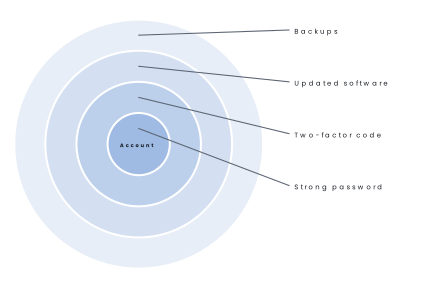
It begins by pointing out that we protect our physical property with locks and safes, but that our digital belongings — photos, messages, bank details — need protection too.
Then it gives eight headed pieces of advice, each in its own paragraph. The headings let you scan the text quickly, a skill often tested in exams.
The eight pieces of advice
| Heading | Main advice |
|---|---|
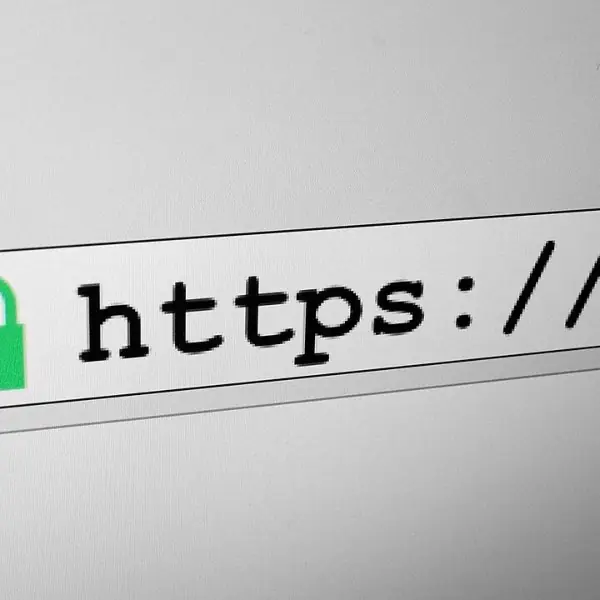
| Protect your personal information with strong passwords | Use long passwords that mix letters, numbers and symbols; use a different password for every account; never share them; do not let the computer remember them on shared machines; store them securely |
| Keep your personal data safe | Be careful where you enter financial details; read the terms and conditions; use a chip debit card (safer than a magnetic-strip card); do not enter financial data on unsafe sites |
| Make sure your devices are secure | Lock screens, use up-to-date security software and be careful with unknown downloads |
| Pay attention to software updates | Update promptly or enable automatic updates because updates fix security holes |
| Be careful about Wi-Fi | Public Wi-Fi may be watched; avoid banking on open networks; use a secured network |
| Set up two-factor authentication | A second proof (a code sent to your phone) protects the account even if your password is stolen |
| Keep personal information private | Do not share your address, school, phone number or location carelessly on social media |
| Back up your personal data | Keep copies of important files so that you can recover them if a device is lost or attacked |
Common threats explained
| Threat | What it is | Defence |
|---|---|---|
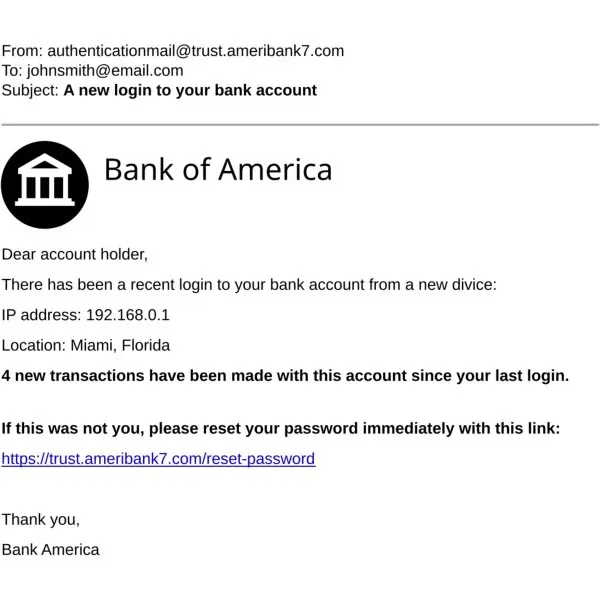
| Phishing | Fake emails or messages that trick you into giving a password or bank details | Never click links from strangers; check the sender |
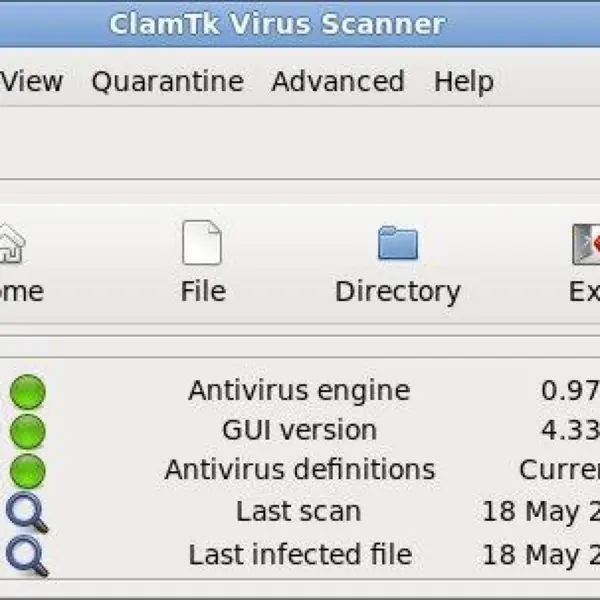
| Malware | Harmful software (viruses, spyware, ransomware) | Security software; avoid pirated programs |
| Identity theft | Someone uses your personal information to pretend to be you | Strong passwords; keep information private |
| Cyberbullying | Harassing or humiliating someone online | Block, report to the platform, tell an adult |
| Online fraud | Cheating people out of money through fake offers | If it sounds too good to be true, it is |
In Nepal, cybercrime is covered by the Electronic Transactions Act, 2063 (2008) and the Nepal Police has a Cyber Bureau that investigates online crimes.
Vocabulary
| Word | Meaning | Example |
|---|---|---|
| possession | something that you own or have with you | Our phone is our most valuable possession. |
| intertwined | closely connected | Technology and daily life are intertwined. |
| integration | the act of combining two or more things | The integration of apps saves time. |
| avoid | to prevent something bad from happening | Avoid clicking unknown links. |
| sensitive | needing careful protection; quick to detect small changes | Bank details are sensitive data. |
| proliferate | to increase rapidly in number | Fake accounts have proliferated. |
| shield | to protect from danger or harm | The firewall shields the network. |
| promptly | without delay | Update the software promptly. |
| authentication | proving that something is real or true | Two-factor authentication needs a code. |
| transaction | an act of buying or selling | An online transaction was completed. |
Questions and model answers
Objective questions (1 mark each)
- Write True or False: It is a good idea to use the same password for all accounts. [1]
- Write True or False: Letting a computer remember passwords is not safe. [1]
- Write True or False: A chip debit card is safer than a magnetic-strip card. [1]
- "Promptly" means [1]alatebwithout delayccarefullydrarely
Answers
1. False.
2. True.
3. True.
4. (b).
Matching. Match the headings to the paragraphs: (a) Keep your personal data safe — B; (b) Keep personal information private — G; (c) Set up two-factor authentication — F; (d) Make sure your devices are secure — C; (e) Be careful about Wi-Fi — E; (f) Pay attention to software updates — D; (g) Back up your personal data — H; (h) Protect your personal information with strong passwords — A.
Short-answer questions (2 marks each)
- How do we try to protect our physical property? [2]
- What should we do to keep our passwords secret? [2]
- Mention two safety measures for shopping with debit cards. [2]
- How can we secure our accounts even when someone finds our password? [2]
- Why should we keep software updated? [2]
Model answers
1. We lock doors, use locks and keep valuable things in safes or cupboards.
2. We should make strong passwords, use different passwords for different accounts, never share them and store them securely.
3. Use a chip debit card rather than a magnetic-strip one, and read the terms and conditions before entering financial details on a website.
4. By using two-factor authentication, which asks for a second proof such as a code sent to our phone.
5. Updates repair weaknesses that criminals could use, so promptly updated software is safer.
Long-answer question (4 marks)
- Why is internet safety important for students? Suggest four safety rules. [4]
Model answer
1. Students spend many hours online for study, entertainment and communication, so they can be targets for fraud, bullying and identity theft. Safe behaviour protects their money, privacy and reputation.
Four rules: (1) use strong, different passwords and never share them; (2) do not give personal details to strangers; (3) enable two-factor authentication and keep devices updated; (4) tell a parent or teacher if you meet bullying or suspicious messages.
Following such rules makes the internet a safe place to learn.
7.3 Grammar and writing tasks of the unit
Grammar I: should, ought to and must
| Modal | Meaning | Example |
|---|---|---|
| should | advice; what is a good idea | You should see a doctor. |
| ought to | advice or moral duty (like should, a little more formal) | Children ought to respect their parents. |
| must | compulsion (a strong rule) or strong moral duty | You must obey the traffic rules. |
| should not / ought not to | advice against | You shouldn't eat so much sugar. |
| must not | prohibition | You must not use a phone while driving. |
| have to | compulsion from outside | I have to wear a uniform. |
- Advice: You should raise your voice against discrimination.
- Moral obligation: Every child should take good care of ageing parents.
- Compulsion: You must abide by traffic rules while driving.
Mustn't means "it is forbidden", but don't have to means "it is not necessary". Do not write should to, musts, ought go (correct: ought to go).
Problem. Fill in with should, ought to or must: "Someone picked my pocket." — "You ____ immediately inform the police."
Solution. A strong, urgent duty → must.
Problem. Say whether the modal shows advice, moral obligation or compulsion: "You must abide by traffic rules while driving."
Solution. It is a rule with a penalty → compulsion.
Exercise A — Advice, moral obligation or compulsion?
- You should raise your voice against discrimination.
- You must abide by traffic rules while driving.
- Children ought to look after their ageing parents.
- You must wear a seat belt in a car.
- You should drink more water.
1. advice.
2. compulsion.
3. moral obligation.
4. compulsion.
5. advice.
Exercise B — Complete with should, ought to or must (use negatives where needed)
- Every child ____ take good care of their ageing parents.
- If you want to lose weight, you ____ exercise regularly.
- It was great. You ____ go and see the movie.
- We ____ not disrespect our nation at any cost.
- You look ill. You ____ see a doctor.
- You ____ not offend people with your harsh words.
- If you find someone's goods, you ____ try to return them to the owner.
1. should (ought to).
2. ought to (should).
3. should.
4. must.
5. ought to (should).
6. must (should).
7. ought to (should).
Grammar II: Articles — a, an, the and no article
| Article | Use | Example |
|---|---|---|
| a | before a singular countable noun that begins with a consonant sound, mentioned for the first time or in general | a doctor, a university, a one-rupee coin |
| an | before a singular countable noun that begins with a vowel sound | an actor, an hour, an MBBS doctor |
| the | for a specific thing known to both speaker and listener; things that are unique; superlatives; rivers, oceans, mountain ranges, nations in plural form; the second time you mention something | the sun, the Himalayas, the Bagmati, the best student |
| no article (zero) | plural and uncountable nouns in general; names of people, most countries and cities, languages; meals; subjects | Water is life. Nepal is beautiful. She studies English. |
Remember: the sound, not the letter. an hour (silent h); a university (starts with "yoo"); an honest man; a European.
Do not write a information or an advices (uncountable: some information). Do not use the before the names of most countries (the Nepal ✘) — except the USA, the UK, the Netherlands.
Do not drop the article before singular countable nouns: He is doctor ✘ → He is a doctor.
Problem. Fill in a/an/the: "Would you like to be ____ actor in the future?"
Solution. Actor starts with a vowel sound → an.
Problem. "I saw a boy in the street. ____ boy was crying." Which article?
Solution. Second mention, specific → The.
Exercise C — Fill in a, an, the or ×
- Doctor: What is your problem? Patient: I have ____ fever and I feel dizzy.
- Would you like to be ____ actor in the future?
- ____ sun rises in the east.
- She is ____ honest girl.
- ____ Mount Everest is the highest peak in ____ world.
- Hari plays ____ football every evening.
- He bought ____ umbrella and ____ raincoat. ____ umbrella was blue.
- We went to ____ Pokhara last year.
1. a.
2. an.
3. The.
4. an.
5. × (Mount Everest takes no article), the.
6. ×.
7. an, a, The.
8. ×.
Writing I: Emails
An email follows the layout: To / Cc / Subject, salutation, body, closing, name. Informal emails to friends use contractions and a warm tone; formal emails use full forms and polite expressions. A reply email answers the earlier message directly.
Task. Imagine you are Niti. You could not attend your friend Sambridhi's brother's wedding because of urgent family business. Write a reply email apologising.
To: sambridhi@example.com Subject: Sorry — I can't come to the wedding
Dear Sambridhi,
Thank you very much for the invitation to your brother Naman's wedding. I was really looking forward to celebrating with you and your family.
Unfortunately, an urgent family matter has come up, and I have to travel to Pokhara on the day of the wedding. I am very sorry that I cannot be there. I know how much this day means to you.
Please give Naman and his wife my warmest congratulations and best wishes for a happy married life. I will call you as soon as I return, and I would love to see the wedding photographs.
With love, Niti
Writing II: A newspaper article
Task. Write a newspaper article on "Internet and Cyber Security" using these guidelines: introduction to the internet and technology; use of the internet in daily life; abuse of the internet; the need and ways of data privacy; conclusion.
Internet and Cyber Security: Protecting Our Digital Lives
The internet has become as important as electricity. From online classes to digital wallets, technology has made life faster and easier for millions of Nepalis.
Students search for study materials, shopkeepers receive payments by QR codes, and families in Nepal talk to relatives abroad on video calls. Government services such as passport and licence applications are also moving online.
However, the same internet can be abused. Criminals send fake messages to steal bank details, hackers break into accounts, and some people spread rumours or bully others on social media. Many young users share personal information without thinking of the risks.
Therefore, data privacy is essential. Users should create strong passwords, use two-factor authentication, update their software, avoid unknown links and keep personal details private.
Parents and teachers should teach children safe online habits, and the government should enforce cybercrime laws.
In short, the internet is a powerful tool, but we must use it carefully. A safe digital world needs careful users as well as strong laws.
Chapter summary
- Parents: a father's anxiety, a daughter's secret online identity and a comic misunderstanding in which a mother thinks the father is a suspicious stranger. Themes: generation gap, online safety, irony.
- Words: lurk, obsessed, outfit, swerve, munch, leer, stammer, window shopping.
- Cyber Security: Basic Internet Safety Tips: eight pieces of advice — strong passwords, safe personal data, secure devices, updates, careful Wi-Fi, two-factor authentication, private information, backups.
- Should / ought to = advice and moral duty; must = compulsion or strong duty; must not = prohibition.
- A before consonant sounds, an before vowel sounds, the for specific/unique things, no article for general plurals and uncountables.
- A reply email thanks, explains and apologises; a newspaper article has a headline, introduction, body and conclusion.
Practice questions
Objective questions (1 mark each)
- Which should you NOT do? [1]aUse two-factor authenticationbShare your password with friendscUpdate softwaredBack up files
- "You ____ obey traffic rules." (compulsion) [1]acanbmustcmightdwould
- Choose the correct article: ____ hour [1]aabancthedno article
- "Authentication" means [1]aproving that something is realba type of softwareca bankddeleting a file
Answers
1. (b).
2. (b).
3. (b).
4. (a).
Short answer questions (2 marks each)
- Why did Anuja's friend not meet them? [2]
- What is phishing and how can we avoid it? [2]
- Complete with should or must: "Students ____ not use mobile phones in the exam hall." (rule) [2]
- Fill in the articles: "I met ____ engineer yesterday. ____ engineer told me ____ interesting story." [2]
Answers
1. The friend's mother thought Anuja's father was a suspicious man lurking nearby, and took her daughter away.
2. Phishing is sending fake messages to trick people into revealing passwords or bank details. We avoid it by not clicking unknown links and by checking who sent the message.
3. must.
4. an; The; an.
Long answer questions (4 marks each)
- Write an email to a friend suggesting four ways to stay safe online. [4]
- Write a newspaper article (about 150 words) on "Cyberbullying among Teenagers". [4]
Answers
1. Outline: To/Subject; greeting; why you are writing; four tips (strong password, don't share personal details, two-factor authentication, tell an adult about suspicious messages); good wishes; closing.
2. Outline: headline; introduction (what cyberbullying is); causes; effects (stress, poor study, loneliness); remedies (report, block, school counselling, laws); conclusion.
Group D: Long writing and model answers
Group D — Extended answers (10 marks each, for deeper revision)
- Write a reply e-mail and a newspaper article on cyber safety. [10]
- Explain should, ought to, must and must not, and the use of articles. [10]
Model answer D1: a reply e-mail and an article (10 marks)
Introduction. A reply e-mail thanks the sender, answers the question, explains and apologises if needed. A newspaper article informs the public with a headline, introduction, body and conclusion.
Model reply.
To: bikash@example.com
Subject: Re: My hacked account
Dear Bikash,
Thank you for your e-mail. I am sorry to hear that your social media account was hacked. First, please change your password at once and use at least twelve characters with letters, numbers and symbols.
Then turn on two-factor authentication so that a code is sent to your phone. You should also check which devices are logged in and log out from the unknown ones. Never click links in strange messages.
I hope your account will be safe again soon. Please tell me if you need any help.
Best wishes,
Rina
Model article.
BE SAFE ONLINE: SEVEN SIMPLE STEPS
By a staff reporter
The number of cyber crimes in Nepal has risen as more people use mobile banking and social media. Police officers say that most victims lose their money because they share passwords or click on false links.
Experts advise people to use strong passwords, update their devices, avoid public Wi-Fi for banking, turn on two-factor authentication and back up their data. "Think before you click" is the best rule, said an officer of the Cyber Bureau.
If everyone follows these steps, the internet will be a safer place.
The eight tips in the chapter.
- Strong passwords.
- Keep personal data safe.
- Secure your devices.
- Update software.
- Be careful with Wi-Fi.
- Two-factor authentication.
- Keep private information private.
- Back up your files.
Conclusion. Be polite and practical in an e-mail; be factual and organised in an article.
Model answer D2: duty verbs and articles (10 marks)
Duty and advice.
- should / ought to = advice and moral duty: You should log out of public computers.
- must = strong duty or compulsion: You must keep your password secret.
- must not = prohibition: You must not share your OTP.
- don't have to = not necessary: You don't have to pay to use the app.
Articles.
- a before a consonant sound, an before a vowel sound: a user, an hour, an e-mail.
- the for something specific, unique or already mentioned: the internet, the sun.
- No article with general plurals and uncountables: Passwords are important. Information is power.
- The is not used with names of most countries and languages, but is used with the USA, the Himalayas.
| Wrong | Correct |
|---|---|
| He is a engineer. | He is an engineer. |
| I use the Facebook. | I use Facebook. |
| She gave me a advice. | She gave me some advice. |
Conclusion. Remember that sound decides a/an, and meaning decides the.
Practise more: English question bank