Chapter 13 · Applied Zoology · 2 questions in the paper · 26 min read
Medical Technology and Applied Biology
What the syllabus asks for 2
- Tissue and organ transplantation, in-vitro fertilization, amniocentesis and transgenic animals
- Applied microbiology: dairy and beverage microbes, sewage and drinking-water treatment, bio-control agents
This unit is rated at 2 questions in this book's estimate of the 40-question Zoology paper.
It is definition-heavy, but the best questions are procedural: why grafts are rejected, which infertility problem IVF or ICSI bypasses, what amniocentesis actually samples, and which microorganism performs each useful fermentation or stage of waste treatment.
- Grafts: auto- self, iso- genetically identical, allo- same species but genetically different, xeno- different species. HLA mismatch drives rejection.
- IVF fertilises an oocyte outside the body; ICSI injects one sperm into an oocyte and is used especially for severe male-factor infertility.
- Amniocentesis samples amniotic fluid and fetal cells, usually for diagnostic karyotyping/genetic testing—not for routine sex selection.
- A transgenic animal carries an intentionally introduced, heritable gene; “pharming” makes useful proteins in milk or another accessible product.
- Dairy lactic-acid bacteria convert lactose → lactic acid; Saccharomyces converts sugars to ethanol + CO₂ in beverages and CO₂ for raising dough.
- Sewage treatment: primary = physical settling; secondary = microbial oxidation in activated sludge/biofilms; sludge digestion is anaerobic and yields methane.
- BOD is the oxygen microorganisms need to oxidise biodegradable organic matter; E. coli is an indicator of faecal contamination of drinking water.
- Bacillus thuringiensis Cry protoxins are activated in susceptible insect midguts; Trichoderma antagonises plant-pathogenic fungi.
13.1 Tissue and organ transplantation, IVF, amniocentesis and transgenic animals
Transplantation and graft rejection
Transplantation replaces a diseased cell population, tissue or organ—such as haematopoietic stem cells, skin, cornea, kidney, liver, heart or lung—with a healthy graft. Grafts are named by genetic relationship:
| Graft | Donor → recipient | Immunological expectation |
|---|---|---|
| Autograft | one site to another in same person | no foreign-HLA rejection |
| Isograft/syngeneic graft | genetically identical individual (identical twin) | normally accepted |
| Allograft | genetically different member of same species | rejection unless matched/immunosuppressed |
| Xenograft | different species | strongest incompatibility; pig-to-human use remains specialised/research territory |
The major barrier is recognition of donor human leukocyte antigens (HLA), the human MHC molecules, as non-self. Hyperacute rejection occurs within minutes/hours when preformed antibodies attack graft vessels.
Acute rejection over days to months is commonly T-cell-mediated and/or antibody- mediated. Chronic rejection slowly scars and narrows graft vessels/tissue.
ABO compatibility, HLA matching and a donor–recipient crossmatch reduce risk, and immunosuppressive drugs suppress lymphocyte activation. Their necessary trade-off is vulnerability to infection and some cancers.
The cornea is relatively immune-privileged and avascular, so corneal grafts often succeed with less systemic immunosuppression.
Bone-marrow/ haematopoietic stem-cell transplantation is exceptional in the opposite way: donor immune cells may attack the recipient in graft-versus-host disease.
Ethical transplantation also requires valid consent, fair allocation and a strict prohibition of organ trafficking/coercion. Medical technology does not remove those constraints; it makes them more important.
In-vitro fertilisation (IVF)
IVF is fertilisation in laboratory culture rather than in a uterine tube.
A typical cycle includes controlled ovarian stimulation and ultrasound/hormone monitoring, a maturation trigger, ultrasound-guided oocyte retrieval, sperm preparation, fertilisation, embryo culture and transfer of an embryo to the uterus.
Suitable extra embryos may be cryopreserved.
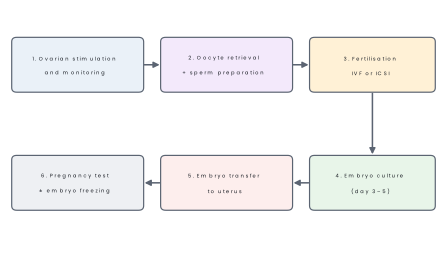
IVF is especially useful for bilateral tubal blockage, severe endometriosis, some ovulatory/unexplained infertility and cases requiring donor gametes or pre-implantation genetic testing.
In intracytoplasmic sperm injection (ICSI), an embryologist injects a single selected sperm into a mature oocyte; it can bypass very low sperm count, poor motility or previous failed fertilisation.
IVF is not a guarantee of a baby: maternal age and embryo chromosome normality strongly influence success, and risks include ovarian hyperstimulation syndrome, multiple pregnancy when more than one embryo implants, procedural complications and cost.
Amniocentesis
In amniocentesis, usually after about 15 weeks of pregnancy, a fine needle is guided by ultrasound through the abdominal/uterine wall to withdraw a small sample of amniotic fluid.
The fluid contains fetal cells whose chromosomes/DNA can be used for karyotyping, chromosomal microarray or selected single-gene tests; biochemical measurements may assess some fetal conditions.
It is a diagnostic test rather than a screening test.
Non-invasive prenatal testing of cell-free DNA in maternal blood can screen risk with no needle into the uterus, but abnormal screening generally requires a diagnostic procedure such as amniocentesis or chorionic-villus sampling for confirmation.
Amniocentesis carries a small risk of leakage, infection or pregnancy loss and may require anti-D protection for an Rh-negative patient.
Its purpose is diagnosis and informed care; misuse for non-medical sex selection is ethically and legally unacceptable.
Transgenic animals
A transgenic animal has a deliberately introduced gene (transgene) stably integrated into its genome and potentially transmitted to offspring.
Methods include pronuclear microinjection into a zygote, engineered embryonic stem cells, viral vectors and targeted genome editing. “Transgenic” is not a synonym for clone: a clone copies a nuclear genome, whereas transgenesis changes the genetic content.
Uses include:
- Disease models: mice carrying human disease-related genes or targeted knockouts reveal mechanisms and test treatments.
- Pharming: mammary-specific promoters make goats/cows secrete a human therapeutic protein in milk, from which it can be purified.
- Improved production/research traits: growth, milk composition, disease resistance or biomaterials have all been investigated.
- Xenotransplantation research: pigs are edited to remove pig antigens and add human regulatory genes, aiming to reduce hyperacute rejection.
Risks and safeguards include insertion-site effects, animal welfare, escape/gene flow, food/environmental safety assessment, containment and traceability. A scientifically successful founder animal is not automatically a socially or legally approved product.
A question describes three couples: (i) the woman's fallopian tubes are blocked; (ii) the man produces very few, weakly motile sperms; (iii) the man produces no sperms in the semen because of a blocked vas deferens. Choose the assisted-reproduction route for each.
- (i) Blocked tubes: fertilisation cannot occur in the body, so use IVF — ova are collected, fertilised in the laboratory, and the embryo is transferred to the uterus. GIFT would be wrong here: it places gametes into the tube, which is the blocked segment.
- (ii) Very few, weak sperms: ordinary IVF may fail because a sperm must still penetrate the ovum. Use ICSI — a single sperm is injected directly into the ovum.
- (iii) No sperms in semen but testes normal: sperms are retrieved surgically from the testis/epididymis and then used for ICSI.
The method is always chosen by asking which step of natural conception is failing — meeting of gametes, penetration of the ovum, or delivery of sperms.
Hyperacute rejection (minutes) is caused by pre-formed antibodies in the recipient; acute rejection (days–weeks) is mainly T-cell mediated; chronic rejection (months–years) is slow vascular damage. MCQs swap these.
Adjacent traps: an isograft (identical twin) is not rejected; graft compatibility is decided by HLA (MHC) matching; cyclosporine protects grafts by suppressing T-cells.
Problem. A river-water sample's dissolved oxygen reads 7.5 mg/L; after five days at 20 °C it reads 2.5 mg/L. What is the BOD? A sewage sample must be diluted 1 : 10 before the same test, and shows the same 5 mg/L drop.
What is its true BOD? Solution. Undiluted: BOD = 7.5 − 2.5 = 5 mg/L — moderately clean water.
Diluted: the drop must be multiplied by the dilution factor: 5 × 10 = 50 mg/L — heavily polluted, which is precisely why it needed diluting: the microbes consumed all the oxygen the bottle could hold.
13.2 Applied microbiology: dairy and beverage microbes, sewage and drinking-water treatment, bio-control agents
Dairy and beverage fermentation
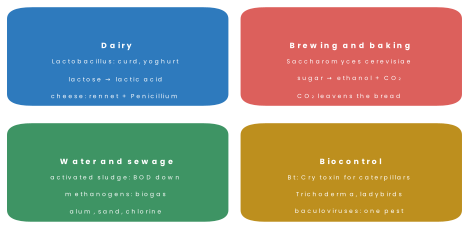
In curd/yoghurt, lactic-acid bacteria ferment lactose mainly to lactic acid. As pH approaches about 4.6, casein micelles lose stability and form a gel.
Classic yoghurt cultures are Streptococcus thermophilus and Lactobacillus delbrueckii subsp. bulgaricus; many curds use mixed Lactococcus/Lactobacillus cultures.
Acidification also suppresses many spoilage organisms and creates flavour compounds. In cheese, starter acid and rennet form curd; ripening organisms then create texture/flavour.
Propionibacterium produces CO₂ “eyes” in Swiss-type cheese, while Penicillium roqueforti and P. camemberti ripen blue and soft cheeses.
The beverage and bread yeast Saccharomyces cerevisiae carries out alcoholic fermentation:
In bread, CO₂ raises the dough and most ethanol evaporates during baking. In beer/wine, sugars come from malted grain or fruit and ethanol remains. Distillation—not yeast—then concentrates ethanol in spirits.
Acetobacter can oxidise ethanol aerobically to acetic acid in vinegar production.
Sewage treatment
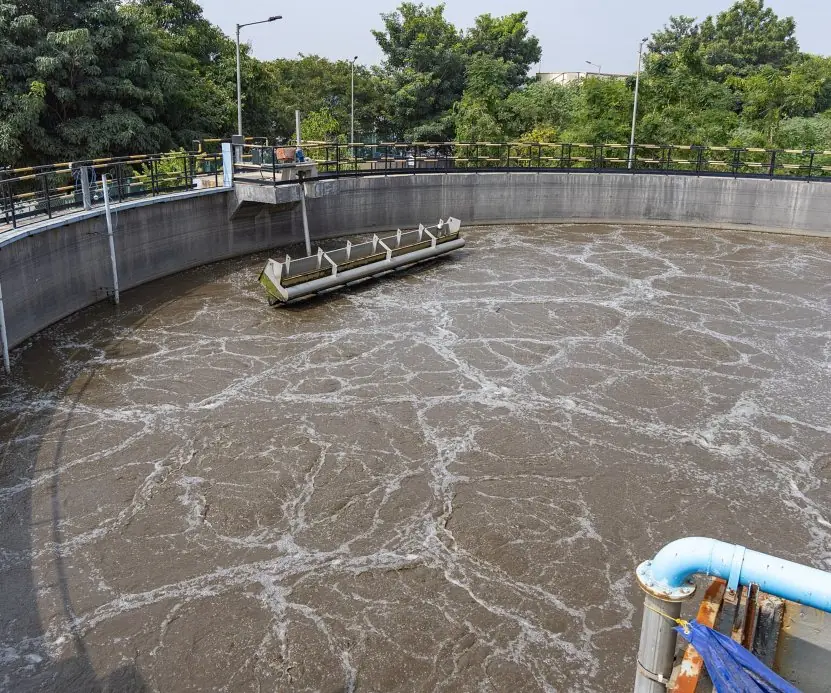
Sewage treatment uses physical separation first and then harnesses microbial food webs.
| Stage | Process | What is removed/changed |
|---|---|---|
| Preliminary/primary | screens, grit chambers, sedimentation | rags, grit and settleable solids (primary sludge) |
| Secondary biological | activated-sludge aeration or biofilm systems such as trickling filters | aerobic bacteria/fungi/protozoa consume dissolved/colloidal organic matter; BOD falls greatly |
| Secondary clarification | flocs settle | part is returned as activated sludge to maintain biomass; excess goes to sludge treatment |
| Tertiary/disinfection where required | nutrient removal, filtration, chlorine/UV/ozone | nitrogen/phosphorus and pathogens reduced further |
| Sludge treatment | thickening and anaerobic digestion | methanogenic archaea produce CH₄-rich biogas; volume and pathogen load fall, though safe disposal rules still apply |
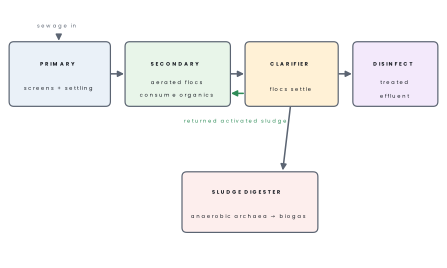
Biochemical oxygen demand (BOD) is the dissolved oxygen used by microorganisms to oxidise biodegradable matter under standard test conditions (usually 5 days at 20 °C).
Raw sewage has high BOD; if discharged untreated, microbial respiration can deoxygenate a river and kill fish. A good treatment plant transfers that oxidation into an engineered aeration tank, so BOD in the effluent is much lower.
A plant treats 2.0\times10^6 L day⁻¹ of sewage with BOD 300 mg L⁻¹ and removes 90% of that load. Incoming BOD load is
Ninety percent removal is 0.90\times600=540 kg day⁻¹ of oxygen-demanding load prevented from reaching the receiving river.
Drinking-water treatment
Safe drinking water uses multiple barriers rather than one chemical step: source protection; coagulation/flocculation to aggregate fine particles; sedimentation; rapid or slow sand filtration (the latter includes a biologically active surface layer); and disinfection by chlorine, UV light or ozone.
Chlorine has the advantage of a residual that helps protect water in pipes, while UV leaves no residual. Boiling is an effective household barrier when fuel and safe storage permit.
Laboratories usually test for Escherichia coli as an indicator organism.
Its presence does not prove that every pathogen is present; it signals recent faecal contamination and hence a pathway by which typhoid, cholera and viral enteric pathogens could enter.
Safe water should contain no E. coli in a 100 mL sample.
Biological control agents
Biocontrol uses a pest's natural enemies or microbial products to suppress it below an economic/medical threshold.
| Agent | Target/mode |
|---|---|
| Bacillus thuringiensis (Bt) | spores/Cry protoxins are eaten by insect larvae; alkaline midgut and gut receptors activate pore-forming toxin, causing gut paralysis/death |
| Baculoviruses (NPVs) | highly host-specific viruses infect and kill particular caterpillar pests |
| Trichoderma spp. | fungi that parasitise/antagonise soil-borne plant-pathogenic fungi and compete in the rhizosphere |
| Parasitoid wasps, ladybirds, spiders | parasitism/predation of insect pests |
| Bacillus thuringiensis israelensis | larvicide for mosquito/blackfly larvae in suitable water bodies |
Compared with broad-spectrum chemical pesticides, biocontrol can be specific, leave fewer toxic residues and fit integrated pest management.
It may act more slowly, require correct timing/storage and be sensitive to ultraviolet light or weather. Resistance to Bt can evolve, so refuges of non-Bt host plants and rotation/monitoring are part of responsible deployment.
A high BOD (biochemical oxygen demand) means heavily polluted water: microbes need much oxygen to decompose the large organic load. Clean river water has a low BOD.
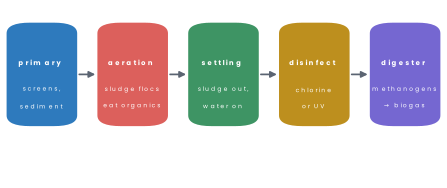
Two linked traps: primary sewage treatment is only physical (screening, sedimentation); the secondary stage is the biological one (aerobic microbes in activated sludge), and in the anaerobic digester methanogen bacteria produce biogas.
Three pairs the paper swaps: Dolly = clone, Rosie = transgenic (cloning copies a genome, transgenesis adds a gene); ZIFT transfers the zygote to the oviduct, IVF-ET the embryo to the uterus; secondary sewage treatment is biological, primary is physical — 'secondary' sounds lesser and is in fact the heart of the plant.

Formula and fact sheet
- Autograft = self; isograft = identical genotype; allograft = same species, different genotype; xenograft = different species.
- Rejection is driven mainly by HLA/MHC and, in hyperacute cases, preformed antibodies.
- IVF = oocyte retrieval + laboratory fertilisation + embryo culture/transfer.
- ICSI = one sperm injected into one mature oocyte; strongest use is severe male factor.
- Amniocentesis = ultrasound-guided sample of amniotic fluid/fetal cells for diagnosis.
- Transgenic = heritable inserted gene; pharming = pharmaceutical protein from a transgenic animal.
- Lactic fermentation: lactose → lactic acid → casein gel in curd/yoghurt.
- Alcoholic fermentation: \mathrm{C_6H_{12}O_6\to2C_2H_5OH+2CO_2}.
- Sewage: primary physical → secondary aerobic biological → clarification → disinfection; sludge anaerobic digestion gives methane.
- BOD falls when treatment succeeds. Drinking-water E. coli = faecal indicator.
- Bt protoxin requires ingestion and susceptible insect-midgut activation.
Rapid-revision tables and high-yield facts
| Quantity | Value |
|---|---|
| Graft types | auto (self), iso (twin), allo (human), xeno (species) |
| Rejection / drug | T cells vs foreign MHC / cyclosporine |
| IVF milestones | Louise Brown 1978; ICSI 1992 |
| Amniocentesis window | 15–20 weeks; karyotype, sex-selection banned |
| Down syndrome / Klinefelter / Turner | 47,+21 / 47,XXY / 45,X |
| Fermentation | sugar → ethanol + CO₂ (yeast); lactose → lactic acid (Lactobacillus) |
| BOD test | DO drop over 5 days at 20 °C; × dilution factor |
| Biogas | methane 50–70 %, CO₂; methanogens, anaerobic |
| Water standard | no E. coli; chlorine/UV/ozone disinfection |
| Bt | Cry toxin, alkaline-gut specific to caterpillars |
Chapter summary
- Transplant compatibility is an immunological problem centred on HLA recognition; immunosuppression prevents rejection at the cost of infection risk.
- IVF moves fertilisation to the laboratory, while ICSI additionally bypasses failures of sperm number, movement or oocyte penetration.
- Amniocentesis provides fetal cells for definitive chromosome/DNA diagnosis, but as an invasive test it follows careful counselling and screening.
- Transgenic animals produce disease models and valuable proteins, yet require welfare, containment and biosafety oversight.
- Dairy and beverage industries are controlled fermentations whose acids, gases and ethanol explain product texture, preservation and flavour.
- Sewage treatment relocates microbial oxidation from rivers to engineered aeration systems and extracts energy from sludge by anaerobic digestion.
- Drinking-water safety is a multi-barrier process monitored with faecal indicator organisms.
- Biocontrol uses ecological specificity—especially Bt, baculoviruses and Trichoderma—as an alternative or complement to chemical pesticides.
Practice questions
Set A — Recall (25 questions)
- A graft between genetically identical individuals is called anaautograftbisograftcallograftdxenograft
- A kidney transferred between unrelated humans is anaautograftbisograftcallograftdxenograft
- The main molecular barrier to organ transplantation is incompatibility ofaHLA/MHC antigensbblood plasma volumecmitochondrial DNA onlyddonor age
- Immunosuppressive treatment after transplantation mainly reducesalymphocyte-mediated rejectionboxygen transportcurine productiondbone growth
- Corneal grafts often need less systemic immunosuppression because the cornea isaheavily vascularisedbrelatively immune-privileged and avascularcmade of cartilagedreplaced every day
- In IVF, fertilisation occursain the uterusbin the ovarycoutside the body in culturedin the cervix
- ICSI involves injection ofaan embryo into a spermbmany sperm into the uterusca nucleus into an eggdone sperm into a mature oocyte
- A day-5 embryo commonly transferred in IVF is at theablastocyst stagebzygote stage onlycgastrula stagedfetal stage
- Amniocentesis samples fetal cells from theamaternal blood onlybplacenta surfacecumbilical arterydamniotic fluid
- Karyotyping of cells obtained by amniocentesis can diagnoseamaternal anaemiabfetal chromosomal abnormalitiescadult hypertensiondpaternal infertility
- A transgenic animal is one carrying aatemporary vaccine onlybhybrid nucleus from matingcstably integrated introduced genedcloned mitochondrion only
- Production of a human therapeutic protein in transgenic goat milk is calledapasteurisationbhybridisationcgene silencingdpharming
- Lactic-acid bacteria in curd ferment mainlyacellulose to methanebethanol to acetic acidclactose to lactic aciddcasein to lactose
- The classic paired yoghurt cultures are Streptococcus thermophilus andaBacillus thuringiensisbSaccharomyces cerevisiaecLactobacillus delbrueckiidEscherichia coli
- Alcoholic fermentation by yeast produces ethanol andalactic acidbcarbon dioxidecmethanedoxygen
- The gas holes in Swiss-type cheese are produced mainly byamethanogensbPenicillium sporescnitrogen-fixing bacteriadPropionibacterium
- Primary sewage treatment is principally aaviral processbphysical settling processcphotosynthetic processddistillation process
- Activated sludge treatment depends on microbial flocs that are mainlyaobligate anaerobes in sealed tanksbphotosynthetic algae onlychuman epithelial cellsdaerobic bacteria and associated organisms
- BOD measures the oxygen required by microorganisms to oxidiseabiodegradable organic matterbsand and gritcdissolved nitrogen gasdglass particles
- Anaerobic digestion of sewage sludge yields a gas rich inaoxygenbchlorinecnitrogendmethane
- Which is a common drinking-water disinfectant leaving a protective residual?aethanolbchlorineclactic aciddmethane
- E. coli in drinking water is used primarily as an indicator ofahardnessbexcess dissolved oxygencfaecal contaminationdfluoride deficiency
- Bt toxin kills susceptible insect larvae after activation in theainsect midgutbhuman stomach onlycplant xylemdsoil water
- Trichoderma species are used in biocontrol chiefly againstainfluenza virusesbsoil-borne fungal plant pathogenscmosquito adultsdtapeworms
- Methane-producing organisms in biogas digesters belong mainly to theaArchaeabfungicprotozoadviruses
Answers and explanations — Set A
1. (b) — An isograft is between genetically identical donor and recipient.
2. (c) — Same-species but genetically different transplantation is allogeneic.
3. (a) — Recipient immunity recognises foreign HLA/MHC molecules.
4. (a) — Immunosuppression limits T-cell and antibody-mediated graft attack.
5. (b) — Corneal avascularity and immune privilege reduce rejection risk.
6. (c) — “In vitro” means fertilisation is performed in laboratory culture.
7. (d) — ICSI injects one sperm directly into the oocyte cytoplasm.
8. (a) — Extended culture to about day 5 produces a blastocyst.
9. (d) — Amniotic fluid contains shed fetal cells.
10. (b) — Chromosome number/structure can be examined in fetal cells.
11. (c) — A transgene is integrated into the genome and can be inherited.
12. (d) — Pharming harvests pharmaceuticals from transgenic animals.
13. (c) — Lactose fermentation yields acid that gels casein.
14. (c) — L. delbrueckii subsp. bulgaricus partners S. thermophilus in yoghurt.
15. (b) — Glucose fermentation gives two ethanol and two CO₂ per glucose.
16. (d) — Propionibacteria release CO₂ that forms cheese eyes.
17. (b) — Screening and sedimentation physically remove solids.
18. (d) — Aerated flocs contain bacteria and grazers that oxidise organics.
19. (a) — BOD quantifies microbial oxygen demand from biodegradable pollution.
20. (d) — Methanogenic archaea produce methane-rich biogas.
21. (b) — Chlorine disinfects and can leave a distribution residual.
22. (c) — E. coli indicates a faecal contamination pathway.
23. (a) — Bt protoxin is solubilised/activated in susceptible larval midguts.
24. (b) — Trichoderma antagonises fungal pathogens in soil/root zones.
25. (a) — Methanogens are anaerobic archaea, not bacteria.
Set B — Understanding (15 questions)
- An allograft is rejected mainly because recipient T cells and antibodies recognise donor tissue asanon-self through HLA differencesbtoo large to vasculariseclacking mitochondriadalways infected
- Long-term immunosuppression creates a clinical trade-off because suppressing rejection also increases susceptibility toainfection and some cancersbchromosomal trisomyclactose intolerancedexcessive antibody memory
- IVF can treat bilateral fallopian-tube blockage because oocytes are retrieved and fertilisedainside the blocked tubebin the laboratory before uterine transfercby amniocentesisdafter natural implantation
- ICSI is preferred over conventional IVF in severe male-factor infertility because it bypasses requirements for spermanumber, motility and oocyte penetrationbDNA and mitochondriacproduction in the testisdABO compatibility
- Amniocentesis is diagnostic rather than merely screening because it obtainsaa maternal risk scorebfetal cells for direct chromosome/DNA analysiscan ultrasound picture onlydadult blood cells
- A clone and a transgenic animal differ because transgenesis specifically involvesaasexual reproduction onlybtransfer into a uteruscdeliberate introduction or editing of a genedidentical twins
- Transgenic mice are valuable disease models because a defined human-related gene or mutation can bearemoved from all foodbstudied in a whole living mammalcmade invisible to immunitydconverted into milk
- Milk sets into curd when lactic acid lowers pH so that casein micellesalose stability and form a gelbbecome lactosecbegin photosynthesisddissolve completely
- The same yeast can raise bread and make beer because fermentation produces both ethanol and CO₂, but in bread the valued product is mainlyalactic acidbmethaneccarbon dioxidedacetic acid
- Returning settled activated sludge to an aeration tank maintains a high concentration ofachlorinebgritcsterile waterdpollutant-consuming microorganisms
- Untreated high-BOD sewage can kill fish mainly by causing microbial respiration to depleteasunlightbcalcium carbonatecnitrogen gasddissolved oxygen
- Coagulation and flocculation improve drinking-water treatment by aggregating fine particles so they can be removed byaboiling onlybchlorination alonecsedimentation and filtrationdanaerobic digestion
- Bt preparations are relatively selective because the Cry protoxin must be ingested and activated by conditions/receptors in theahuman lungbsusceptible insect midgutcroots of every plantdblood of mammals
- A major advantage of biocontrol in integrated pest management is that it can suppress pests with greater target specificity and fewerachromosomesbpollinatorscnutrientsdpersistent chemical residues
- In anaerobic digestion, methane formation is the final stage after hydrolysis, acid formation and acetate/H₂ production byaphotosynthetic algaebthe recipient's T cellscyeast distillationdinteracting bacteria and methanogenic archaea
Answers and explanations — Set B
1. (a) — Alloimmunity is directed at genetically different donor antigens, especially HLA.
2. (a) — The same immune suppression that protects a graft weakens defence against microbes/tumours.
3. (b) — Laboratory fertilisation bypasses the anatomical tubal meeting site.
4. (a) — Direct injection compensates for too few, poorly motile or non-penetrating sperm.
5. (b) — Direct fetal-cell analysis can establish a diagnosis rather than estimate risk.
6. (c) — Cloning copies; transgenesis alters genetic content.
7. (b) — Whole-animal models expose gene effects across interacting tissues and systems.
8. (a) — Near its isoelectric pH, casein precipitates/gels.
9. (c) — CO₂ inflates dough; most ethanol is lost in baking.
10. (d) — Returned sludge seeds and maintains the working microbial biomass.
11. (d) — Decomposition consumes dissolved oxygen faster than it is replaced.
12. (c) — Larger flocs settle and filter much more effectively than colloids.
13. (b) — Alkaline pH, proteases and specific receptors make activation host-selective.
14. (d) — Specific biological agents can reduce broad chemical exposure and residues.
15. (d) — Anaerobic digestion is a microbial food chain ending in methanogenesis.
Set C — Application (10 questions)
- Ignoring recombination, the probability that two full siblings are HLA-identical is abouta100%b50%c75%d25%
- An amniocentesis karyotype reported as 47,XY,+21 indicates a male fetus withaTurner syndromebKlinefelter syndromecDown syndromedcri-du-chat syndrome
- A couple has normal gametes but both uterine tubes are irreversibly blocked. The most direct assisted-reproduction method isaamniocentesisbartificial insemination onlycchorionic-villus samplingdIVF with embryo transfer
- A semen sample contains very few weakly motile sperm. The IVF modification most appropriate isaembryo freezingbdonor insemination onlycICSIdtubal surgery
- Sewage with BOD 250 mg L⁻¹ undergoes 92% BOD removal. The approximate effluent BOD isa250 mg L⁻¹b20 mg L⁻¹c92 mg L⁻¹d230 mg L⁻¹
- Complete fermentation of 90 kg glucose has a theoretical ethanol yield of abouta23 kgb46 kgc90 kgd180 kg
- A transgenic goat secretes purified human antithrombin in its milk. This application is best calledapharmingbamniocentesiscxenograftingdpasteurisation
- A kidney-transplant recipient on immunosuppressants develops invasive fungal infection mainly because treatment reducesared-cell production onlybcell-mediated immune surveillancecstomach acidity permanentlyddonor HLA expression to zero
- E. coli is detected in a village drinking-water sample. The most justified interpretation isafaecal contamination and possible enteric-pathogen riskbproof that cholera toxin is presentcwater is safe if cleardexcessive water hardness
- A Bt spray kills a caterpillar pest but does not poison a farmer in the same direct way chiefly because the protoxin requiresaactivation/receptor conditions of the insect midgutbsunlight inside human bloodcfertilisation in plant ovulesdanaerobic sewage sludge
Answers and explanations — Set C
1. (d) — Siblings inherit the same two parental HLA haplotypes in about one-quarter of cases.
2. (c) — 47 chromosomes with XY and an extra chromosome 21 is male trisomy 21.
3. (d) — IVF replaces tubal fertilisation/transport and returns the embryo to the uterus.
4. (c) — ICSI allows one viable sperm to be injected into each mature oocyte.
5. (b) — Remaining BOD is 250\times0.08=20 mg L⁻¹.
6. (b) — 180 kg glucose yields 2\times46=92 kg ethanol, so 90 kg yields 46 kg.
7. (a) — Pharmaceutical production in a transgenic animal is pharming.
8. (b) — Suppressed T-cell immunity predisposes to opportunistic fungal disease.
9. (a) — The indicator reveals a contamination route, not the identity of every pathogen.
10. (a) — Bt specificity depends on ingestion, gut pH/proteases and epithelial receptors.
Group D — Model answers for long questions (10 marks each, for deeper revision)
- Describe tissue and organ transplantation, in-vitro fertilisation, amniocentesis and transgenic animals. [10]
- Describe the role of microbes in dairy and beverages, sewage and drinking-water treatment and biological control. [10]
Model answer D1: Medical technology (10 marks)
Introduction. Modern medicine uses transplantation, assisted reproduction, prenatal diagnosis and genetic engineering to treat disease and help families.
1. Tissue and organ transplantation. An organ or tissue of a donor replaces a failed one in the recipient.
| Type | Meaning |
|---|---|
| Autograft | From one part of the body to another (skin graft) |
| Isograft | Between identical twins |
| Allograft | Between two unrelated persons of one species (kidney) |
| Xenograft | Between species (pig heart valve) |
The immune system may cause rejection, so doctors match HLA and blood group and use immunosuppressants such as cyclosporin. Kidney transplants are done in Nepal; the organs can come from a living relative or a brain-dead donor.
2. In-vitro fertilisation (IVF) — "test-tube baby". Steps:
- The woman receives hormones to produce several eggs.
- Eggs are collected from the ovary and sperm from the male.
- They are mixed in a dish (fertilisation outside the body).
- The zygote divides to an 8-celled embryo.
- The embryo is placed in the uterus (embryo transfer) for implantation.
Louise Brown (1978, UK) was the first IVF baby. ZIFT and GIFT place a zygote or the gametes in the oviduct.
3. Amniocentesis. At 15–18 weeks a needle takes a little amniotic fluid from the womb under ultrasound. The foetal cells are cultured and checked for chromosomal disorders such as Down syndrome (trisomy 21), and for metabolic diseases.
Using it to find the sex of the baby for abortion is illegal in Nepal.
4. Transgenic animals. An animal that carries a foreign gene in its genome. Examples: mice for cancer research, Rosie the cow whose milk had human α-lactalbumin, sheep making human α-1-antitrypsin, and fish that grow faster.
Uses: drug production, disease models, and safety testing of vaccines.
Conclusion. These technologies save lives and treat infertility, but they raise ethical issues that need laws and careful use.
Model answer D2: Applied microbiology (10 marks)
Introduction. Microbes are used to make food, to clean water and to protect crops.
1. Dairy and beverages.
- Curd: Lactobacillus (lactic acid bacteria) changes lactose to lactic acid, which coagulates milk protein and also gives vitamin B12.
- Cheese: Streptococcus lactis ripens it; the holes in Swiss cheese come from CO₂ made by Propionibacterium.
- Alcoholic drinks: yeast (Saccharomyces cerevisiae) ferments sugar into ethanol and CO₂: C₆H₁₂O₆ → 2C₂H₅OH + 2CO₂. Nepali jaand and raksi use this in a traditional way with murcha starter.
- Bread and idli: yeast gas makes the dough rise.
2. Sewage treatment.
| Stage | Process |
|---|---|
| Primary | Screening, grit removal, sedimentation; solids settle as sludge |
| Secondary | Effluent goes to the aeration tank; air and activated sludge microbes digest organic matter, lowering the BOD (biological oxygen demand) |
| Tertiary | Chlorination or UV removes germs before discharge into a river |
The sludge is digested anaerobically in a digester to make biogas (methane), which is widely used in Nepali homes.
3. Drinking-water treatment. Sedimentation → coagulation with alum (flocs trap particles) → filtration through sand → disinfection by chlorine (0.2–0.5 mg/L) or boiling or the SODIS method.
4. Biological control. Pests are controlled by living organisms.
- Bacillus thuringiensis (Bt) toxin kills caterpillars.
- Baculovirus controls insect pests.
- Trichoderma fungus protects plants from soil fungi.
- Ladybird beetles eat aphids, and Gambusia fish eat mosquito larvae.
Advantages. No chemical residue, safe for man and soil, and cheaper for farmers who practise organic farming in Nepal.
Conclusion. Microbes provide food, clean water and natural pest control, which makes them very important to human welfare.