Question bank · 24 min read
Social Studies: Unit-wise Subjective Question Bank
Most of the 75 marks of the Social Studies paper are written answers. The CDC grid, as published for the 2080 curriculum, has nine short answers of 4 marks (36 marks) and four long answers of 7 marks (28 marks).
Another source I checked prints a different split of the same marks (4 x 4 and 8 x 6), so confirm the figures against the grid your school gives you.
Whichever split is used, the skill is the same: give a clear definition, then numbered points with a fact in each, then a closing line.
This chapter gives, for each of the ten units, three short questions and one long question with model answers.
Write your own answer first and compare points, not words. A 4-mark answer needs about four separate points in 60 to 80 words.
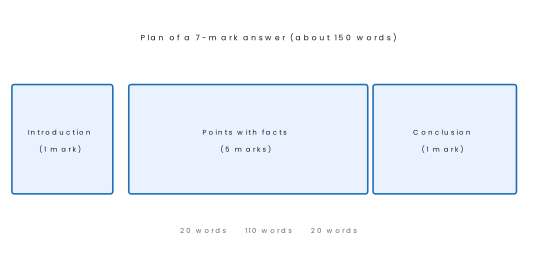
A 7-mark answer needs a short introduction, five or six developed points with facts, and a conclusion in about 150 words.
Every answer here is original practice material based on the Social Studies book chapters of this series, not a copy of any board answer.
15.1 Command words and the marks they carry
| Command word | What to write | Typical marks |
|---|---|---|
| Define, what is | a definition in one or two sentences | 1 to 2 |
| Mention, state, list | four or five points, no explanation | 4 |
| Differentiate | a two-column comparison on three or four points | 4 |
| Explain, describe | each point with a fact or example | 4 to 7 |
| Analyse, evaluate, justify | reasons for and against, then your view | 7 |
15.2 Unit 1: Our Society and We
Short questions (4 marks each)
- Define socialization. Name four agencies of socialization. [4]
- What is national identity? Name three documents that prove it. [4]
- How is unity in diversity protected in Nepal? Give four points. [4]
Long question (7 marks)
- Describe the diversity of Nepal and explain why unity in diversity matters. [7]
Model answers: Unit 1
1. Socialization is the lifelong process by which a person learns the language, norms, values and skills of society. Its agencies are the family (the first and strongest), the peer group, the school, religion and culture, the mass media, and the community and state.
2. National identity is the sense of belonging to a nation, answering "Who are we as a nation?". It is built from language, culture, religion, place and nationality. Legal proof comes from the citizenship certificate (issued from age 16), the National ID card and the passport.
3. (i) The Constitution protects equality and rights (for example Articles 18, 24, 31, 32 and 42). (ii) Languages, cultures and religions are recognised and may be used and taught. (iii) Festivals and symbols are shared by all communities. (iv) Dialogue, education and inclusion reduce discrimination and intolerance.
4. Introduction. Nepal is a small country with a very large variety of people. Points. (i) Census 2021 counted 29,164,578 people. (ii) They belong to 142 caste and ethnic groups. (iii) They speak 124 mother tongues. (iv) They follow 10 religions. (v) The land has mountain, hill and Terai regions with different ways of life. Why unity matters. Unity in diversity means living in peace and cooperation despite differences. It keeps the country stable, lets every group keep its culture, allows all citizens to take part in development and protects the nation from conflict. It is endangered by discrimination, intolerance and regional imbalance. Conclusion. Respect for difference, protected by the Constitution, is the strength of Nepal.
15.3 Unit 2: Development and the Foundations of Development
Short questions (4 marks each)
- What is the Human Development Index? Name its three dimensions. [4]
- What is sustainable development? Name its three pillars. [4]
- Mention four benefits of federalism in Nepal. [4]
Long question (7 marks)
- What are national pride projects? Explain their importance with examples. [7]
Model answers: Unit 2
1. HDI is a composite index, published by UNDP since 1990, that measures a country's development on a scale from 0 to 1. Its dimensions are health (life expectancy), education (mean and expected years of schooling) and standard of living (GNI per capita, PPP). Nepal's HDI is 0.622 and its rank is 145, in the medium group.
2. Sustainable development meets the needs of the present without harming the ability of future generations to meet theirs (Brundtland, 1987). Its three pillars are economic, social and environmental.
3. (i) Power and resources go to provinces and local governments, so decisions are taken closer to the people. (ii) Services such as schools, health posts and roads reach more places. (iii) Local people take part in planning. (iv) Regions and communities get fairer chances, reducing regional imbalance.
4. Introduction. National pride projects are very large strategic projects chosen to speed up growth and bring national pride. Examples. Melamchi drinking water, Upper Tamakoshi hydropower (456 MW), Budhi Gandaki hydropower, the Kathmandu–Terai/Madhesh Fast Track, new international airports and the highways. Importance. (i) They create jobs during construction and after. (ii) They produce energy or water and cut imports. (iii) They link regions and open trade and tourism. (iv) They raise confidence that Nepal can build large works by itself. Conclusion. If finished on time and on budget, these projects speed up development and give a lasting pride to the nation.
15.4 Unit 3: Our Social Values and Beliefs
Short questions (4 marks each)
- Name Nepal's World Heritage Sites and the year each was listed. [4]
- Differentiate between a folk dance and a classical dance. [4]
- What is social responsibility? Give four examples. [4]
Long question (7 marks)
- Describe the contributions of Gandhi, Mandela, Mother Teresa and Martin Luther King Jr. [7]
Model answers: Unit 3
1. Kathmandu Valley (1979), Sagarmatha National Park (1979), Chitwan National Park (1984) and Lumbini (1997).
2. A folk dance comes from a community, is learned by watching and joining, has simple steps and is danced at festivals (for example Maruni, the Tharu stick dance, Deuda and Sakela). A classical dance has strict rules of movement, mudra and music, needs long training from a teacher and is performed on stage (for example Charya nritya).
3. Social responsibility is doing our duty to self, family, community, nation, environment and humanity. Examples: paying taxes, keeping the neighbourhood clean, helping in disasters and obeying laws.
4. Introduction. These four persons served humanity beyond their own countries. Gandhi led India's freedom struggle by non-violence and truth. Mandela fought apartheid in South Africa, spent many years in prison, became president and won the Nobel Peace Prize in 1993. Mother Teresa served the poor, the sick and the dying in Kolkata and won the Nobel Peace Prize in 1979. Martin Luther King Jr. led the civil rights movement for equality of black Americans through peaceful protest. Lesson. All four show that equality, peace and service are stronger than hatred. Conclusion. Their ideas support universal brotherhood: the world is one family.
15.5 Unit 4: Social Problems and Solutions
Short questions (4 marks each)
- What is corruption? Give four ways to control it. [4]
- State the causes and two effects of domestic violence. [4]
- Mention four superstitions and remedies for them. [4]
Long question (7 marks)
- What is human trafficking? Explain its causes, effects and solutions. [7]
Model answers: Unit 4
1. Corruption is the misuse of power or position for personal gain. It can be controlled by (i) a strong CIAA and laws such as the Prevention of Corruption Act 2059, (ii) the Right to Information Act 2064, which opens public offices to questions, (iii) honest education and public awareness, and (iv) quick, equal punishment of offenders. Nepal scored 34 out of 100 in the Corruption Perceptions Index 2024.
2. Domestic violence is physical, mental, sexual or economic harm inside the family. Causes: unequal power between men and women, poverty, alcohol, lack of education. Effects: injury and fear, loss of confidence, broken families and harm to children. The Domestic Violence Act 2066 gives legal help.
3. Witchcraft accusation (remedy: education and law), chhaupadi (awareness and law), dowry (law and equality), child marriage (education and enforcement), faith healing instead of treatment (health services). Any four with a remedy earn full marks.
4. Introduction. Human trafficking is buying, selling or transporting people by force or deceit for exploitation. Causes. Poverty, illiteracy, fake job and marriage offers, and the open border. Effects. Loss of freedom, abuse, disease, shame and broken families; the victim may be forced into labour or sexual exploitation. Solutions. Education, jobs at home, safe migration, strong law (Constitution Article 29 and the Act of 2064), rescue and rehabilitation, and cooperation with international organisations. Conclusion. Awareness at village level and strict enforcement together protect people. World Day against Trafficking is observed on 30 July.
15.6 Unit 5: Civic Consciousness
Short questions (4 marks each)
- Name the three organs of state power and give one function of each. [4]
- State four duties of a citizen in an election. [4]
- Mention four rights of a consumer. [4]
Long question (7 marks)
- Describe the composition of the Federal Parliament and explain how a bill becomes law. [7]
Model answers: Unit 5
1. The legislature makes laws; the executive carries them out; the judiciary interprets them and gives justice. All three are checked by the Constitution.
2. (i) Register and vote at the age of 18 or above. (ii) Choose candidates by merit and not by gift or fear. (iii) Refuse to take or give a bribe. (iv) Accept the result peacefully.
3. The right to basic needs, to safety, to information, to choose, to be heard, to redress, to consumer education and to a healthy environment. (Any four.) The Consumer Protection Act is of 2075, and World Consumer Rights Day is 15 March.
4. Composition. The Federal Parliament is the President together with two houses. The House of Representatives has 275 members: 165 elected by first-past-the-post and 110 by proportional representation, for five years. The National Assembly has 59 members for six years, and one-third retire every two years. How a bill becomes law. (i) A bill is introduced in one house. (ii) It is discussed in the house and in a committee. (iii) It is passed by a majority. (iv) The other house considers and passes it. (v) It goes to the President for assent. (vi) After assent it becomes an Act. Conclusion. Both houses and the President take part, so no law is made hastily.
15.7 Unit 6: Our Earth
Short questions (4 marks each)
- Explain four factors that affect climate. [4]
- Mention four safety measures during an earthquake. [4]
- State four essential elements of a map. [4]
Long question (7 marks)
- Describe the relief, climate and economic importance of the continent of Africa. [7]
Model answers: Unit 6
1. (i) Latitude: places near the equator are hot, near the poles cold. (ii) Altitude: temperature falls by about 6.5 °C for every 1,000 m. (iii) Distance from the sea: coastal places have mild weather, interiors have extremes. (iv) Ocean currents, winds and relief: warm currents warm coasts, and mountains cause rain shadow.
2. (i) Drop to hands and knees, cover your head under a table, and hold on. (ii) Keep away from windows and heavy objects. (iii) Do not use a lift. (iv) After shaking stops, go to an open space and keep an emergency kit ready; build houses to code.
3. Title, scale, direction (north arrow), legend (key) and border. Contours show relief.
4. Introduction. Africa is the second largest continent, about 30.3 million km². Relief. It has the Sahara in the north, the Nile (the great river) and the highest peak, Kilimanjaro (5,895 m). Climate. The equator crosses the middle, so the continent has equatorial rainforest, savanna grassland and hot desert; the north and south have milder types. Economy. Many people depend on farming; the continent has minerals (gold, diamonds, copper) and oil, but poverty and low industry remain. Conclusion. Africa's wealth of land and resources is large; development needs peace and investment.
15.8 Unit 7: Our Past
Short questions (4 marks each)
- State four causes of the First World War. [4]
- State four results of the Second World War. [4]
- Why was the Panchayat system criticised? Give four reasons. [4]
Long question (7 marks)
- Explain the causes and results of the revolution of 2007 BS. [7]
Model answers: Unit 7
1. Militarism (arms race), alliances (two armed camps), imperialism (rivalry for colonies) and nationalism. The spark was the assassination at Sarajevo on 28 June 1914.
2. About 70 to 85 million people died; the United Nations was founded in 1945; the United States and the Soviet Union became superpowers; many colonies won independence (decolonisation).
3. Political parties were banned; power was held by the king; free speech and press were limited; the 1980 referendum narrowly kept the system (54.8%) and many demanded change, leading to Jana Andolan I in 2046.
4. Introduction. The revolution of 2007 BS ended 104 years of Rana rule. Causes. (i) The Ranas ruled by family and kept people poor and uneducated. (ii) Political parties such as the Nepali Congress worked for democracy. (iii) King Tribhuvan supported the movement and left for India. (iv) Indian independence in 1947 encouraged change. Results. (i) Rana rule ended. (ii) The Delhi Agreement (Falgun 2007) set up a Rana–Congress interim cabinet and promised a Constituent Assembly. (iii) Democracy came to Nepal, remembered on Democracy Day (7 Falgun). Conclusion. The revolution opened the way to citizens' rights, although political instability followed in the first decade.
15.9 Unit 8: Economic Activities
Short questions (4 marks each)
- Name the types of energy sources with one example each. [4]
- Mention the sources of government revenue. [4]
- State four benefits of cooperatives. [4]
Long question (7 marks)
- How can tourism be promoted in Nepal? Explain. [7]
Model answers: Unit 8
1. Traditional energy (firewood), commercial energy (electricity, petroleum, coal) and alternative energy (solar, biogas, wind).
2. Revenue is tax revenue and non-tax revenue. Tax is direct (income tax) or indirect (VAT at 13%). Non-tax revenue comes from fees, fines, royalties and profits of public enterprises.
3. (i) Savings and cheap loans for members. (ii) One member, one vote: democratic control. (iii) Jobs and income, especially in agriculture and dairy. (iv) Local capital stays in the community. Cooperatives are one of the three pillars of the economy.
4. Introduction. About 1.2 million tourists visited Nepal in 2019, and tourism gives 6 to 7% of GDP. Ways to promote. (i) Build infrastructure: roads, airports, hotels. (ii) Market Nepal abroad through the Nepal Tourism Board (1998). (iii) Ensure the safety of visitors. (iv) Offer a variety of products: trekking, wildlife, culture, pilgrimage, adventure. (v) Involve local people through homestays. Conclusion. Tourism creates jobs and brings foreign currency, so it should be planned carefully.
Problem.(a) Find the simple interest on Rs 20,000 at 8% a year for 3 years.(b) Find the compound interest on Rs 10,000 at 10% a year for 2 years.
Solution.(a) S.I. = PRT / 100 = 20,000 × 8 × 3 / 100 = Rs 4,800.(b) A = P(1 + R/100)ⁿ = 10,000 × (1.1)² = 10,000 × 1.21 = Rs 12,100. Compound interest = 12,100 − 10,000 = Rs 2,100.
15.10 Unit 9: Our International Relations and Cooperation
Short questions (4 marks each)
- State the five principles of Panchsheel. [4]
- Name the six organs of the United Nations. [4]
- Mention two advantages and two disadvantages of globalisation. [4]
Long question (7 marks)
- Explain the role of the United Nations in world peace and development. [7]
Model answers: Unit 9
1. Respect for territorial integrity and sovereignty; non-aggression; non-interference in internal affairs; equality and mutual benefit; peaceful coexistence.
2. The General Assembly, the Security Council, the Economic and Social Council (ECOSOC), the Trusteeship Council, the International Court of Justice (The Hague) and the Secretariat.
3. Advantages: freer trade and growth; spread of technology and remittance. Disadvantages: more inequality between rich and poor; threat to local culture and products.
4. Introduction. The UN was founded on 24 October 1945, has 193 members and its headquarters in New York. Nepal joined in 1955. Role. (i) The Security Council acts for peace and security; its five permanent members hold the veto. (ii) UN peacekeeping missions keep ceasefires, and Nepal contributes troops. (iii) Specialised agencies work for development: UNESCO (Paris) for education, science and culture, WHO (Geneva) for health, FAO (Rome) for food, ILO (Geneva) for labour, and the World Bank and IMF (Washington) for finance. (iv) UNICEF and UNDP, as programmes, help children and development. Conclusion. By bringing countries together for talks, the UN reduces war and spreads cooperation.
15.11 Unit 10: Population and Its Management
Short questions (4 marks each)
- Mention four benefits of family planning. [4]
- What are push and pull factors of migration? Give two of each. [4]
- State four reasons for the uneven distribution of population. [4]
Long question (7 marks)
- Explain the relationship between population and environment. [7]
Model answers: Unit 10
1. Better health of mothers and children; more chances for education; higher family income and quality of life; less pressure on the environment.
2. Push factors drive people out of a place (poverty, lack of jobs); pull factors attract them to another place (jobs, schools, hospitals, safety).
3. Relief (steep mountains are thinly settled), climate, soil fertility, transport and jobs and services.
4. Introduction. Population and environment affect each other. Effects of population on environment. (i) More people need more land and firewood, causing deforestation. (ii) Urban growth causes air, water and noise pollution and waste. (iii) Greater use of fossil fuel adds to climate change. Effects of environment on population. Poor soil, floods or landslides cause migration, disease and food shortage. Solutions. Family planning, community forestry, the 3Rs (reduce, reuse, recycle) and clean energy. Conclusion. Managing population size and protecting nature must go together.
Problem.(a) A country has a crude birth rate of 20 and a crude death rate of 6 per 1,000, with no migration. Find its growth rate and doubling time.(b) A district has 540,000 people in 3,000 km². Find its density.
Solution.(a) Growth rate = (CBR − CDR) ÷ 10 = (20 − 6) ÷ 10 = 1.4% a year. Doubling time ≈ 70 ÷ 1.4 = 50 years.(b) Density = population ÷ area = 540,000 ÷ 3,000 = 180 persons per km².
Problem. The temperature at sea level is 30 °C. What is it at 3,000 m if it falls by 6.5 °C per 1,000 m?
Solution. Fall = 6.5 × 3 = 19.5 °C. Temperature = 30 − 19.5 = 10.5 °C.
15.12 Extended model answers (10 marks)
In Social Studies, a 10-mark answer needs an introduction, six to eight explained points with Nepali examples, a table where possible, and a short conclusion.
Extended questions
- Explain the structure of the federal system of Nepal and the importance of federalism. [10]
- Explain the causes and effects of rapid population growth in Nepal and suggest measures to manage it. [10]
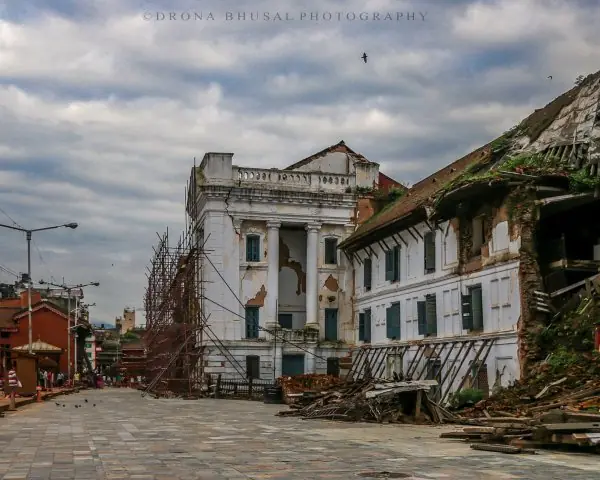
Model answer D1: federalism in Nepal (10 marks)
Introduction. Federalism is a system of government in which power is divided between a central government and regional governments, each independent in its own field.
The Constitution of Nepal, promulgated on 3 Ashoj 2072 (20 September 2015), made Nepal a federal democratic republic. It replaced the old unitary system, in which all decisions were taken in Kathmandu.
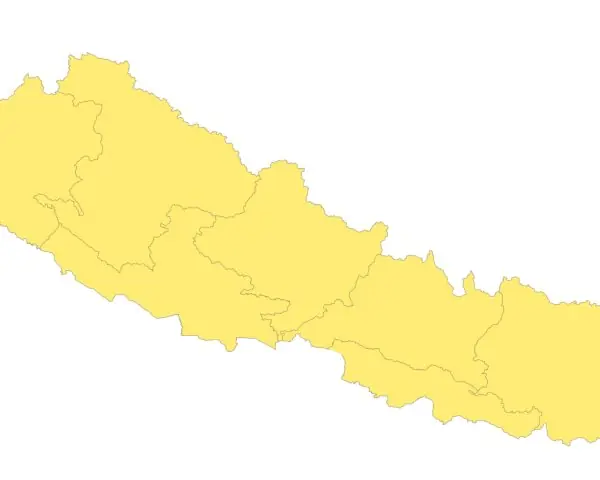
Structure. There are three levels of government.
| Level | Number | Main bodies |
|---|---|---|
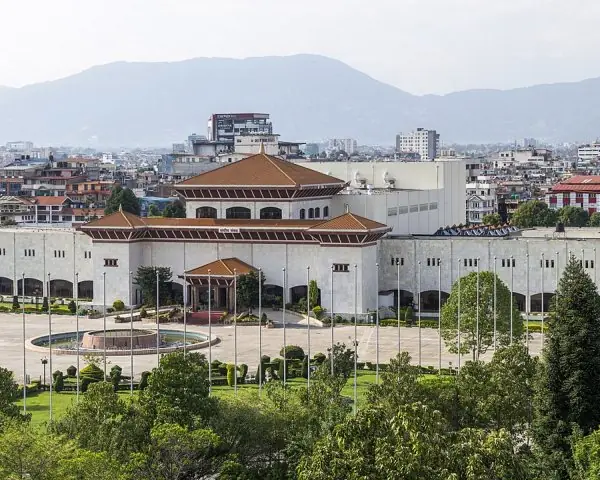
| Federal | 1 | Federal Parliament (House of Representatives and National Assembly), Prime Minister and Cabinet |
| Province | 7 | Provincial Assembly, Chief Minister and Council of Ministers |
| Local | 753 | 6 metropolitan cities, 11 sub-metropolitan cities, 276 municipalities, 460 rural municipalities |
Each level has its own powers listed in the Schedules of the Constitution. The federal level handles defence, foreign affairs, currency and national planning.
Provinces look after provincial police, health services and roads, while local levels manage basic education, local roads, water supply and health posts. Some powers, such as electricity and forests, are shared.
Importance of federalism.
- Decisions are taken near the people. A ward chairperson can solve a problem of a village without waiting for approval from Singha Durbar.
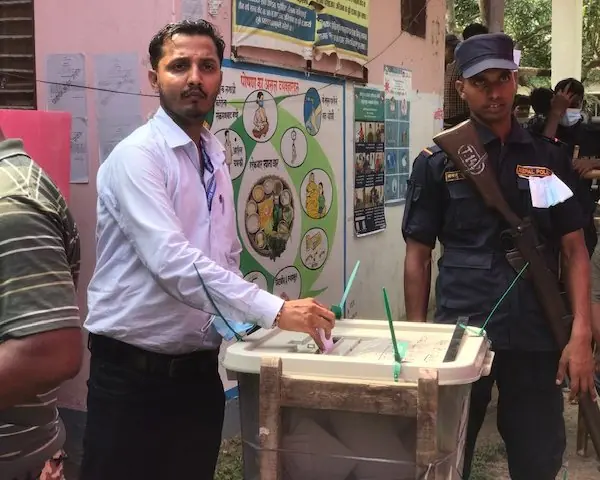
- Inclusion. Women, Dalits and marginalised groups are guaranteed seats in the local bodies.
- Balanced development. Provinces plan for their own roads, hydropower and tourism, and remote areas get a fair share of the budget.
- Better services. Birth, marriage and migration certificates and recommendations are given at the ward office.
- Protection of culture and language. Local governments can promote local languages, festivals and traditions.
- Training in democracy. More citizens become elected leaders and learn to manage a budget.
- Stronger national unity. When every region has a role in governing, people feel that the state belongs to them.
Challenges. Shortage of skilled staff, overlap of powers, low local income and slow making of laws.
Conclusion. Federalism brings government to the doorstep of the citizen. Its success depends on honest leaders, clear laws and good cooperation among the three levels.
Model answer D2: population growth in Nepal (10 marks)
Introduction. Population growth is the increase in the number of people living in a country. The population of Nepal was about 29.2 million in the census of 2078 BS.
The growth rate is now about 0.9 percent a year, which is lower than before, but the country still faces many problems because of the large number of people compared with its resources.
Causes of rapid growth.
- High birth rate in the past. Early marriage and the wish for sons kept families large.
- Fall in death rate. Vaccination, health posts, clean water and medicines lowered child and adult deaths, but the birth rate fell more slowly.
- Poverty and illiteracy. Poor families think that more children mean more hands for work.
- Social beliefs. Religious and cultural beliefs favour large families.
- Lack of family planning. In remote areas there is little knowledge or access to contraceptives.
- Rural economy. In an agricultural society, children help on the farm.
Effects.
| Area | Effect |
|---|---|
| Food | Pressure on the land; small farms and food shortage |
| Health and education | Crowded schools and hospitals |
| Employment | Unemployment and foreign migration |
| Environment | Deforestation, pollution in Kathmandu, loss of wildlife habitat |
| Settlement | Unplanned cities, squatters and disaster risk |
| Economy | Low saving and low capital for development |
Measures to manage the population.
- Provide free and compulsory education, especially for girls.
- Spread family-planning services through health posts and female community health volunteers.
- Stop child marriage by law and awareness.
- Create jobs and skills training so that young people use their ability at home.
- Promote planned cities and safe building codes.
- Run mass-media programmes for a small, happy family.
Conclusion. A large population can be a resource if it is healthy, educated and skilled. Nepal must manage growth with education, health and jobs so that every citizen can live with dignity.
Chapter summary
- A 4-mark answer is four points in 60 to 80 words; a 7-mark answer is an introduction, five developed points with facts and a conclusion in about 150 words.
- Use the numbers of the book: 142 groups, 124 languages, 7 provinces, 753 local levels, HoR 275 (165 + 110), NA 59.
- Federalism, sustainable development (three pillars, 17 SDGs) and national pride projects are favourite long answers of Units 1 and 2.
- Always give the cause, effect and solution of a social problem; never leave one out.
- Formulas: S.I. = PRT/100; A = P(1 + R/100)ⁿ; growth rate = (CBR − CDR)/10; doubling time ≈ 70 ÷ rate; density = population ÷ area.
- Temperature falls 6.5 °C per 1,000 m.
- Use the model plans of the longer answers in this chapter as templates.
Practice questions
Group B: Short answer (4 marks each)
- Define sustainable development. Name its three pillars. [4]
- A district has 800,000 people in 4,000 km². Find its density and say what the figure means. [4]
- State four causes of domestic violence. [4]
Answers to Group B
1. Sustainable development meets the present need without harming the future (Brundtland, 1987). Pillars: economic, social, environmental.
2. Density = 800,000 ÷ 4,000 = 200 persons per km². It means that on average 200 people live on each square kilometre of the district.
3. Unequal gender power, poverty, alcohol and drugs, and lack of education and awareness.
Group C: Long answer (7 marks each)
- Explain the importance of the Constitution of Nepal 2072. [7]
- Describe the results of the First World War. [7]
Answers to Group C
1. Introduction: the Constitution was promulgated on 3 Ashwin 2072 (20 September 2015). Importance: it makes Nepal a federal democratic republic with 7 provinces and 753 local levels; it divides power among the legislature, executive and judiciary; it gives 31 fundamental rights; it protects diversity and equality; it guarantees a multi-party system and periodic elections. Conclusion: it is the highest law that guides the nation.
2. Introduction: the war lasted from 1914 to 1918. Results: the Treaty of Versailles (1919) punished Germany; the League of Nations was formed; the empires of Germany, Austria-Hungary, Russia and Turkey collapsed; new countries were created; millions died; the war's bitterness helped lead to the Second World War. Conclusion: the peace was not secure.