Question bank · 17 min read
Compulsory English: Unit-wise Subjective Question Bank
The subjective part of the English paper is 60 of the 75 marks: the unseen passage (15), the short literary questions (5 x 2 = 10), the long literary questions (2 x 5 = 10) and the three writing tasks (7 + 8 + 10 = 25).
This chapter gives, for the texts of the Grade 12 book, the questions that can be asked and a model answer, then one model for each writing task.
Answers are written at the length that earns full marks: short answers about 60 to 80 words, long answers about 150 to 200 words.
Write your own answer first. Then check that yours has the same points, not the same words. Examiners give marks for ideas that are relevant and supported from the text.
Every answer below is original practice material based on the texts in this book, not a copy of any board answer.
18.1 Short stories
Neighbours (Tim Winton)
Q. How do the narrator and his wife change their attitude to their neighbours? (5) At first the young couple find the street strange: its people are European migrants whose habits and language are unfamiliar.
Over one year the neighbours share their lives, and a vegetable patch is dug, a henhouse falls down and a baby is born. By the end the couple are part of the street.
The story shows that strangers become neighbours through small shared acts, not big events.
A Respectable Woman (Kate Chopin)
Q. Why does Mrs Baroda change her mind about Mr Gouvernail? (5) Mrs Baroda expects to dislike her husband's quiet guest. One night on the garden bench she discovers that his presence disturbs her in a way she did not expect.
Nothing is confessed and nothing is done; the story is about a woman learning a hidden truth about herself.
A Devoted Son (Anita Desai)
Q. Is Rakesh a truly devoted son? Give reasons. (5) Rakesh becomes the most successful doctor in town and looks after his father with great care.
But his medical judgement overrules every wish of his father's old age, so the father feels more a patient than a father.
The title is therefore ironic: Rakesh is devoted in duty but lacks understanding of his father's real needs, which are freedom and affection.
The Treasure in the Forest (H. G. Wells)
Q. How does Wells show that greed destroys? (5) Two men paddle to an island with a stolen map. In the first pages they are thirsty and eager; by the last page they are dying in a silent forest beside a heap of gold.
Wells uses small details, such as the map's "little dashes" and a "little prick" on a thumb, to prepare the ending. The gold beside the dead men is a symbol of greed.
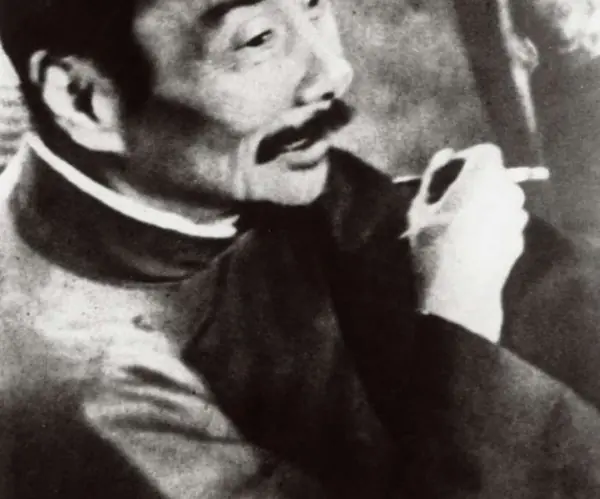
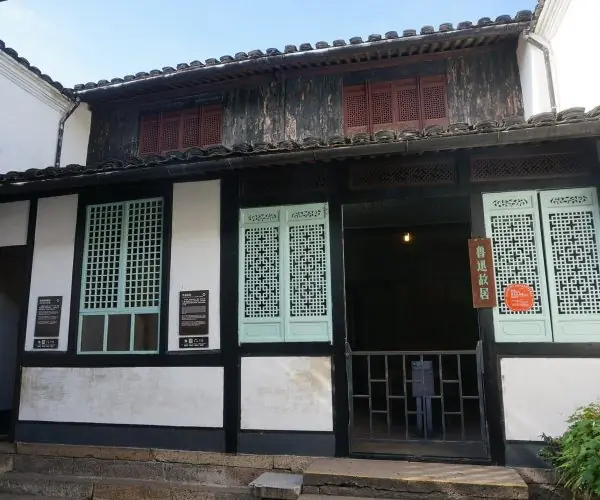
My Old Home (Lu Xun)
Q. How has Runtu changed between boyhood and the narrator's return? (5) In memory Runtu is a lively boy with a silver necklet. When they meet again he is old before his time, shivering, and calls the narrator "Master".
Poverty and a rigid social order have put a wall between the friends. The narrator is sad but hopes that the next generation will live differently.
The Half-closed Eyes of the Buddha and the Slowly Sinking Sun (Shankar Lamichhane)
Q. What does the guide show the tourist, and why? (5) The tourist, warmed by whisky, praises Nepal's peace, gods and smiles. The next day the guide takes him to a farmer's house and shows what his words left out.
The story criticises visitors who see a poor country only as a beautiful picture.
A Very Old Man with Enormous Wings (Gabriel Garcia Marquez)
Q. How do the villagers treat the old man, and what does this show? (5) A neighbour calls him an angel, a priest calls him an impostor, a doctor calls him a wonder of nature, and the villagers pay five cents to stare at him.
They turn a miracle into a show and soon drift away. The story shows how quickly people lose wonder and how cruel curiosity can be.
18.2 Poems
A Day (Emily Dickinson). Q. What is the difference between the two halves of the poem? (5) The first half is a child's excited report of how the sun rose.
In the second half the speaker slows down and says, "But how he set, I know not." The shift shows that beginnings are easy to describe and endings are not.
Every Morning I Wake (Dylan Thomas). Q. What does the speaker ask of God? (5) He asks God to keep an eye on "all poor creatures born to die", to notice that the townspeople are "not wholly bad or good", and to let them have one more day. The prayer is humble and full of sympathy.
I Was My Own Route (Julia de Burgos). Q. In what way is the poem a rebellion? (5) The woman admits she once tried to be what men wanted, and ends by not turning up to the ceremony that would honour her in the old way.
Nothing is smashed; the rebellion is walking her own road.
The Awakening Age (Ben Okri). Q. What is the main idea? (5) The poor are described only by what they lack, and this description harms them. The poem hopes for an age in which all people share a vision of light and harvest.
Soft Storm (Abhi Subedi). Q. Why is the storm called soft? (5) The storm is a violent political decade whose violence appears in quiet scenes: hungry children, a man beaten in front of his family, a blood-stained shirt.
The contradiction shows how ordinary people suffer while the city hardly notices.
18.3 Essays
On Libraries (Oliver Sacks). Q. What did libraries mean to Sacks? (5) They were the places where he became himself: the home library, the public library and the school and museum libraries. The essay ends in grief, because a library is also connected with loss.
Marriage as a Social Institution (Stephen L. Nock). Q. Why is marriage called an institution? (5) Nock says marriage is never only two people. It comes with rules, expectations and helpers already attached: law, religion, custom and relatives.
Knowledge and Wisdom (Bertrand Russell). Q. How does Russell separate knowledge from wisdom? (5) Knowledge is facts and skills; wisdom adds a sense of proportion and a concern for human life.
More knowledge has not made us wiser, because facts used without wisdom can produce harm.
Humility (Yuval Noah Harari). Q. Why does Harari say each group thinks it is the centre of history? (5) He collects examples from Greeks, Chinese nationalists, some Hindu nationalists and Aztecs, each sure that their own story is the most important. He argues that humility is needed to see that no single group is the centre.
Human Rights and the Age of Inequality (Samuel Moyn). Q. What question does Moyn ask? (5) He asks why the gap between rich and poor has grown although human rights have spread since 1948.
18.4 Plays
A Matter of Husbands (Ferenc Molnar). Q. Where does the comedy come from? (5) There are only two speaking characters in one room: a frightened wife and a glamorous actress. A great deal of acting and a last line that turns everything upside down make the comedy.
Facing Death (August Strindberg). Q. Why does Monsieur Durand take his terrible decision? (5) He is a widowed innkeeper in a ruined boarding house, with unpaid bills, no bread and three ungrateful daughters.
He has no hope of a better life, and the play is a tragedy of poverty and despair in one room.
The Bull (Bhimnidhi Tiwari). Q. Why are the caretakers afraid when the bull dies? (5) The king, Ranabahadur Shah, is known to be fond of the royal bull called Male. The caretakers fear punishment, and the play laughs at fear of power.
18.5 Long answers (2 x 5 marks)
Q. Discuss the theme of social division in "My Old Home" and "The Half-closed Eyes of the Buddha...". Both stories show a gap between people hidden behind polite words.
In Lu Xun's story it lies between a master and a servant's son; in Lamichhane's it lies between a foreign tourist and a poor farmer.
In both, a meeting makes the gap visible, and both writers want the reader to feel uneasy and to hope for change.
Q. Compare the endings of "A Devoted Son" and "The Treasure in the Forest". Both endings reverse what a character wanted. Varma wanted comfort and respect and is given obedience without freedom.
The treasure hunters wanted gold and die beside it. Desai ends softly and ironically in a home; Wells ends suddenly in a forest.
18.6 Writing tasks (Questions 4, 5 and 6)
Q4 Guided writing (7 marks)
Task: The chart shows the percentage of students using different sources to study: textbooks 50, internet 25, teachers' notes 15, friends 10. Write a paragraph describing it.
The chart shows how students prepare for their studies. Half of the students (50 per cent) depend on textbooks, which is the largest share. The internet comes second at 25 per cent, exactly half the textbook figure.
Teachers' notes follow with 15 per cent, while only 10 per cent learn mainly from friends. The figures show that textbooks remain the main source, with online study as a clear second choice.
Q5 Functional writing (8 marks)
Task: Write a letter to the editor about the problem of plastic waste in your town.
The Editor The Himalayan Times Kathmandu
24 Poush 2082
Sir,
Through the columns of your newspaper I wish to draw the attention of the municipality to the growing problem of plastic waste in our town. Plastic bags lie in drains and on roadsides, block the water in the rainy season and harm the cattle that eat them.
I request the authorities to ban thin plastic bags, to place waste bins along the main streets and to start a campaign for cloth bags. Citizens too must take their own bags when shopping.
I hope you will kindly publish this letter.
Yours faithfully, Anil Sharma
Q6 Free writing (10 marks): essay plan
Task: Write an essay of about 250 words on "The Value of Reading". Use five paragraphs: (1) introduction on how reading shapes a person; (2) reading gives knowledge and ideas; (3) reading builds imagination and language; (4) reading in the age of phones and how to make it a habit; (5) conclusion that links back to the introduction.
Keep each paragraph to about 50 words in simple, correct sentences.
18.7 Unseen passage (Question 1, 15 marks)
1) Read the questions first. 2) Read the passage once for the main idea. 3) Underline the words that answer each question. 4) Answer in your own words, in full sentences. 5) For the title, use a short phrase built from the main idea.
Vocabulary items ask for the meaning in that passage, so check the sentence around the word.
18.8 Extended model answers (10 marks)
The best English answers combine a clear opening, ideas supported by details from the text, a comparison where the question asks for one, and a closing sentence that answers the question. The three models below show the expected length of a 10-mark answer.
Extended questions
- Is Rakesh a truly devoted son? Discuss with reference to "A Devoted Son". [10]
- Compare and contrast the theme of social division in "My Old Home" and "The Half-closed Eyes of the Buddha and the Slowly Sinking Sun". [10]
- Write an essay of about 300 words on "The Value of Reading". [10]
Model answer D1: "A Devoted Son" (10 marks)
Introduction. In Anita Desai's story, Rakesh rises from a poor home to become the most successful doctor in his town, and he looks after his old father Varma with great care. But the title is ironic.
The story asks whether care that is correct in medicine and cold in feeling can be called devotion.
Discussion.
- Rakesh's success. At the beginning he stands first in his examinations, and his father is proud. Rakesh has done everything a good son should do, and the whole neighbourhood praises him.
- His duty. When his father becomes old and weak, Rakesh gives him the best medicines, tests and food, and sits with him daily. By any outward measure he is a model son.
- Control instead of care. Rakesh decides everything: which food his father may eat, which medicines to take and how long to rest. His medical judgement overrules every wish of the old man.
- The father's loss. Varma wants his old freedom, sweets that he loves, the company of his friends and respect as the head of the family. He begins to feel more like a patient than a father, and he becomes bitter.
- Irony. Rakesh is devoted to his father's body, but not to his happiness. The father needs affection and understanding, and gets a schedule of pills.
- The wider theme. The story shows the clash between two generations, one of tradition and love, the other of science and discipline. Desai does not say that Rakesh is cruel; she says that he is blind.
| Quality | What Rakesh gives | What the father needs |
|---|---|---|
| Health | Medicines and diet | Freedom to enjoy simple pleasures |
| Time | Regular visits | Friendly company |
| Respect | Obedience from the household | Being heard, not managed |
| Love | Care as a duty | Affection and understanding |
Conclusion. Rakesh is devoted in duty but not in understanding. The title is ironic because the very qualities that make him a perfect doctor make him an unfeeling son, and the story teaches that true devotion listens to the person it serves.
Model answer D2: social division in two stories (10 marks)
Introduction. Lu Xun's "My Old Home" (China) and Shankar Lamichhane's "The Half-closed Eyes of the Buddha and the Slowly Sinking Sun" (Nepal) were written in different countries and times, but both show an invisible wall between people.
In both stories a meeting makes the wall visible, and a narrator feels uneasy.
Social division in "My Old Home".
- The narrator returns to his village to sell the family house and meets his childhood friend, Runtu.
- In memory, Runtu was a lively boy with a silver necklet who knew the secrets of the fields and the sea-shore.
- Now Runtu is old before his time, with a rough face and hands like the bark of a pine, and he shivers in thin clothes.
- He greets his friend with the word "Master". With that one word the old friendship is dead, and the gap of class stands between them.
- The cause is poverty and a rigid social order, which have made Runtu humble.
- The story ends with a note of hope: the children Hongr and Shuisheng, who play together, may live a new life that their fathers could not.
Social division in "The Half-closed Eyes of the Buddha...".
- A foreign tourist, warmed by whisky, praises Nepal's peace, gods, mountains and smiling people.
- The next day his guide takes him to the house of a poor farmer.
- There the tourist sees the hunger and hardship that his romantic words had left out.
- The story criticises visitors who see a poor country only as a beautiful picture.
| Basis | "My Old Home" | "The Half-closed Eyes of the Buddha..." |
|---|---|---|
| Setting | A village in China | Nepal, among tourists |
| The divided people | A master and a servant's son | A tourist and a poor farmer |
| How it is shown | One word, "Master" | A day-long walk to a farmer's house |
| Cause | Poverty and rigid class order | Poverty and a romantic gaze |
| Mood at the end | Sad but hopeful | Quiet and critical |
Conclusion. Both writers want the reader to feel uneasy at the distance between people and hope for change. Lu Xun looks to the next generation, while Lamichhane asks the visitor, and the reader, to see the real life behind the beautiful picture.
Model answer D3: essay on "The Value of Reading" (10 marks)
The Value of Reading
Introduction. A book is a window to the world. A person who reads is never alone, because on every page he can talk with a scientist, a poet or a traveller. Reading shapes the mind in the way that exercise shapes the body.
Knowledge and ideas. First, reading gives knowledge. A student of a village school who reads a library book can learn about the planets, the history of Nepal or a new way of farming.
Every discovery that is known today began in the pages of a book that someone read with care. Reading also gives us ideas to question, and it teaches us to think for ourselves.
Imagination and language. Second, reading builds imagination and language. A story invites us to see a place we have never visited and to feel the sorrow of someone whom we never met.
A reader gathers new words and learns how to place them in good sentences, so his speaking and writing improve. The students who read widely write better essays.
Reading today. In the age of the mobile phone, reading in depth is becoming rare, and a person may spend hours scrolling and remember nothing.
Yet technology can help: an e-book, a free online library or an audio book can be read anywhere in the bus or on a hill.
To form the habit, one should set aside twenty minutes every day, choose a book of interest and read it without the phone nearby.
Conclusion. In short, reading is cheap, but it gives us knowledge, imagination and wisdom that last for life. As the introduction said, a book is a window; the more we read, the wider the view of the world becomes.
| Mark scheme | Marks |
|---|---|
| Introduction and conclusion | 2 |
| Relevant ideas with examples | 4 |
| Organisation and paragraphing | 2 |
| Grammar, spelling and style | 2 |
Chapter summary
- Subjective marks total 60 of 75; practise writing, not only reading.
- Literary answers need the point, evidence from the text and a line of meaning.
- Short answer about 70 words; long answer about 170 words.
- Learn the central idea of each text in one sentence.
- Writing tasks: follow the format (letter parts, paragraph order) and keep to the word limit.
- Unseen passage: read the questions first and answer in your own words.